Loading...
SB4292
OVERVIEW
Electrochemical VOC sensor with ppb-level detection for air quality, emission, and indoor monitoring. 30-second response time. Plugs into Sensorbee Pro 2 stations.
CAPABILITIES
Electrochemical sensing with 2 ppb limit of detection
1 ppb resolution across 0–2,000 ppb range
Fast <30 second response time
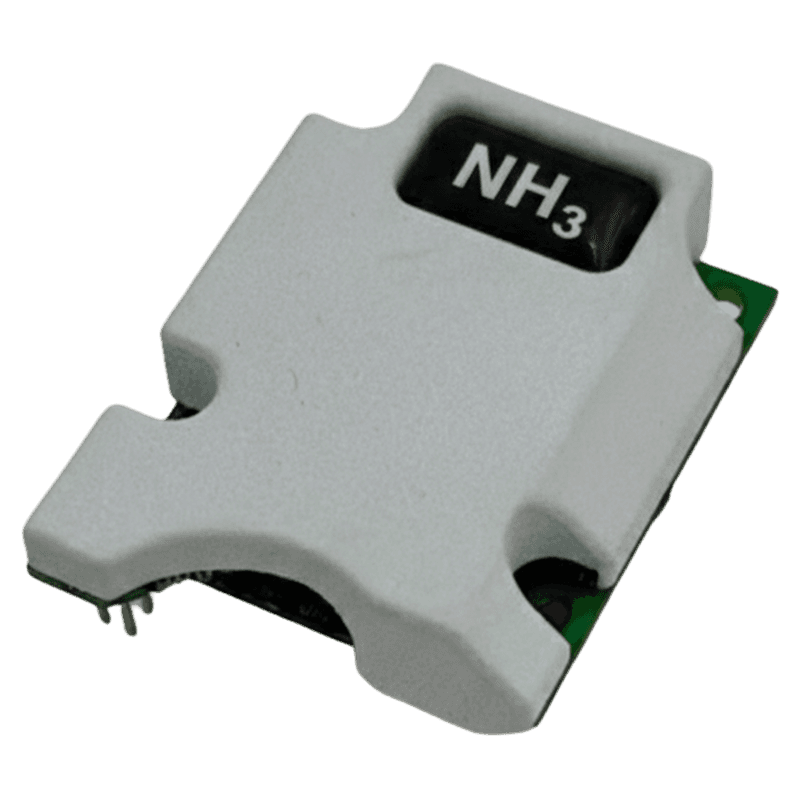
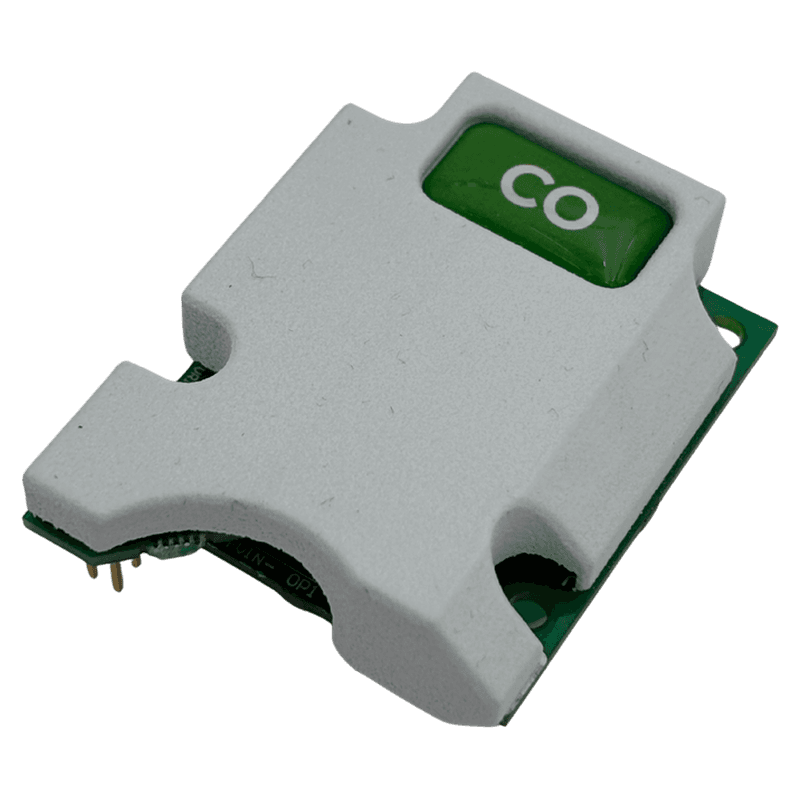
Compact 25 g plug-in module with polyamide enclosure
Compatible with the Air Pro 2 platform
>1 year operational life with field replacement
SPECIFICATIONS
| Sensor Type | Electrochemical |
| Measurement Range | 0 to 2,000 ppb |
| Resolution | 1 ppb |
| Limit of Detection | 2 ppb |
| Repeatability | 5 ppb |
| Typical Accuracy | +/-130 ppb |
| Response Time | <30 sec |
| Guarantee Range | 50 ppm |
| Dimensions | 55 x 40 x 30 mm |
| Weight | 25 gram |
| Enclosure | Polyamide |
| Operating Temperature | -30 to +50 C |
| Operating Pressure | 800 to 1200 hPa |
| Operating Humidity | 15 to 90 %RH |
| Operational Life | >1 Year |
Volatile organic compounds encompass thousands of different chemical species — from the solvents used in paints and coatings to the hydrocarbons emitted by vehicles, industrial processes, and building materials. The Sensorbee VOC Sensor (SB4292) is an electrochemical gas sensor module that provides sensitive ppb-level detection of volatile organic compounds from 0 to 2,000 ppb with 1 ppb resolution and a fast 30-second response time, making it suitable for ambient air quality assessment, emission monitoring, and process control applications.

## What Are Volatile Organic Compounds?

Volatile organic compounds (VOCs) are carbon-based chemicals that evaporate readily at room temperature. The term covers a broad range of substances — the US EPA lists 189 hazardous air pollutants, many of which are VOCs. Common examples include:

| Compound | Typical Sources | Health Concern |
|----------|----------------|----------------|
| **Benzene** | Vehicle exhaust, fuel storage, industrial processes | Classified carcinogen (Group 1, IARC) |
| **Formaldehyde** | Building materials, adhesives, pressed wood | Carcinogen; respiratory and skin irritant |
| **Toluene** | Paints, coatings, printing inks | Central nervous system effects |
| **Xylene** | Solvents, fuel blending, chemical manufacture | Respiratory and neurological effects |
| **Ethylbenzene** | Paints, plastics production | Possible carcinogen |

VOCs are classified by boiling point: very volatile organic compounds (VVOCs, below 50–100 °C), standard VOCs (50–100 °C to 240–260 °C), and semi-volatile organic compounds (SVOCs, 240–260 °C to 380–400 °C).

In outdoor environments, VOCs react with nitrogen oxides in sunlight to form ground-level ozone and secondary particulate matter — making VOC monitoring relevant to broader air quality management beyond the compounds themselves.

Total VOC (TVOC) measurement provides a single aggregated reading of all volatile organic compounds present. While it does not identify individual species, TVOC is widely used as a screening metric for indoor air quality assessment, industrial emission monitoring, and environmental compliance.

## How Electrochemical VOC Detection Works

The VOC sensor uses electrochemical detection technology. VOC molecules diffuse through a gas-permeable membrane and react at a working electrode, producing an electrical current proportional to the VOC concentration. This 25-gram plug-in module integrates with the Air Pro 2 monitoring platform for continuous VOC monitoring.

## Electrochemical vs MOx VOC Sensors

Most low-cost VOC sensors on the market use metal-oxide (MOx) technology — a heated metal-oxide surface that changes resistance when VOC molecules are present. MOx sensors are inexpensive but have significant limitations for quantitative measurement:

| Characteristic | Electrochemical (SB4292) | Metal-Oxide (MOx) |
|----------------|--------------------------|-------------------|
| **Output type** | Absolute ppb concentration | Relative index or unreliable ppb estimate |
| **Specificity** | Responds proportionally to VOC concentration | Broadband-reactive; cross-sensitive to humidity, CO, ethanol |
| **Calibration stability** | Stable calibrated output over sensor life | Sensor drift requires frequent recalibration |
| **Quantitative accuracy** | Suitable for compliance and trending | Sensor manufacturers (Sensirion, Bosch) have moved away from absolute TVOC outputs due to unreliability |
| **Response time** | <30 seconds | Seconds to minutes depending on heating cycle |
| **Best use case** | Ambient monitoring, emission tracking, regulatory reporting | Relative air quality indication (better/worse) |

The Sensorbee VOC Sensor uses electrochemical detection specifically because environmental monitoring applications require quantitative, comparable readings — not a relative "air quality index" that varies with humidity and temperature. When comparing VOC readings between locations or tracking emission trends over time, absolute ppb values are essential.

## Why VOC Monitoring Matters

Volatile organic compounds matter for both health and environmental reasons:

* **Health effects** — many VOCs are irritants at moderate concentrations and some (benzene, formaldehyde) are classified carcinogens. Chronic exposure to elevated VOC levels in indoor and outdoor environments is associated with respiratory symptoms, headaches, and long-term health risks
* **Ozone precursors** — VOCs react with nitrogen oxides in sunlight to form ground-level ozone. Monitoring VOC concentrations helps assess photochemical smog potential and supports ozone management strategies
* **Indoor air quality** — new buildings, renovations, furnishings, and cleaning products release VOCs that affect occupant comfort and health. TVOC monitoring provides a general indicator of indoor air contamination
* **Odour assessment** — many VOCs have low odour thresholds. TVOC measurements complement specific odour gas monitoring (H2S, NH3) at waste and industrial facilities
* **Regulatory compliance** — industrial processes using solvents, coatings, and organic chemicals may face VOC emission limits under environmental permits

## VOC Detection Performance

The VOC sensor covers a 0–2,000 ppb detection range with 1 ppb resolution and a 2 ppb limit of detection — providing the sensitivity to detect low-level indoor air quality changes and ambient VOC concentrations.

The sub-30-second response time (t90) makes this the fastest-responding sensor in the Sensorbee gas sensor range. Fast response is valuable for:

* **Event detection** — quickly identifying VOC release events from industrial processes, spills, or equipment malfunctions
* **Indoor ventilation assessment** — tracking rapid VOC concentration changes when windows are opened, ventilation rates change, or new materials are introduced
* **Mobile monitoring** — capturing spatial VOC profiles when the sensor platform moves through different environments

## VOC Sensor vs Specific Gas Sensors

The VOC sensor provides total volatile organic compound measurement, complementing the specific-gas electrochemical sensors in the Sensorbee range:

* **Specific gas sensors** (NO2, SO2, O3, CO, H2S, NO) measure individual gas species with high selectivity and certified accuracy. Use these when you need to know the exact concentration of a particular pollutant
* **VOC sensor** screens for the presence of organic contamination across multiple VOC species simultaneously. Use this when you need to track emission trends or assess general air quality

For comprehensive monitoring, deploy both — specific gas sensors for regulated pollutants and the VOC sensor for broad organic compound screening.

## Operational Life

The VOC sensor delivers over one year of operational life, consistent with the electrochemical gas sensors in the Sensorbee range. Field-replaceable modules minimise downtime — swap the sensor without replacing the base station.

## Integration With Sensorbee Platforms

The VOC sensor connects to the Air Pro 2 via the M8 connector interface — the same compact, moisture-resistant connector used by the ammonia sensor. The base station handles data acquisition, processing, and transmission to the Sensorbee Cloud.

For indoor air quality applications, combine the VOC sensor with:

* **CO2 sensor (SB4212)** — ventilation adequacy indicator alongside VOC contamination measurement
* **EnviroSense module (SB4502)** — temperature, humidity, and pressure for complete indoor environmental profiling

For industrial and outdoor applications, the VOC sensor complements specific gas sensors to provide a layered monitoring approach — specific pollutant measurement plus broad organic compound screening.

## Applications

* **Indoor air quality monitoring** — TVOC measurement in offices, schools, hospitals, and residential buildings to assess organic contamination from furnishings, cleaning products, and building materials
* **Construction site monitoring** — track VOC emissions from painting, coating, adhesive application, and solvent use during construction and renovation activities
* **Industrial emission monitoring** — perimeter VOC screening at manufacturing facilities, chemical plants, and process operations where organic compounds are used or produced
* **Urban pollution assessment** — TVOC data complements specific pollutant measurements for comprehensive air quality characterisation in urban environments
* **Waste facility monitoring** — detect organic compound emissions at landfills, composting facilities, and waste transfer stations alongside H2S and NH3 monitoring
* **Environmental impact assessments** — VOC baseline and operational monitoring for planning applications involving industrial, commercial, or construction activities

## Frequently Asked Questions

### Can this sensor identify specific VOC species?

No — the VOC sensor provides a total VOC (TVOC) measurement that represents the combined response to all organic compounds present. Identifying individual species (e.g., benzene, toluene) requires gas chromatography instrumentation. The VOC sensor is a screening tool that indicates the presence and magnitude of organic contamination.

### What units does the sensor report?

The sensor reports in ppb (parts per billion), referenced to a standard calibration gas. Because the sensor responds differently to different organic compounds, the ppb reading represents an equivalent concentration rather than a true species-specific measurement. The reading is most accurate for compounds similar to the calibration reference.

### How does humidity affect VOC readings?

The electrochemical sensing element can be influenced by humidity changes. The sensor operates across 15–90% RH, and the Sensorbee platform applies compensation algorithms to minimise humidity-related measurement drift. For highest accuracy, compare VOC data collected under similar humidity conditions.

### Can I use this alongside the H2S and NH3 sensors?

Yes — deploying the VOC, H2S, and NH3 sensors together on the same Air Pro 2 base station creates a comprehensive odour and air quality monitoring system. The H2S sensor detects sulfur-based odour compounds, the NH3 sensor measures ammonia, and the VOC sensor provides broad coverage of organic odour and contamination compounds.

### How does the VOC sensor differ from the specific gas sensors?

The specific gas sensors (NO2, SO2, O3, CO, H2S, NO) are optimised for high selectivity to a single gas species and provide certified accuracy for that pollutant. The VOC sensor is designed for broad-spectrum detection of volatile organic compounds — providing a total VOC reading rather than identifying individual species. Use specific gas sensors for regulated pollutant compliance and the VOC sensor for general organic contamination screening.
Speak to our technical team about specifications, site suitability, and pricing.