Loading...

MCERTS-certified dust, noise, and vibration monitoring for construction sites. Solar-powered, real-time alerts, BS 5228 and BS 7385 compliant. Get a quote.
24/7
Continuous Monitoring
Real-time
Instant Alerts
MCERTS
Certified
Audit-ready
Reporting
RECOMMENDED PRODUCTS
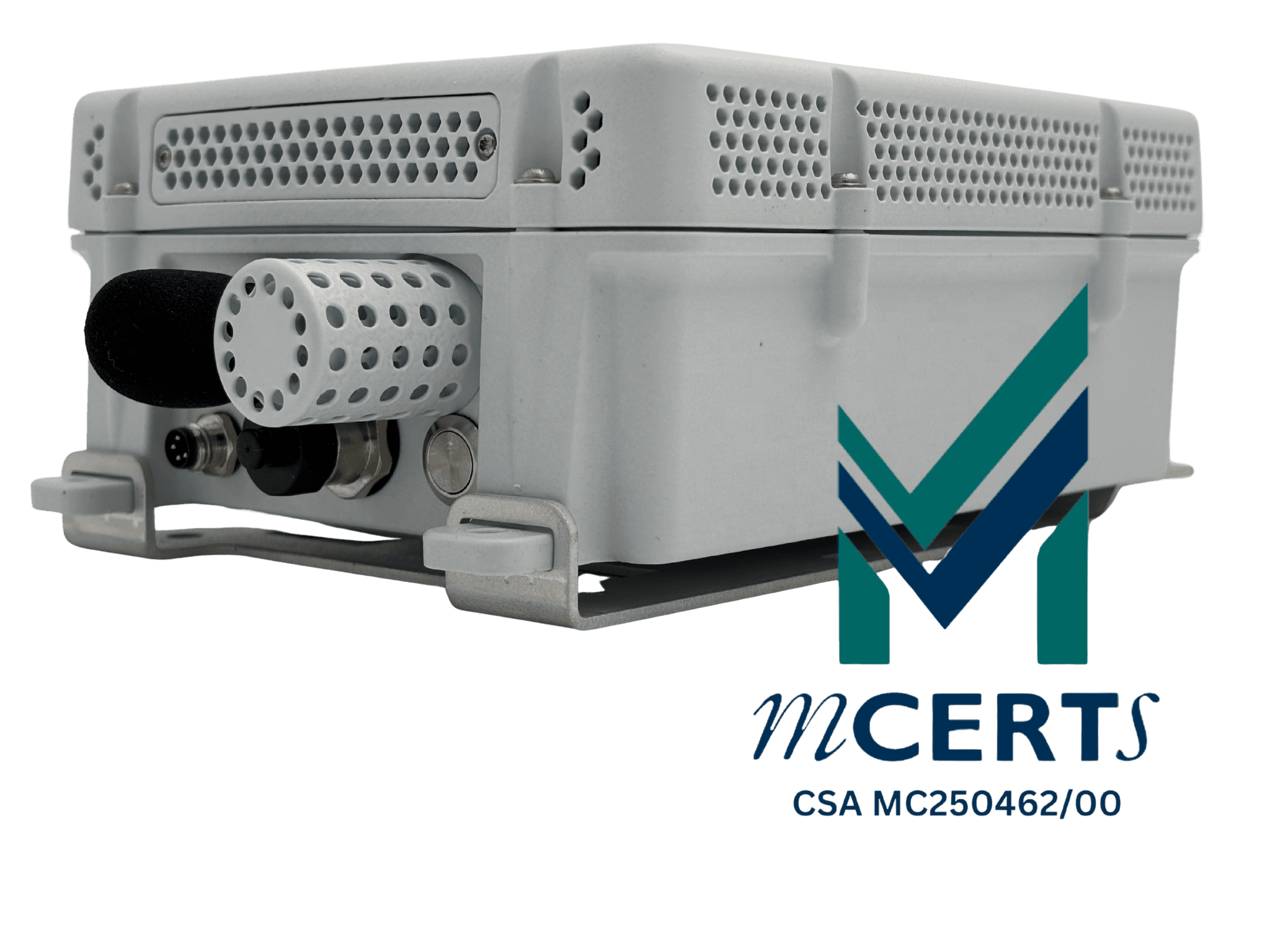
The Sensorbee Air Pro 2 Cellular is a professional air environmental monitoring device. It uses solar power to measure dust, temperature, humidity, and gases. It can connect to extra sensors and shares data via mobile networks. This tool is designed for efficient and eco-friendly monitoring, useful for advanced environmental research and urban management.
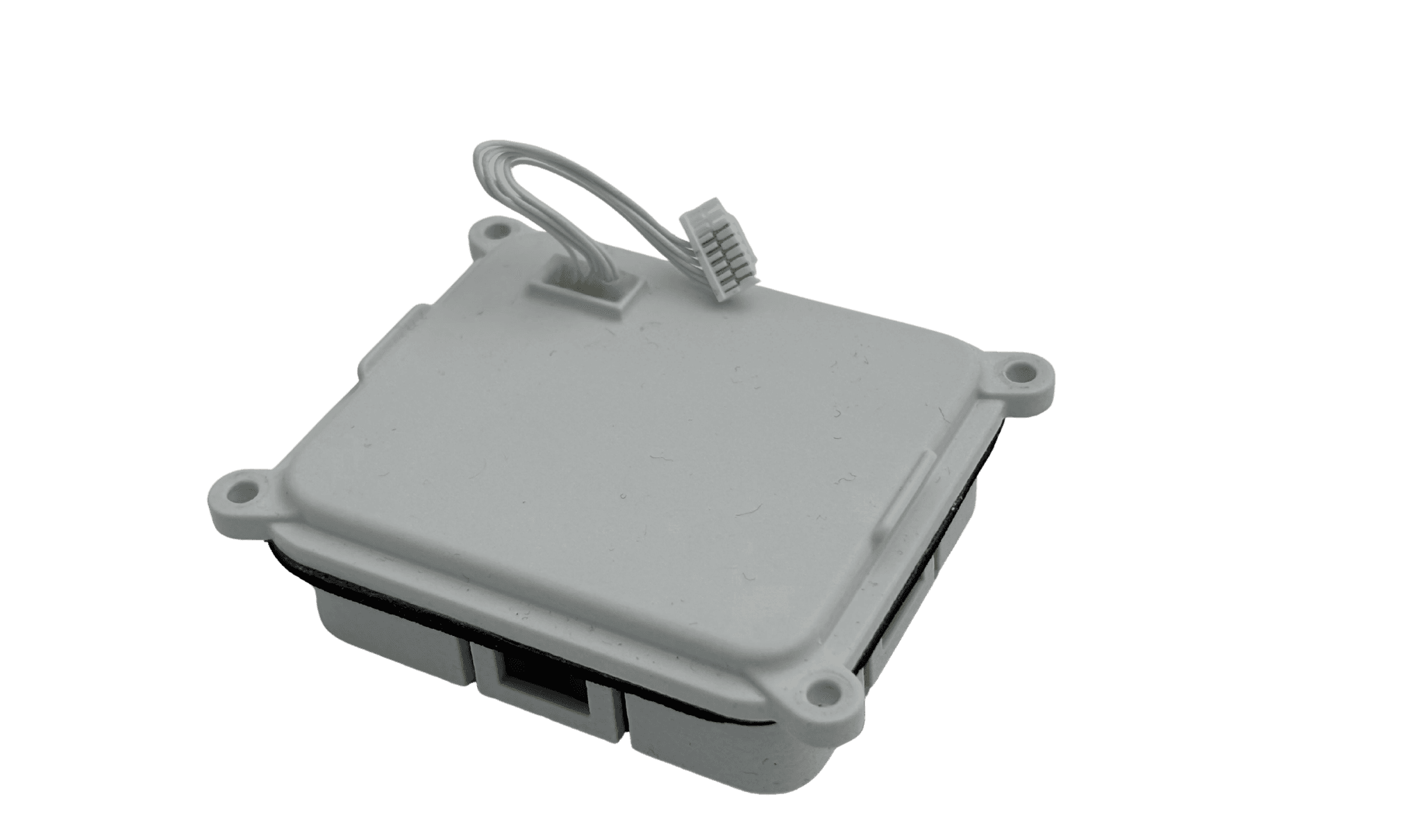
The Particle Matter Module is a rugged high accuracy sensor built for outdoor use. It has a high air flow rate for robust PM10 readings, as well as a heating element that helps improve accuracy in high humidity situations. Each module is individually 3-point calibrated and shipped with its own calibration certificate.
The Sensorbee Sound Level Meter is an add-on product that can be added to the Pro2 unit. It captures real-time noise data with an integrated microphone, analyzes it in A-weighted decibels for human hearing. Configurable alerts and data reporting comply with EU noise regulation directives.
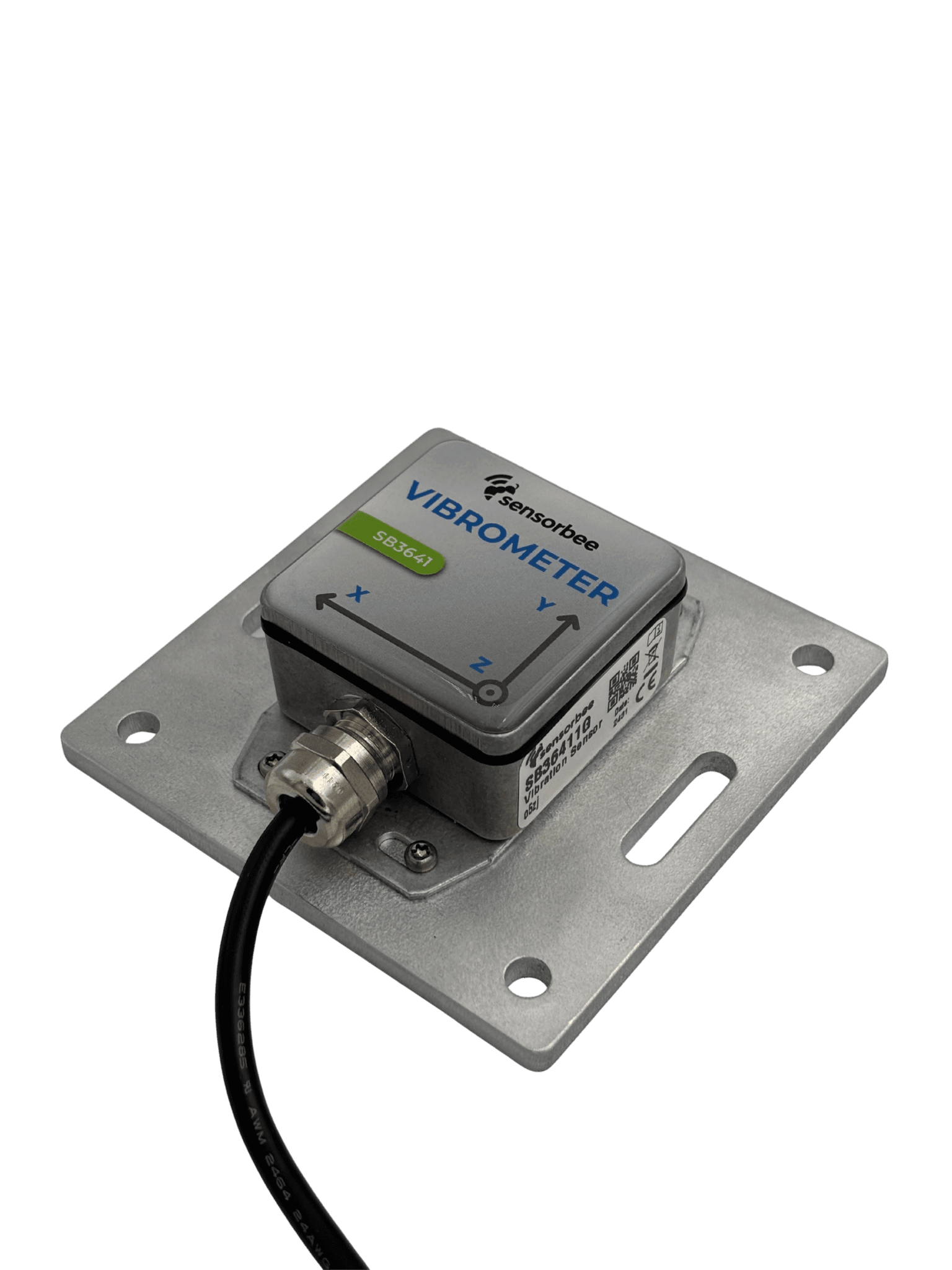
The SB3641 is a durable triaxial vibration sensor for monitoring construction, blasting, and traffic vibrations. It connects seamlessly with the Sensorbee Pro2 base via Modbus RTU and is built for long-term use in harsh environments with its IP67 weatherproof housing. Provides real-time data on Peak Particle Velocity (PPV), Peak Component Particle Velocity (PCPV), and frequency spectrum.
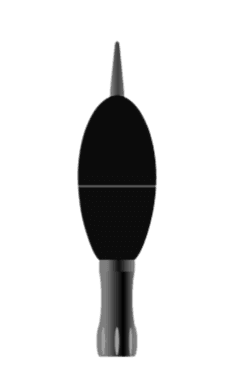
IEC 61672-1 Class 1 sound level meter with stainless steel IP-rated housing. Factory-verified ≤±0.3 dB errors, self-noise <19 dB(A).
Construction is one of the most heavily regulated sectors for environmental impact in the UK. Under Section 61 of the Control of Pollution Act 1974, local authorities can impose prior consent conditions on construction works — specifying acceptable noise levels, permitted working hours, and required monitoring methods. Failure to comply can result in enforcement action, injunctions, and project delays costing thousands of pounds per day.
The regulatory framework extends beyond noise. The Institute of Air Quality Management (IAQM) Guidance on the Assessment of Dust from Demolition and Construction (2014, updated 2023) requires developers to assess dust risk and implement monitoring where sites are classified as medium or high risk. For sites near sensitive receptors — hospitals, schools, residential properties — continuous boundary monitoring is increasingly a planning condition rather than a recommendation.
Vibration adds a third layer of compliance. BS 7385-2 sets guide values for Peak Particle Velocity (PPV) to prevent cosmetic and structural damage, while BS 6472-1 addresses human perception of vibration in buildings. Piling, demolition, and heavy plant movements can all generate ground-borne vibration that exceeds these thresholds if left unmonitored.
Most contractors address these requirements with three separate instruments from different suppliers — a dust monitor, a noise meter, and a vibration sensor — each with its own power supply, data platform, and maintenance schedule. Sensorbee combines all three parameters in a single MCERTS-certified device weighing 1.9 kg, powered entirely by solar energy.
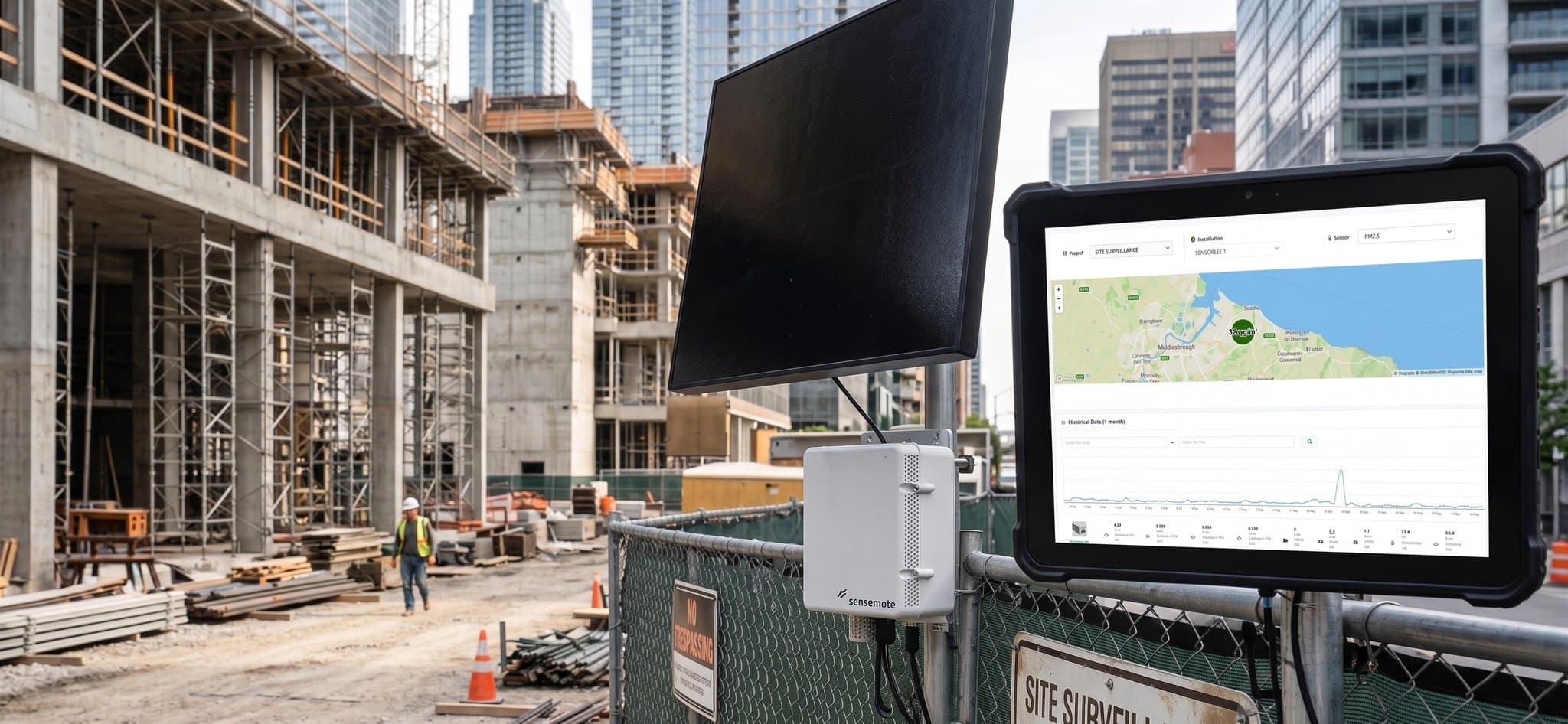
Construction dust monitoring in the UK follows IAQM guidance, which defines the critical PM10 action level at 190 µg/m³ as a 1-hour mean at the site boundary. Sites must also track PM2.5 for health-related assessments, particularly where works are within 350 metres of residential receptors. For a comprehensive overview of particulate matter in the UK — including PM2.5 and PM10 health effects, UK legal limits, and measurement methods — see our monitoring guide. For deployment patterns, thresholds, and Section 61 reporting specific to dust, see our construction dust monitoring page.
The Sensorbee Air Pro 2 measures PM1, PM2.5, and PM10 simultaneously using an optical particle counter with a resolution of 1 µg/m³ and a measurement range of 0–1,000 µg/m³. The MCERTS-certified Particle Matter Module includes a heated inlet that activates above 60% humidity — preventing false readings from fog and condensation that plague uncorrected sensors on exposed construction sites.
Key dust monitoring capabilities:
Dust monitoring data from the Sensorbee cloud platform can be exported directly into Section 61 compliance reports, providing the evidential chain that planning authorities require.
BS 5228-1:2009+A1:2014 (Code of Practice for Noise and Vibration Control on Construction and Open Sites) is the primary standard governing construction noise in England and Wales. It defines the ABC method for setting noise limits based on ambient conditions, with typical daytime thresholds of 65–75 dB LAeq,T depending on the existing noise climate at receptors. For a detailed explanation of decibel meters and noise metrics, see our BS 5228 monitoring guide. For Class 1 deployment, time-of-day thresholds, and Section 61 noise reporting, see our dedicated construction noise monitoring page.
Section 61 prior consent applications require contractors to predict noise levels, specify mitigation measures, and — increasingly — commit to continuous monitoring throughout the project. Local authorities set specific conditions: time-of-day limits (commonly lower thresholds during evenings and weekends), measurement positions, and reporting intervals.
The Sensorbee Sound Level Meter provides the metrics that BS 5228 assessments require:
All noise data is transmitted in real time alongside dust and vibration readings through the same cloud dashboard — eliminating the need for separate noise monitoring equipment or manual site visits to download data from standalone loggers.
Ground vibration from construction activities — piling, demolition, compaction, and heavy vehicle movements — can cause cosmetic cracking, structural damage, and disturbance complaints from neighbouring occupants. For sensor placement, PPV thresholds by receptor type, and BS 7385 reporting workflow, see our dedicated construction vibration monitoring page. BS 7385-2:1993 provides guide values for transient vibration based on building type:
| Building Type | PPV Guide Value |
| Reinforced or framed structures (industrial / commercial) | 50 mm/s at 4 Hz, rising to 50 mm/s at 40 Hz and above |
| Unreinforced or light-framed structures (residential) | 15 mm/s at 4 Hz, rising to 20 mm/s at 15 Hz and 50 mm/s at 40 Hz and above |
BS 6472-1 additionally defines vibration dose values (VDV) for human comfort. Even vibration well below structural damage thresholds can generate complaints if residents perceive repeated events during sensitive hours.
The Sensorbee Vibration Sensor (SB3641) is a triaxial MEMS accelerometer that provides:
The sensor connects via Modbus RTU to the Air Pro 2 base unit, with an IP67-rated aluminium housing designed for ground-level deployment on construction sites. Real-time PPV alerts ensure site managers know immediately when vibration approaches guide values, allowing them to adjust methods before damage occurs.
Most construction site monitoring setups require three separate instruments: a dust monitor, a sound level meter, and a vibration sensor — each from a different manufacturer, each with its own power supply, data platform, and service contract. This means three sets of equipment to install, three systems to maintain, and three dashboards to check.
Sensorbee eliminates this complexity. The Air Pro 2 Cellular integrates dust, noise, and vibration monitoring in a single unit:
This all-in-one approach is not just convenient — it is a genuine differentiator. Competitors such as Casella require separate Guardian2 units for dust-noise-vibration, each needing mains power (100–250 VAC). Aeroqual's Dust Sentry monitors only particulate matter. Kunak and EarthSense do not offer noise or vibration measurement at all.
1. Deploy at boundaries — mount the Air Pro 2 on a pole at each sensitive receptor location around the site perimeter. Connect the solar panel and the unit begins transmitting data immediately via NB-IoT or LTE-M. No Wi-Fi, no cables, no electrician.
2. Set your thresholds — configure alert levels in the Sensorbee cloud platform to match your Section 61 consent conditions: PM10 action levels (typically 190 µg/m³), noise limits (e.g. 75 dB LAeq,T daytime), and vibration PPV guide values per BS 7385-2.
3. Monitor in real time — view live readings from all sensors across the site on a single dashboard. Receive automated SMS or email alerts the moment any parameter approaches its threshold, giving you time to implement dust suppression, adjust working methods, or pause operations.
4. Report with confidence — generate audit-ready compliance reports with timestamped, MCERTS-certified data. Export directly for Section 61 submissions, planning authority reviews, or community liaison meetings.
Construction projects in urban areas often intersect with broader urban air quality monitoring requirements, particularly near Clean Air Zones. Where construction works are adjacent to industrial facilities, coordinated industrial emissions monitoring ensures comprehensive environmental protection for surrounding communities.
What dust monitoring is required on construction sites in the UK?
The IAQM Guidance on the Assessment of Dust from Demolition and Construction requires a dust risk assessment for all sites. Medium and high-risk sites — typically those within 350 metres of sensitive receptors — need continuous PM10 monitoring at site boundaries. Many local planning authorities now make MCERTS-certified monitoring a condition of consent. The critical action level is 190 µg/m³ PM10 as a 1-hour mean.
What are the BS 5228 noise limits for construction?
BS 5228-1 does not set fixed limits. Instead, it provides the ABC method for determining acceptable noise levels based on the existing ambient noise climate at receptors. Typical daytime thresholds for residential areas fall between 65 and 75 dB LAeq,T. Specific limits are set by the local authority as part of Section 61 prior consent conditions, often with lower thresholds for evenings, weekends, and night-time working.
What PPV limits apply to construction vibration under BS 7385?
BS 7385-2 provides guide values expressed as Peak Particle Velocity (PPV). For residential properties (unreinforced or light-framed structures), the guide value is 15 mm/s at 4 Hz, rising to 50 mm/s at frequencies above 40 Hz. For industrial and commercial buildings, the guide value starts at 50 mm/s. These are cosmetic damage thresholds — human perception of vibration occurs at much lower levels (typically 0.3 mm/s), which is why community complaints often arise well before structural risk.
Do I need MCERTS-certified monitoring for construction?
MCERTS certification is not universally mandatory, but it is increasingly required by planning conditions and Environment Agency guidance. MCERTS-certified data carries significantly more weight in regulatory proceedings and dispute resolution. The Sensorbee Air Pro 2 is MCERTS-certified for PM10 and PM2.5 (Certificate No: CSA MC250462/00), tested against the reference-grade Fidas 200S system.
Can Sensorbee monitor dust, noise, and vibration simultaneously?
Yes. The Sensorbee Air Pro 2 is an all-in-one monitoring station that measures PM1, PM2.5, and PM10 (MCERTS-certified), noise (LAeq, LAFmax, Ln statistics), and triaxial vibration (PPV, PCPV, frequency via FFT) — all from a single solar-powered unit. This replaces the need for three separate instruments from different suppliers.
Sensorbee integrates directly with your site management systems and compliance workflows. Download our product catalogue for full technical specifications, or contact our team to discuss your site monitoring requirements.
Contact our team to discuss your specific monitoring requirements.