
Street-Canyon CO Monitoring During Stockholm's Classic Car Cruise
Sveavägen, Stockholm, Sweden
In partnership with

SLB-analys, City of Stockholm
Sveavägen, Stockholm, Sweden
The Challenge: Measuring Both Sides of the Street
Once a year, on the first Saturday of August, hundreds of veteran cars cruise down Sveavägen in central Stockholm. The event pushes carbon monoxide (CO) levels close to the legal limit. Sveavägen is a street canyon, and depending on the wind the highest levels can occur on either side of the street — so both sides need to be measured. The city's fixed monitoring station covers only one side, and setting up a second one for a single day is impractical and expensive.
The Approach: Tested Against the City's Station First
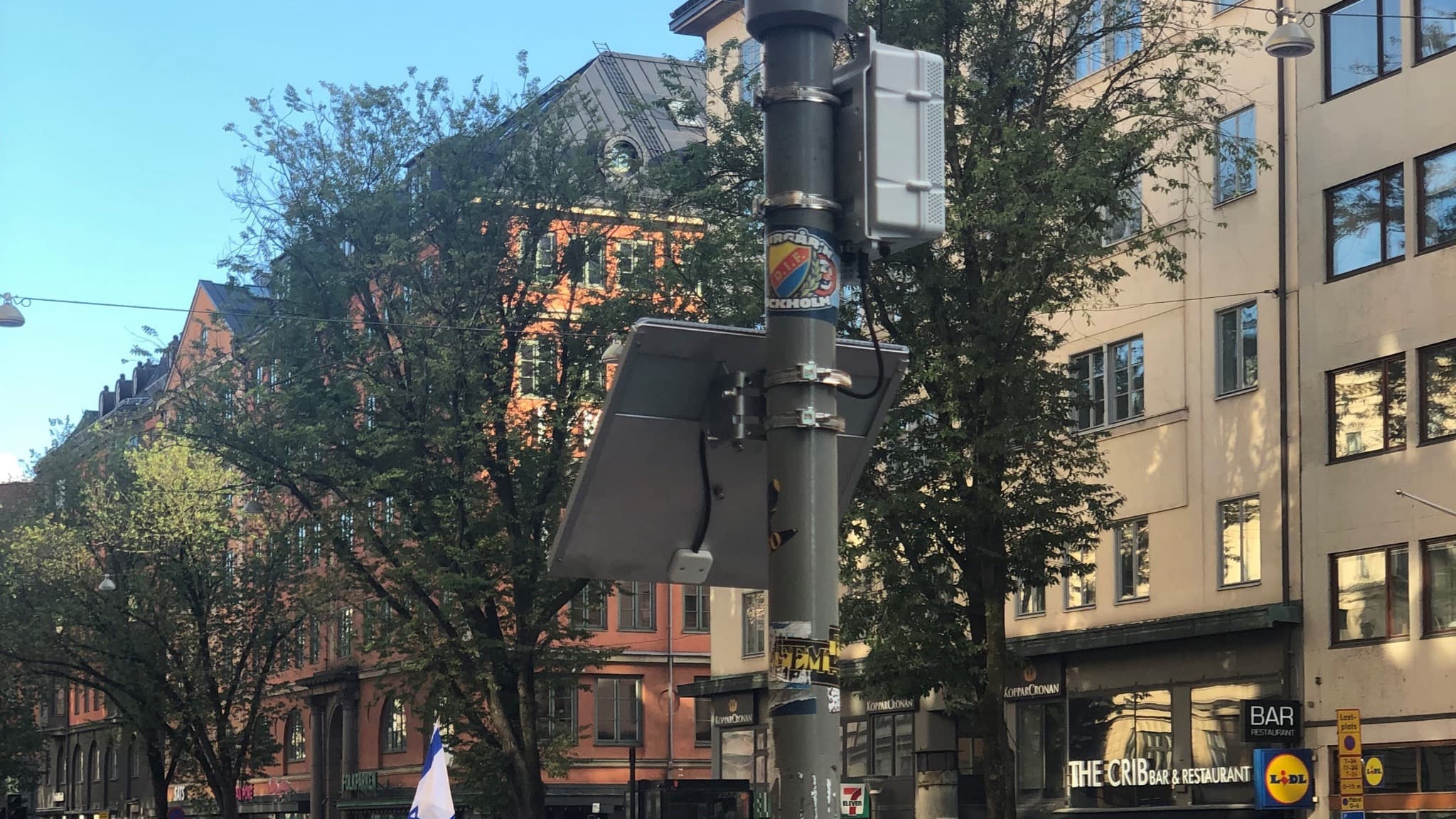
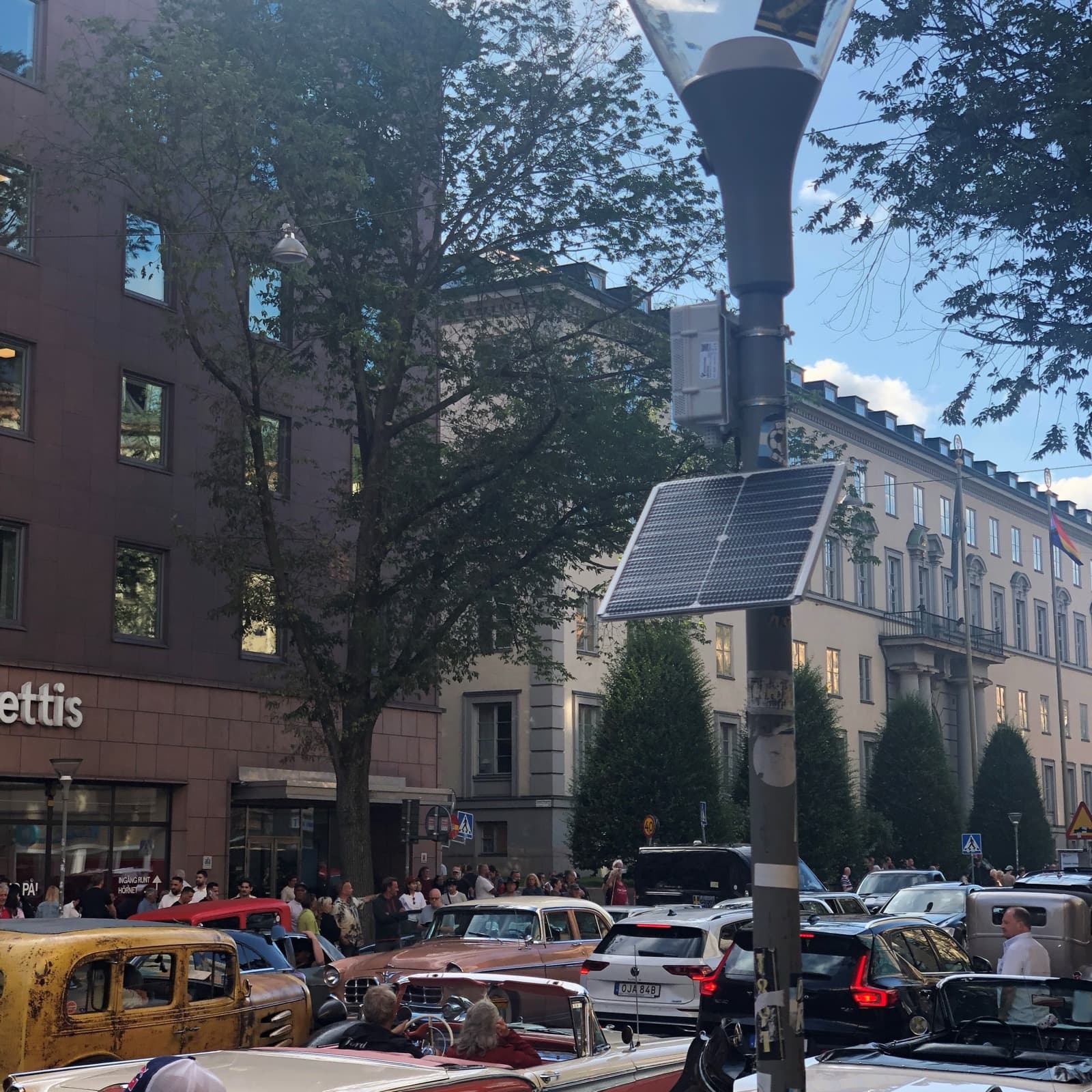
SLB-analys placed a Sensorbee Air Pro 2 next to the city's monitoring station and compared the CO readings. The data matched well, so the team added a second unit, checked the two units against each other, and then moved one across the street. The validation covered carbon monoxide only, and the conclusions in this case study apply to CO alone.
Calibrated for Accuracy
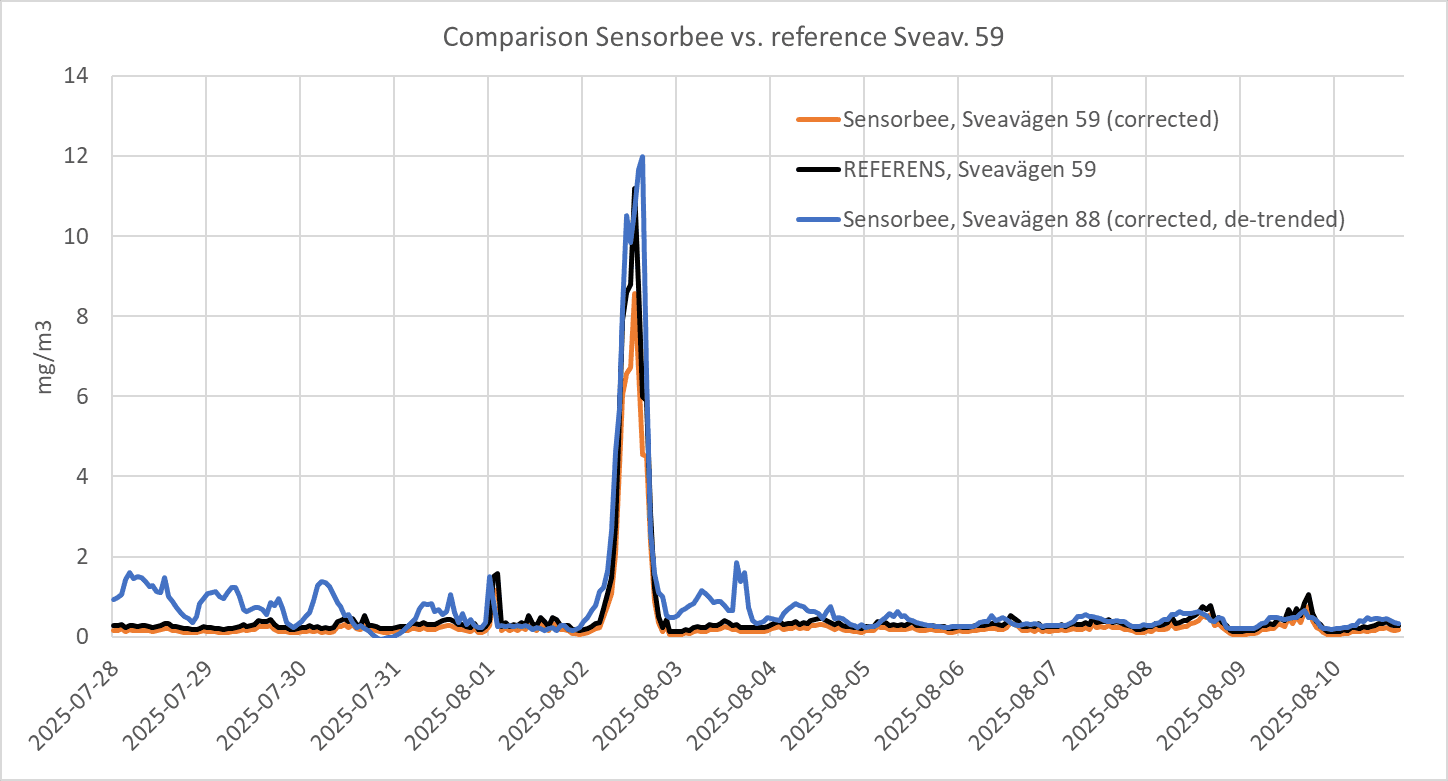
Before the event, the sensor data was calibrated against the city's monitoring station, so that both Sensorbee units reported values directly comparable with the official measurements. After calibration, the sensor data followed the station's instrument closely.
The Result: The Peak Was on the Unmonitored Side
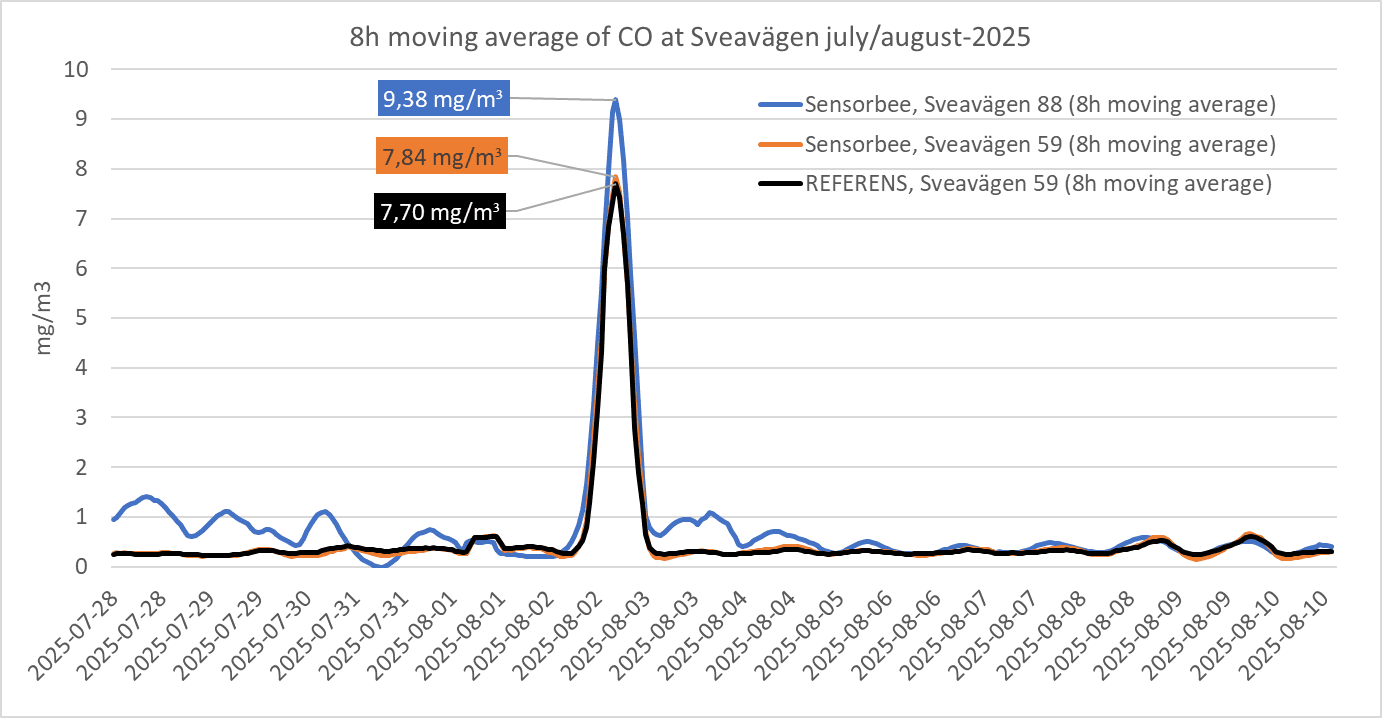
During the event, the highest CO levels appeared on the side of the street with no fixed station — captured only by the Sensorbee unit. The 8-hour average there peaked at 9.38 mg/m³, just under the 10 mg/m³ limit. Stockholm stayed within the limit, and the city knew it from both sides of the street.
Outcome
Trusted results: In SLB-analys's own words: "we are happy with the performance of the Sensorbee sensor and trust the results."
A repeatable method: The team plans to use the same setup at the next cruising event.
Shared with the sensor community: The results have been presented at the Nordic Sensor Network and at a sensor forum hosted by NILU in Norway.