
Posted by Elena Artemenko on · 3 min read
Construction insurance premiums are rising. Climate risk, material inflation, and tighter regulations are all pushing costs up. But one factor is quietly pushing them back down: real-time environmental monitoring data.
Insurers no longer price risk on history alone. They want live evidence that a project is actively managing its exposure. And contractors who can provide that evidence are starting to pay less for coverage.
Underwriting Is Going Real-Time
The shift is already happening in other industries. Fleet telematics cut motor insurance premiums by rewarding safer driving with data. Now construction is following the same path.
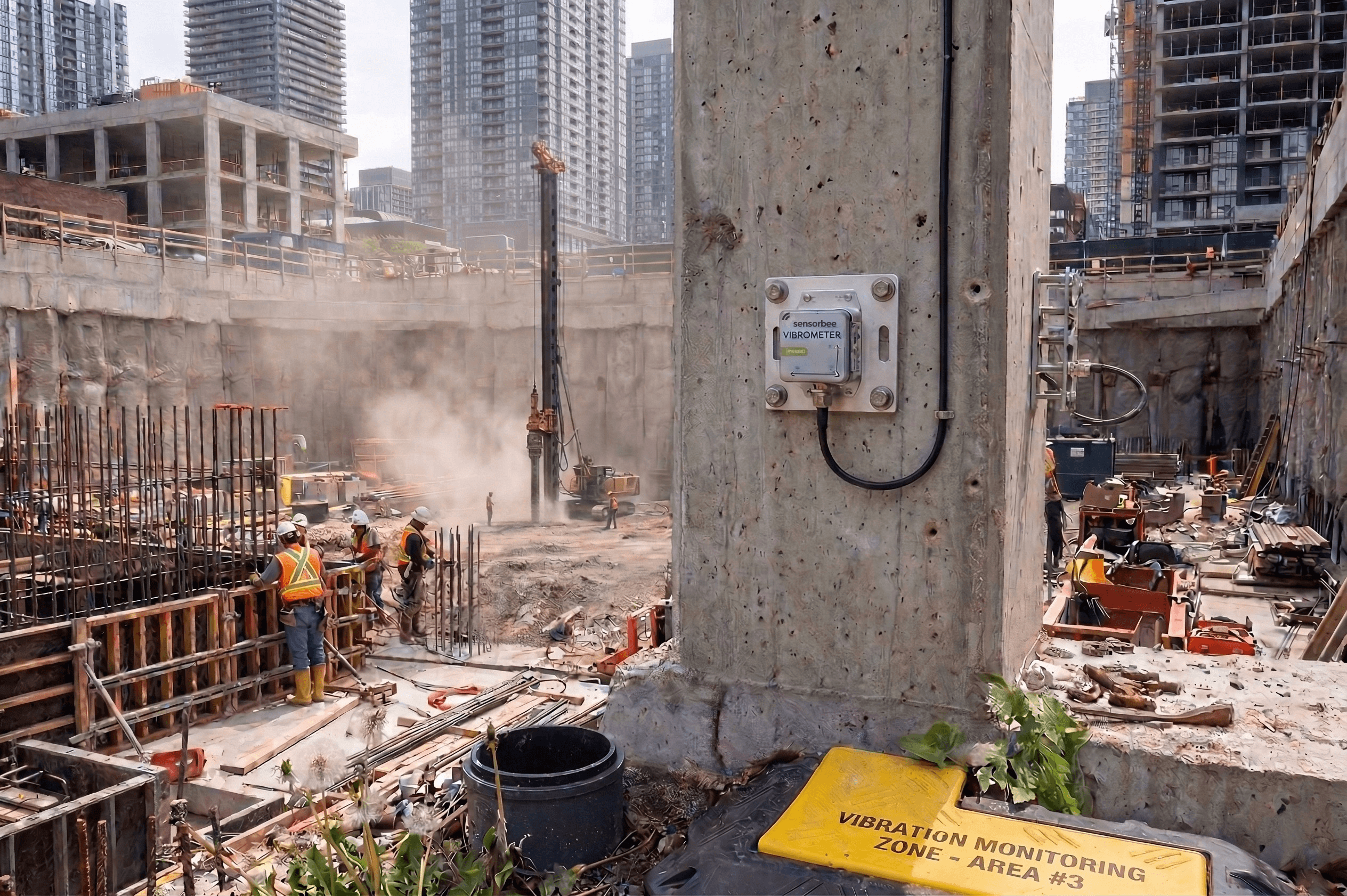
The NAIC identifies IoT sensor data as a key force reshaping insurance underwriting. The logic is simple: a site capturing dust, noise, and vibration readings 24/7 catches threshold breaches before they become incidents. Fewer incidents means fewer claims. Fewer claims means lower premiums.
Industry analyses show IoT-equipped properties have achieved premium reductions of up to 25%. Some insurers are going further — co-investing in sensor deployments on high-value projects as a loss-prevention measure.
A £180,000 Claim Rejected in Two Weeks
A customer-partner shared this case with us — a real project, a real claim, and a result that speaks for itself.
A contractor (name withheld under NDA) piling fifteen metres from a row of period terraces in a major UK city (location withheld under NDA) received a £180,000 structural damage claim from a neighbouring property. Cracked walls, jammed doors — the solicitor's letter arrived within days.
The site had continuous vibration monitors running throughout the works. MCERTS-calibrated, cloud-stored, timestamped to the second. The data showed Peak Particle Velocity never exceeded 60% of the BS 7385 cosmetic damage threshold — not once across the entire piling phase.
The insurer reviewed the logs, cross-referenced them with the piling schedule, and dismissed the claim within two weeks. No settlement. No negotiation. No six-figure payout.
Without that data, the insurer would likely have settled defensively — as routinely happens with vibration disputes where no objective record exists. The monitoring deployment cost less than 5% of what the settlement alone would have been.
What Underwriters Look For
Not all monitoring strengthens an insurance position. The data needs to be:
- ·Continuous — not spot-check readings taken at convenient moments
- ·Timestamped and tamper-evident — stored in a cloud platform that supports third-party audit
- ·Calibrated to recognised standards — MCERTS or EN 15267 certification adds regulatory weight
- ·Multi-parameter — systems covering dust, noise, and vibration from a single device eliminate data gaps that defence lawyers exploit
In short: underwriters want the same thing regulators want — a complete, credible, unbroken record. The difference is that the insurer converts it into a lower price.
Your Compliance Budget Is an Insurance Asset
Most contractors already deploy environmental monitoring to satisfy planning conditions or Section 61 consents. What they miss is the second return on that investment: leverage at insurance renewal.
Urban sites next to residential properties, infrastructure projects with long durations, locations near hospitals or heritage buildings — these are exactly the projects where monitoring data shifts the risk conversation. The cost of continuous monitoring is a fraction of one disputed claim. And as data-driven underwriting becomes standard, the gap between monitored and unmonitored projects will only widen.
Want to see how continuous monitoring data could strengthen your next insurance renewal? Talk to our team.

Elena Artemenko
Operations Support & Finance Assistant