
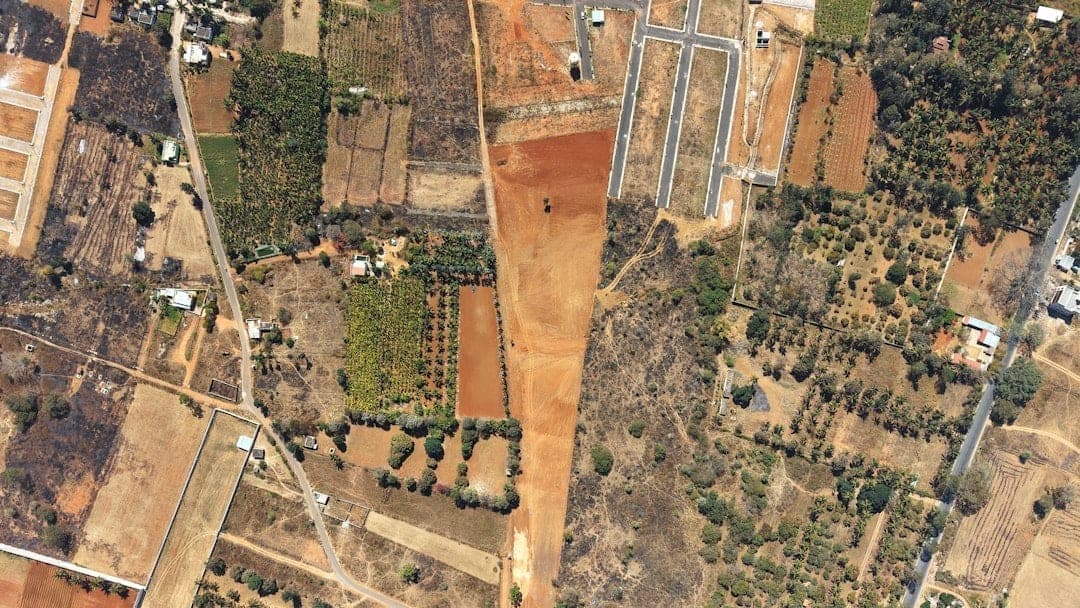
Posted by Filip Sobecki on · 12 min read
The UK government's push to prioritise brownfield development aims to protect green spaces while tackling the housing crisis. Successive policy statements have reinforced a "brownfield-first" approach, directing local authorities to exhaust previously developed land options before releasing greenfield sites for housing.
But brownfield and greenfield sites present fundamentally different environmental monitoring challenges. A former gasworks carries contamination legacies that demand extensive investigation before a single foundation is poured. A greenfield meadow carries no such burden — yet its ecological value and proximity to sensitive receptors create their own monitoring obligations.
Whether you are a developer assessing site feasibility, an environmental consultant scoping a monitoring programme, or a site manager planning compliance during construction, understanding these differences is essential. Getting it wrong means delays, enforcement action, or environmental harm that could have been prevented.
What Is a Brownfield Site?
The National Planning Policy Framework (NPPF) defines brownfield land as "previously developed land" — land which is or was occupied by a permanent structure, including the curtilage of the developed land and any associated fixed surface infrastructure.
Crucially, the definition excludes certain types of land within built-up areas. Residential gardens, parks, recreation grounds, and allotments are not classified as brownfield, even though they sit within developed areas. This distinction matters for planning purposes: a back garden in a suburban street is not brownfield land, regardless of what surrounds it.
Common Examples of Brownfield Sites
- ·Former factories and industrial works
- ·Gasworks and chemical plants
- ·Petrol stations and fuel depots
- ·Decommissioned power stations
- ·Railway sidings and goods yards
- ·Closed landfill sites
- ·Disused military land
- ·Demolished housing estates
The Brownfield-First Policy
The UK government's brownfield-first policy encourages local authorities to prioritise these sites for new housing and commercial development. Since 2017, local planning authorities in England have been required to maintain a Brownfield Land Register — a publicly available list of previously developed sites considered suitable for residential development.
The register serves two purposes. Part 1 lists all brownfield sites that the authority has assessed as appropriate for housing. Part 2 grants planning permission in principle for sites that meet specific criteria, streamlining the development process.
For developers, brownfield sites often benefit from a presumption in favour of development in planning terms. The land has been built on before, local infrastructure typically exists, and regeneration is politically popular. However, the contamination legacy of previous uses introduces monitoring and remediation costs that greenfield development avoids entirely.
What Is a Greenfield Site?
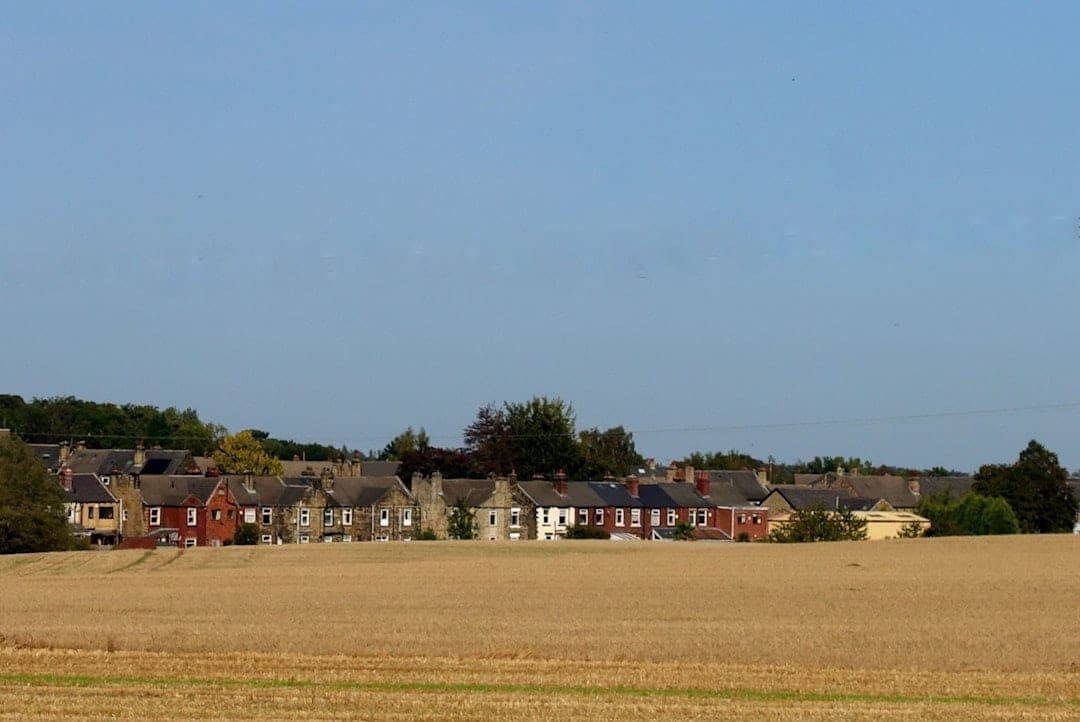
A greenfield site is land that has not previously been built on. This typically means agricultural land, meadows, woodland, or other undeveloped areas on the edges of existing settlements.
Some greenfield land falls within the Green Belt — designated areas around major urban centres where development is heavily restricted to prevent urban sprawl. Green Belt designation adds a further layer of protection beyond the standard greenfield planning considerations, and development within it requires "very special circumstances" to be approved.
Planning Scrutiny for Greenfield Development
Greenfield sites face considerably more scrutiny during the planning process than brownfield equivalents. Applicants must typically demonstrate:
- ·Ecological impact: Habitat surveys, protected species assessments (great crested newts, bats, badgers), and biodiversity net gain calculations under the Environment Act 2021
- ·Flood risk: Sequential and exception tests under NPPF guidance, flood risk assessments for sites in Flood Zones 2 and 3
- ·Landscape and visual impact: Particularly in Areas of Outstanding Natural Beauty (AONBs) or near heritage assets
- ·Agricultural land quality: Development on Best and Most Versatile (BMV) agricultural land (Grades 1, 2, and 3a) faces additional justification requirements
- ·Transport and infrastructure: New roads, utilities, drainage, and public transport connections must be provided from scratch
The critical advantage of greenfield sites from a monitoring perspective is straightforward: they carry no contamination legacy. The soil has not been polluted by industrial processes, no ground gas seeps from former landfill, and no asbestos lurks beneath the surface. This significantly reduces the pre-development investigation burden.
Key Differences for Developers and Planners
Understanding the practical differences between brownfield and greenfield development helps scope monitoring programmes accurately and budget appropriately.
Planning process: Brownfield sites often benefit from a presumption in favour of sustainable development, particularly where they appear on the Brownfield Land Register. Greenfield proposals face greater opposition from local communities and planning committees, with longer determination periods and higher refusal rates.
Contamination risk: This is the defining difference. Brownfield sites may harbour legacy chemicals, heavy metals, hydrocarbons, asbestos, and ground gases from decades of industrial use. Greenfield sites carry negligible contamination risk, unless affected by agricultural chemicals or naturally occurring radon.
Existing infrastructure: Brownfield sites may retain road access, drainage connections, and utility services — though these often require upgrading. Greenfield sites need entirely new infrastructure, adding cost and construction time.
Monitoring requirements: Brownfield development demands pre-construction contamination assessment, potentially spanning months of ground gas monitoring and multiple rounds of soil and groundwater sampling. Greenfield development requires ecological baseline surveys, which are seasonally constrained (some protected species surveys can only be conducted during specific months).
Environmental Impact Assessment (EIA): Both site types may trigger EIA requirements depending on project scale, location sensitivity, and potential environmental effects. Schedule 2 of the Town and Country Planning (Environmental Impact Assessment) Regulations 2017 sets the screening thresholds.
Community response: Brownfield regeneration is typically welcomed by local communities — it removes blight, creates jobs, and repurposes derelict land. Greenfield development frequently attracts organised opposition, particularly from residents concerned about landscape change, traffic, and loss of countryside.
Cost profile: Brownfield development carries higher investigation and remediation costs, sometimes running to millions of pounds for heavily contaminated sites. Greenfield development carries higher infrastructure costs but avoids remediation entirely.
Environmental Monitoring on Brownfield Sites
Brownfield sites carry the heavier monitoring burden. The contamination legacy of previous industrial, commercial, or waste disposal uses demands thorough investigation before, during, and sometimes after development.
Contaminated Land Assessment
Part 2A of the Environmental Protection Act 1990 establishes the regulatory framework for identifying and remediating contaminated land in England and Wales. The regime applies a risk-based approach: contamination is only legally significant where a "significant contaminant linkage" exists between a source, a pathway, and a receptor.
Site investigation follows BS 10175:2011+A2:2017 (Investigation of Potentially Contaminated Sites — Code of Practice). This standard sets out the phased approach to investigation:
- Desk study and site walkover — historical maps, regulatory records, visual inspection
- Exploratory investigation — targeted sampling to confirm or rule out contamination
- Detailed investigation — comprehensive characterisation of confirmed contamination
- Remediation and verification — treatment or removal, followed by validation sampling
Ground Gas Monitoring
Former landfills, gasworks, marshland, and sites with significant organic deposits can generate ground gases including methane (CH₄), carbon dioxide (CO₂), carbon monoxide (CO), hydrogen sulphide (H₂S), and volatile organic compounds (VOCs).
Gas monitoring wells are installed across the site and monitored over multiple visits — typically a minimum of six visits over three months, covering different barometric pressure conditions (rising, falling, and steady). CIRIA C665 (Assessing risks posed by hazardous ground gases to buildings) provides the classification framework, categorising sites from Characteristic Situation 1 (very low risk) to CS5 (very high risk).
For sites where VOC monitoring is required, photoionisation detectors (PIDs) provide real-time screening during intrusive works, while pumped sorbent tube sampling allows laboratory identification of specific compounds.
Soil and Groundwater Contamination
Soil sampling targets contaminants associated with the site's historical use. Common analytes include:
- ·Heavy metals: Lead, arsenic, cadmium, chromium, mercury, zinc
- ·Hydrocarbons: Total petroleum hydrocarbons (TPH), polycyclic aromatic hydrocarbons (PAHs), BTEX compounds (benzene, toluene, ethylbenzene, xylenes)
- ·Asbestos: Fibre identification and quantification in soil
- ·Inorganic compounds: Cyanide (from gasworks), sulphate, pH
Groundwater monitoring wells assess whether contamination has migrated into the water table. Repeat sampling tracks plume migration and evaluates the effectiveness of any remediation measures. Results are compared against Environmental Quality Standards and site-specific assessment criteria.
Ambient Air Quality During Remediation
When contaminated soil is disturbed during excavation or remediation, volatile and semi-volatile contaminants can be released into the air. Dust generated during earthworks on contaminated land carries adsorbed pollutants that pose inhalation risks beyond those of ordinary construction dust.
Perimeter air quality monitoring during remediation works typically includes:
- ·Particulate matter (PM10, PM2.5) — continuous monitoring at site boundaries
- ·VOCs — real-time PID screening and periodic sorbent tube sampling
- ·Specific contaminants — depending on site history (e.g. mercury vapour at former chemical works)
- ·Asbestos fibres — air sampling during demolition or excavation of asbestos-containing materials
This is where construction dust monitoring equipment must work alongside specialist contamination monitoring to provide a complete picture.
Environmental Monitoring on Greenfield Sites
Greenfield monitoring focuses on protecting the existing environment during construction, rather than investigating legacy contamination.
Ecological Surveys
Before construction begins, ecological surveys establish what habitats and species are present. Under the Environment Act 2021, all planning permissions granted in England must deliver a minimum 10% biodiversity net gain (BNG), measured using the statutory biodiversity metric.
Surveys are seasonally constrained — bat activity surveys run from May to September, great crested newt surveys from mid-March to mid-June, breeding bird surveys from March to June. Missing the survey window can delay a project by an entire year.
Baseline Air and Noise Assessment
Establishing pre-development conditions provides the benchmark against which construction impacts are measured. Baseline monitoring typically runs for a minimum of two weeks (air quality) or one week (noise), capturing background levels before any site activity begins.
This baseline data becomes critical when responding to complaints during construction. Without it, there is no evidence to demonstrate whether elevated dust or noise levels are attributable to construction activity or represent pre-existing conditions.
Construction Phase Dust and Noise Monitoring
Most greenfield sites near residential areas will have planning conditions requiring continuous environmental monitoring during construction. The Institute of Air Quality Management (IAQM) guidance on the assessment of dust from demolition and construction recommends site-specific dust risk assessment for all construction projects.
BS 5228-1:2009+A1:2014 sets out the code of practice for construction noise management, including the ABC method for setting trigger levels based on the ambient noise climate and the significance criteria for assessing impact. For more detail on implementing these standards, see our guide to BS 5228 noise monitoring.
Drainage and Water Quality
Greenfield sites require particular attention to surface water runoff. Construction activity strips vegetation cover and compacts soil, dramatically increasing runoff rates and sediment loading. Monitoring obligations typically include:
- ·Turbidity and suspended solids in watercourses downstream of the site
- ·pH monitoring where cementitious materials are used
- ·Oil and fuel interceptor performance
- ·Sustainable Drainage Systems (SuDS) compliance during and after construction
Common Monitoring Parameters for Both Site Types
Regardless of whether a site is brownfield or greenfield, construction activity generates environmental impacts that require monitoring. The key parameters are common to both.
Dust (PM10, PM2.5)
Earthworks, demolition (on brownfield sites), materials handling, vehicle movements, and concrete cutting all generate airborne particulate matter. IAQM guidance recommends trigger levels of 190 µg/m³ (15-minute mean PM10) at the site boundary for high-risk sites, with lower thresholds for medium and low-risk sites.
On brownfield sites, dust monitoring takes on additional significance because particulate matter may carry adsorbed contaminants from the underlying soil. This dual concern — nuisance dust and contaminated dust — means monitoring must be more rigorous and response protocols more immediate.
Noise
Construction noise is assessed against BS 5228 criteria, with the ABC method establishing trigger levels based on the pre-existing ambient noise climate. Typical Section 61 consent limits range from 65 to 75 dB LAeq,T depending on the time period and receptor sensitivity.
Vibration
Where construction activities involve piling, compaction, or demolition near existing structures, vibration monitoring to BS 7385-2:1993 is required. Peak Particle Velocity (PPV) limits are frequency-dependent, with residential structures typically limited to 15 mm/s PPV at 4 Hz, rising to 50 mm/s at frequencies above 40 Hz.
Air Quality on Brownfield Sites
Brownfield remediation may require monitoring for additional pollutants beyond particulate matter. NO₂ from plant and vehicle emissions, VOCs from contaminated soil disturbance, and site-specific contaminants all require consideration. Refer to our MCERTS certification guide for guidance on selecting monitoring equipment that meets regulatory requirements.
For a comprehensive overview of how these parameters work together on construction sites, integrated multi-parameter monitoring provides the most practical and cost-effective approach.
How Sensorbee Supports Site Monitoring
Both brownfield and greenfield construction sites share a common need: reliable, continuous monitoring of dust, noise, and vibration that satisfies planning conditions and provides defensible compliance data.
One Device for Dust, Noise, and Vibration
The Sensorbee Air Pro 2 measures PM1, PM2.5, and PM10 particulate matter alongside noise levels and vibration — all from a single 1.9 kg device. There is no need to procure, install, and manage three separate monitoring systems from three separate vendors.
MCERTS-Certified Measurement
The Air Pro 2 is MCERTS-certified for indicative particulate matter measurement, meaning the data it produces meets the quality standards required by the Environment Agency and local authorities. When a compliance query arises, certified data answers the question before it escalates.
Solar-Powered, No Mains Required
Early-phase construction — whether clearing a brownfield site or breaking ground on greenfield land — rarely has mains power available. The Air Pro 2 operates on solar power, deploying in under five minutes without any electrical infrastructure. As work areas shift and the site evolves, monitors relocate just as quickly.
Real-Time Alerts and Cloud Reporting
Sensorbee Cloud provides real-time data access and configurable alert thresholds. When dust, noise, or vibration levels approach trigger values, site managers receive immediate notification — enabling mitigation measures (damping down, relocating plant, adjusting work methods) before an exceedance occurs.
All data is logged to the cloud platform, providing the continuous compliance record that regulators and environmental consultants need for reporting. No manual data downloads, no spreadsheet manipulation, no gaps in the monitoring record.
Practical for Both Site Types
On brownfield sites, the Air Pro 2 provides continuous perimeter dust monitoring during the remediation and construction phases — complementing specialist contamination monitoring with the real-time PM data that planning conditions require. On greenfield sites, it delivers the construction-phase environmental monitoring that local authorities expect, with MCERTS certification providing the data quality assurance that prevents compliance disputes.
Frequently Asked Questions
What is the difference between brownfield and greenfield sites?
Brownfield sites are previously developed land — land that is or was occupied by a permanent structure and its associated infrastructure. The NPPF definition excludes residential gardens, parks, and allotments. Greenfield sites are undeveloped land, typically agricultural, that has not previously been built on. The key practical difference for monitoring is contamination: brownfield sites may carry a legacy of soil contamination, ground gases, and groundwater pollution from previous industrial use, while greenfield sites generally do not.
What environmental monitoring is required on brownfield sites?
Brownfield sites typically require contaminated land assessment under Part 2A of the Environmental Protection Act 1990, including phased site investigation to BS 10175. Ground gas monitoring (methane, CO₂, VOCs) is needed where the site history suggests potential gas generation — typically a minimum of six monitoring visits over three months. Soil and groundwater sampling identifies the nature and extent of contamination. During construction and remediation, continuous dust, noise, and vibration monitoring is required under planning conditions, with additional air quality monitoring for VOCs and specific contaminants where contaminated soil is being disturbed.
Do you need dust monitoring on greenfield development?
Yes, if the site is near sensitive receptors such as residential properties, schools, hospitals, or ecological sites. The IAQM guidance recommends dust risk assessment for all construction projects regardless of site type. Planning conditions commonly require continuous PM10 monitoring at site boundaries for both brownfield and greenfield development, particularly on medium and large-scale projects. The trigger level for high-risk sites is typically 190 µg/m³ as a 15-minute rolling mean PM10 concentration at the site boundary.
What regulations apply to brownfield remediation?
The primary regulatory framework includes Part 2A of the Environmental Protection Act 1990, which defines the contaminated land regime in England and Wales. The Environmental Permitting Regulations 2016 apply where remediation activities require a permit (e.g. mobile treatment of contaminated soils). The NPPF sets out planning policy requirements for land affected by contamination. Key technical standards include BS 10175 for site investigation, CIRIA C665 for ground gas risk assessment, and CLR11 (Model Procedures for the Management of Land Contamination) for the overarching risk management framework. Remediation strategies must be agreed with the local planning authority and, where groundwater is affected, the Environment Agency.

Filip Sobecki
Production & Logistics Manager