
Gas Sensors
Sensorbee uses two gas-sensing technologies in the Pro series, each picked for the gas being measured.
Gas sensors are only supported on the Sensorbee Pro series (Air Pro 2 and Modbus Pro). The Lite-series units do not have gas-sensor bays.
Sensor technologies
Electrochemical
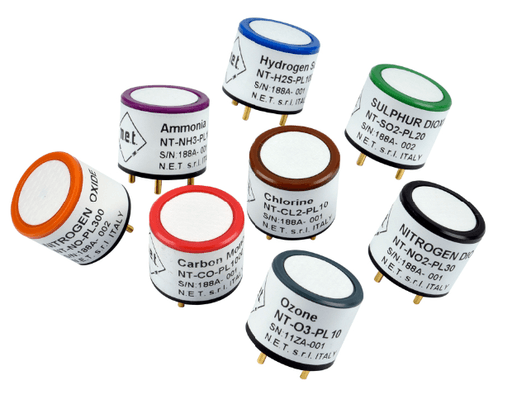
Electrochemical sensors react with the target gas and produce an electrical current proportional to its concentration. They're long-established in industrial monitoring and cover most common air-quality gases. The maths for converting the raw current into a ppm or ppb value — including baseline offset, sensitivity, and temperature compensation — is described in Gas Sensor Calculations.
Photoacoustic
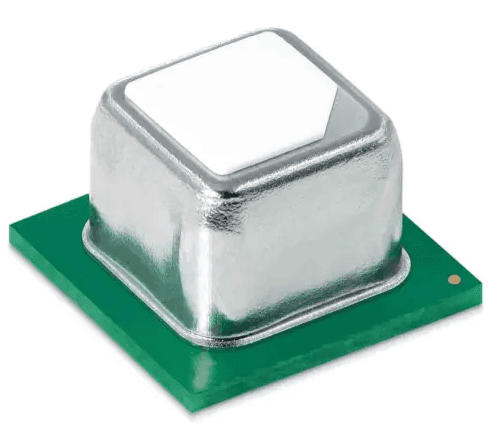
Photoacoustic sensors use modulated infrared light at a wavelength absorbed by a specific gas (CO₂ in our case). The absorption produces an acoustic wave that's detected by a microphone and converted to an electrical signal proportional to gas concentration.

Available gases
Up to three gas sensors can be fitted to a single Pro-series unit. The current range:
| Gas | SKU | Notes |
|---|---|---|
| Carbon dioxide (CO₂) | SB3541 | Photoacoustic. Useful for indoor air quality and ventilation. |
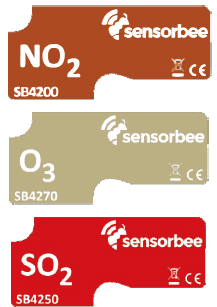
| Nitrogen dioxide (NO₂) | SB4200 | Electrochemical. Common in vehicle and industrial emissions. |
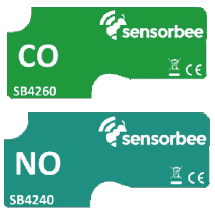
| Nitric oxide (NO) | SB4240 | Electrochemical. Often a precursor to NO₂; combustion byproduct. |
| Sulphur dioxide (SO₂) | SB4250 | Electrochemical. From fossil-fuel combustion. |
| Carbon monoxide (CO) | SB4260 | Electrochemical. Incomplete combustion byproduct. |
| Ozone (O₃) | SB4270 | Electrochemical. Component of smog. |
For per-gas datasheets, see the Datasheets section.
Installation
Power down the unit before opening it. Air Pro 2: hold the power button for 4 seconds — wait for the LED to turn red for about 30 seconds and then off. Modbus Pro: disconnect incoming power at the terminal block.
For the full step-by-step procedure with figures, see Installation of Gas Sensors (Air Pro 2). The procedure on the Modbus Pro is the same.
In short:
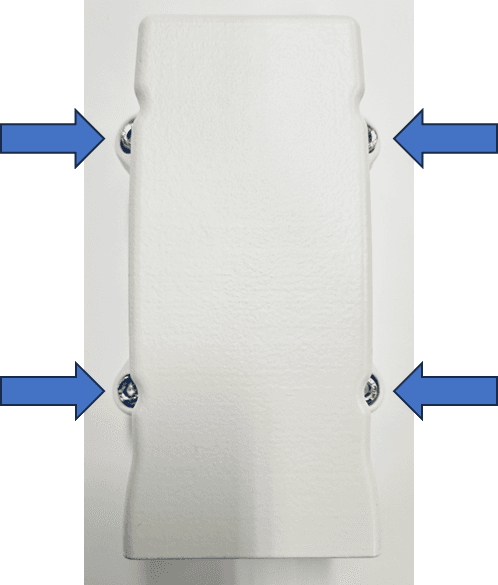
- Open the sensor house with a PH2 Phillips screwdriver.
- Place the sensor house upside-down next to the base, leaving the cable connected.
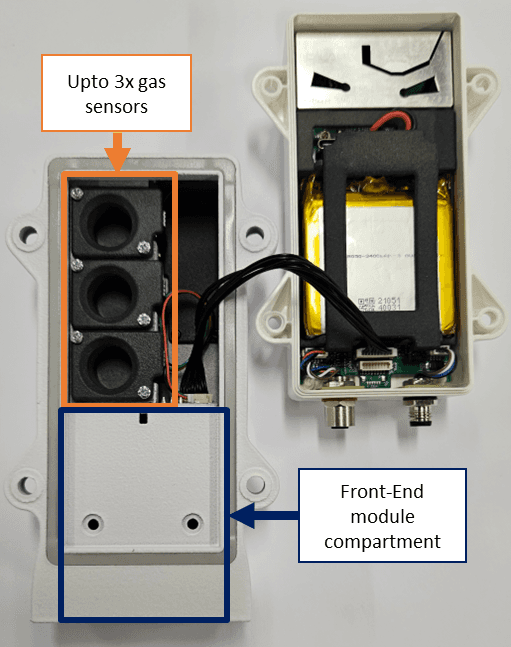
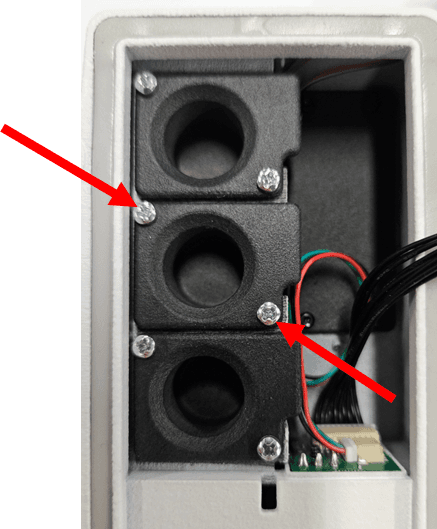
- Use a small Phillips-head screwdriver to remove the blanking plug or the old gas sensor. For removing an old sensor, use small pliers on the edges of the sensor casing.
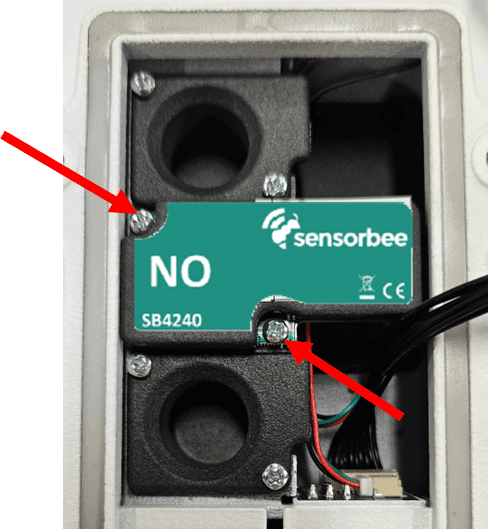
- Align the new sensor with the mounting holes and four-pin connector, press it in, and secure the screws.
- Refit the sensor house with the PH2 Phillips screwdriver.
Double-check the cable between the sensor house and base isn't pinched in the seal.
Electrochemical sensors need to stabilise after power-on — usually several hours. Plan for this when validating readings.
For replacement-as-maintenance specifically, see Replace Gas Sensors.