

Posted by David Löwenbrand on · 7 min read
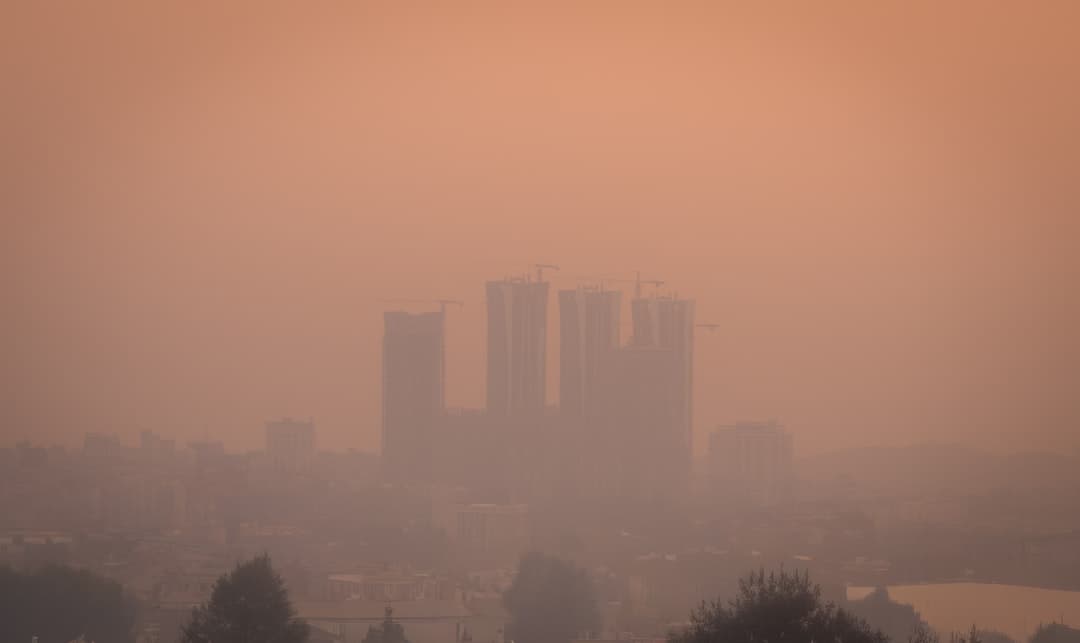
Roughly 300,000 Europeans die prematurely each year from breathing polluted air. Fine particulate matter (PM2.5) alone accounts for 238,000 of those deaths across EU member states, with another 49,000 linked to nitrogen dioxide (NO2) exposure. These are not projections. They are recorded outcomes from the European Environment Agency's 2020 assessment.
Air pollution remains the continent's largest environmental health risk. And despite decades of regulation, 96% of urban residents in the EU still breathe air exceeding World Health Organisation guideline levels.
The Scale of Europe's Air Quality Problem
The health burden of polluted air extends well beyond mortality statistics. Chronic exposure to PM2.5 at concentrations above 10 ug/m3 (the WHO annual guideline) increases rates of cardiovascular disease, stroke, chronic obstructive pulmonary disease, and lung cancer. Children exposed to elevated NO2 levels develop reduced lung function that persists into adulthood.
The economic cost is equally severe. The European Commission estimates air pollution-related health damage costs EU economies between EUR 330 billion and EUR 940 billion annually, accounting for healthcare expenditure, lost productivity, and crop damage.
These impacts do not fall evenly. Lower-income communities, often situated near major roads or industrial zones, bear a disproportionate burden. Schools adjacent to congested intersections, care homes near freight corridors, and housing estates downwind of factories all face elevated exposure that wealthier areas avoid.
EU Directive 2024/2881: Tighter Limits, Stronger Enforcement
In late 2024, the European Parliament adopted the revised Ambient Air Quality Directive (EU) 2024/2881 as part of the European Green Deal. The directive introduces several substantial changes.
Stricter pollutant limits. The annual PM2.5 limit drops from 25 ug/m3 to 10 ug/m3, bringing it closer to the WHO guideline of 5 ug/m3. NO2 annual limits tighten from 40 ug/m3 to 20 ug/m3. These are legally binding targets that member states must meet by 2030, with limited extensions available under strict conditions.
Enhanced monitoring requirements. Member states must expand their monitoring networks to provide better spatial coverage, particularly in urban areas where pollution varies significantly over short distances. The directive recognises that sparse networks of reference stations miss localised pollution hotspots.
Citizen compensation rights. For the first time, EU citizens whose health is damaged by illegal pollution levels can seek compensation from national authorities. This creates direct accountability for member states that fail to meet air quality standards.
Mandatory air quality plans. Local and regional authorities must develop enforceable air quality management plans when limits are exceeded, with clear timelines and measurable actions.
What the Directive Means for the UK
Although the UK is no longer an EU member state, the directive's influence is significant. UK environmental regulations historically aligned with EU standards, and many UK industries, consultancies, and local authorities continue to reference EU frameworks.
The UK's own Environment Act 2021 sets a PM2.5 annual mean target of 10 ug/m3 by 2040, with an interim target of 12 ug/m3. While less aggressive than the EU's 2030 timeline, the trajectory is clear: tighter limits require denser monitoring.
For environmental consultants and local authorities managing air quality across the UK, the practical challenge is identical to their European counterparts. Existing reference station networks, typically spaced kilometres apart, cannot capture the street-level variation that drives actual human exposure.
Why Traditional Monitoring Falls Short
Europe's existing air quality infrastructure relies heavily on reference monitoring stations. These are precise instruments, but they present three fundamental limitations for meeting tighter directive requirements.
Cost. A single reference station costs EUR 120,000 to EUR 300,000 to install and EUR 18,000 to EUR 36,000 annually to operate, covering calibration gases, filter replacements, climate-controlled housing maintenance, and regular technician visits. At these price points, most cities operate fewer than 10 stations across their entire jurisdiction.
Coverage. With stations spaced kilometres apart, pollution from a congested junction, a construction site, or an industrial facility goes unrecorded. Residents in a heavily polluted street may live within the coverage area of a station reporting clean air from a park two kilometres away.
Responsiveness. Reference stations typically report hourly or daily averages. Acute pollution events lasting 30 to 60 minutes, such as those caused by traffic surges or industrial releases, are averaged out of the data.
Indicative Monitoring Networks Fill the Gap
The revised directive explicitly encourages the use of indicative monitoring alongside reference stations. Indicative monitors, when independently certified, provide data quality suitable for regulatory assessment at a fraction of the cost of reference equipment.
Dense networks of indicative monitors achieve what sparse reference networks cannot: spatial resolution sufficient to identify where pollution concentrations actually exceed limits and where interventions will have the greatest effect. City-scale deployments are already proving this approach — Newcastle and Gateshead operate a network of 55 sensor pods across their urban area as part of the Urban Observatory project, while Minneapolis and St Paul deployed 50 units mapping live pollution levels across both cities.
A network of 50 MCERTS-certified indicative monitors deployed across a city costs less than two reference stations while providing pollution mapping at 200-metre resolution. This data density transforms air quality management from reactive compliance reporting into proactive source identification.
Practical Applications Under Tighter Standards
The new limits create specific monitoring demands across multiple sectors.
Urban air quality management. Cities approaching the 10 ug/m3 PM2.5 limit need to identify which streets, junctions, and corridors drive exceedances. Dense sensor networks measuring PM2.5, PM10, NO2, and O3 in real time allow targeted interventions such as traffic rerouting, low-emission zone enforcement, and construction activity scheduling.
Construction and demolition. Projects generating fugitive dust emissions require continuous perimeter monitoring to demonstrate compliance with local air quality targets. As limits tighten, the margin for exceeding thresholds shrinks. Real-time dust monitoring with automated alerts enables immediate mitigation rather than retrospective enforcement.
Industrial perimeter monitoring. Facilities operating under environmental permits must demonstrate that boundary emissions remain within consent conditions. Lower ambient limits mean that the same level of industrial emissions may now cause an exceedance where previously it would not.
Port and airport operations. Transport hubs generate concentrated pollution from vehicle movements, fuel handling, and machinery. Monitoring networks around these facilities provide the evidence base for emissions reduction planning required under the directive.
How Monitoring Technology Responds
Meeting the directive's monitoring demands requires equipment that balances data quality with deployment practicality. The Sensorbee Air Pro 2 addresses this balance through several design principles.
Multi-pollutant measurement. Simultaneous monitoring of PM1, PM2.5, PM10, NO2, O3, CO, SO2, and VOCs from a single unit provides the comprehensive dataset the directive's air quality plans require.
Solar-powered operation. No mains electricity means monitors can be placed where pollution actually occurs rather than where power infrastructure exists. This is essential for the expanded spatial coverage the directive mandates.
Cellular data transmission. Real-time data streaming via NB-IoT or LTE-M eliminates the need for wired data connections. The cloud platform provides instant access to measurements, automated threshold alerts, and long-term trend analysis.
MCERTS certification. Independent certification by the UK Environment Agency confirms data quality suitable for regulatory applications, directly satisfying the directive's emphasis on validated monitoring data.
What Comes Next
The EU's 2030 compliance deadline is not distant. Member states must begin demonstrating progress through expanded monitoring, enforceable action plans, and measurable pollution reductions.
For the UK, parallel pressure comes from domestic targets, public health evidence, and the practical reality that tighter standards are inevitable. Organisations that invest in monitoring infrastructure now build the data foundation needed when stricter limits arrive.
The shift from sparse, expensive reference networks to dense, affordable indicative networks is not a future possibility. It is an operational necessity driven by regulatory timelines and the health evidence that underpins them.
Frequently Asked Questions
What is EU Directive 2024/2881?
The revised EU Ambient Air Quality Directive adopted in late 2024 sets tighter legally binding limits for air pollutants, including reducing the annual PM2.5 limit from 25 ug/m3 to 10 ug/m3 by 2030. It also strengthens monitoring requirements, mandates enforceable air quality plans, and introduces citizen compensation rights for health damage caused by illegal pollution levels.
Does the EU air quality directive affect the UK?
The UK is no longer bound by EU directives, but UK environmental policy follows a similar trajectory. The Environment Act 2021 sets a PM2.5 target of 10 ug/m3 by 2040. UK consultants, local authorities, and industries working with European partners or referencing EU standards are directly affected by the directive's requirements.
How many air quality monitors does a city need?
Coverage depends on population density and pollution source distribution. The directive requires enhanced spatial coverage beyond traditional reference station networks. A mid-sized European city typically needs 30 to 80 indicative monitors to achieve the street-level resolution necessary for identifying exceedance hotspots and evaluating intervention effectiveness.

David Löwenbrand
Founder & CEO