
Posted by Oscar Sjöberg on · 8 min read
Air quality monitoring has evolved from manual smoke observations to sophisticated sensor networks that measure pollutants continuously and transmit data to cloud platforms within seconds. But what actually happens inside an air quality monitor? How does a compact device detect invisible gases at concentrations measured in parts per billion, or count individual airborne particles smaller than a human blood cell?
Understanding how these monitors work is not academic curiosity. It directly affects which monitoring approach fits your project, how much confidence you can place in the data, and whether regulators will accept your results. This guide explains the core technologies behind modern air quality monitoring equipment — from reference-grade stations to compact sensor networks — and what separates trustworthy data from unreliable readings.
Reference-Grade Monitoring Stations
Reference stations are the gold standard of air quality measurement. In the UK, the Automatic Urban and Rural Network (AURN) operates 184 such stations, forming the backbone of national compliance monitoring. Each station houses dedicated analytical instruments operating on distinct measurement principles:
Gravimetric sampling for particulate matter. Defined by EN 12341:2023, air is drawn through a size-selective inlet and particles collect on a pre-weighed filter over 24 hours. The mass difference gives the concentration. Simple in principle, labour-intensive in practice.
Chemiluminescence for NOx. Nitric oxide reacts with ozone in a reaction chamber, producing light proportional to concentration. To measure NO2, the sample passes through a converter that reduces NO2 to NO, and the difference gives the NO2 reading.
UV fluorescence for SO2. Ultraviolet light excites SO2 molecules, which emit fluorescent light proportional to their concentration.
UV absorption for O3. Ozone absorbs UV light at 254 nm following the Beer-Lambert law. The instrument compares transmission through the sample against ozone-scrubbed reference air.
These stations deliver exceptional accuracy but at substantial cost: £100,000+ per station, plus £15,000–30,000 annually for maintenance and data validation. With only 170 stations covering the entire UK, spatial coverage is inherently sparse.
Low-Cost Sensor Networks
Sensor networks achieve what reference stations cannot: spatial density. A network of 50 indicative monitors costs less than two reference stations while providing street-level pollution mapping. The PM2.5 difference between a main road and a parallel residential street 100 metres away can be a factor of two — detail that a single reference station misses entirely.
These networks use compact, low-power sensors designed for unattended outdoor operation over months or years. The key sensor types — optical particle counters, electrochemical gas cells, and photoacoustic detectors — are explored in detail in the sections that follow.
What bridges the gap between cost and data quality is certification. In the UK, the Environment Agency's MCERTS scheme certifies indicative monitoring equipment that meets defined performance standards. An MCERTS-certified sensor network does not replace the AURN, but it does produce data that regulators accept for permit compliance, planning condition discharge, and enforcement evidence.
How Particulate Matter Sensors Work
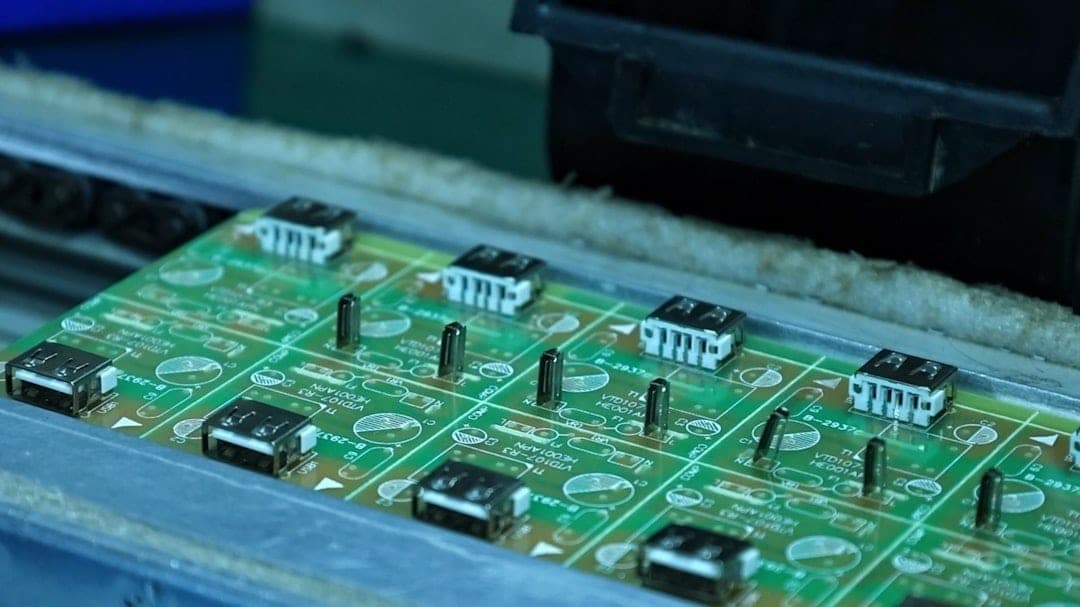
Airborne particulate matter is measured using three main methods.
Optical particle counting (laser scattering) is the dominant technology in compact monitors. A laser beam illuminates particles drawn through the sensor; photodetectors measure scattered light. Scattering intensity correlates with particle size, so the sensor builds a size distribution and converts particle counts to mass concentration (µg/m³) using correction algorithms.
The Sensorbee Particle Matter Module (SB4102) uses this approach: an optical particle counter with 2.5 lpm airflow measuring PM1, PM2.5, and PM10 simultaneously at 1 µg/m³ resolution with ±5% precision for PM2.5 and ±10% for PM10. A heating element activates above 60% humidity to drive off surface moisture from hygroscopic particles — critical for accuracy in UK conditions. Each module is individually factory calibrated with a certificate, not batch calibrated.
Beta attenuation monitoring (BAM) collects particles on filter tape and passes beta radiation through the deposit. Attenuation is proportional to collected mass, providing a direct measurement used in some reference-grade instruments.
Nephelometry measures total light scattered by all particles in a volume simultaneously, giving a bulk reading of particle loading rather than individual particle counts.
For regulatory acceptance, non-gravimetric sensors must demonstrate equivalence to EN 12341 through extended field collocation — typically 12+ weeks alongside gravimetric reference samplers across varied conditions. For more on PM size fractions and their health significance, see our particulate matter monitoring guide.
How Gas Sensors Work
Gas detection relies on technologies that exploit the chemical or physical properties of target gases.
Electrochemical cells are the workhorses of environmental gas detection. The target gas diffuses through a membrane, reacts at an electrode surface, and generates current proportional to concentration. A typical cell has three electrodes (sensing, counter, and reference) immersed in electrolyte. Sensorbee uses electrochemical sensors for:
- ·NO2 (SB4202): 0–10,000 ppb, 1 ppb resolution, ±7 ppb accuracy
- ·SO2 (SB4252): 0–10,000 ppb, 1 ppb resolution, ±15 ppb accuracy
- ·CO (SB4262): 0–7,000 ppb, 10 ppb resolution, ±80 ppb accuracy
- ·H2S (SB4282): 0–2,000 ppb, 1 ppb resolution, ±10 ppb accuracy
- ·O3 (SB4272): 0–10,000 ppb, 1 ppb resolution, ±8 ppb accuracy
Cross-sensitivity is a known challenge — an NO2 sensor may respond weakly to ozone since both are oxidising gases. Sensor design and on-board algorithms minimise these interferences. See our NO2 monitoring guide for more detail.
Photoacoustic sensors illuminate sample gas with modulated infrared light at a wavelength the target absorbs. Absorption heats the gas, causing pulsed expansion that generates a sound wave detected by a microphone. Sensorbee's CO2 sensor (SB4212, 0–40,000 ppm, 1 ppm resolution) and EnviroSense module (SB4502) use this technology, which offers excellent long-term stability.
Photoionisation detection (PID) measures total VOC concentration by exposing sample air to UV light that ionises organic molecules. The resulting ion current is proportional to VOC levels. PID is useful for screening across a broad range of compounds. See our VOC monitoring guide.
Non-dispersive infrared (NDIR) measures CO2 by detecting infrared absorption at 4.26 µm, with a reference wavelength compensating for lamp ageing and contamination.
How Noise and Vibration Sensors Work
Environmental monitoring increasingly combines air quality with noise and vibration — driven by the regulatory reality that construction sites must demonstrate compliance across dust, noise, and vibration simultaneously under Section 61 consents.
Noise is measured using MEMS microphones. The Sensorbee Sound Level Meter (SB4652) covers 20 Hz–10 kHz with a 40–100 dBA range (±2 dBA accuracy, typical ±1 dBA), reporting LAeq, LAFmax, LAFmin, and statistical levels L05–L95. A-weighting matches human hearing sensitivity as specified in BS 5228-1 for construction noise assessment.
Vibration is measured using triaxial MEMS accelerometers. The Sensorbee Vibration Sensor (SB3641) covers ±50 mm/s across 1–100 Hz (sampled at 4,096 Hz), reporting PPV, PCPV, and FFT spectrum. At 350 g in an IP67 housing, it complies with BS 7385-1 and BS 6472-1. See our vibration monitoring guide.
A single monitoring platform measuring dust, noise, and vibration together provides a complete compliance picture while reducing equipment and data management complexity on site.
Data Transmission and IoT Connectivity
The Sensorbee Air Pro 2 uses LTE-M and NB-IoT — cellular standards designed for IoT devices that consume far less power than standard 4G, penetrate buildings effectively, and support massive device densities. This provides reliable wide-area coverage without local communication infrastructure.
Other connectivity options include WiFi (suitable for indoor monitoring but limited to 30–50 metres outdoors and dependent on existing infrastructure) and LoRa/LoRaWAN (2–15 km range in rural settings but lower data throughput, requiring a gateway within range). Edge computing within the sensor handles initial data validation, calibration corrections, and buffer storage during connectivity gaps — ensuring no data is lost even if the cellular connection drops temporarily.
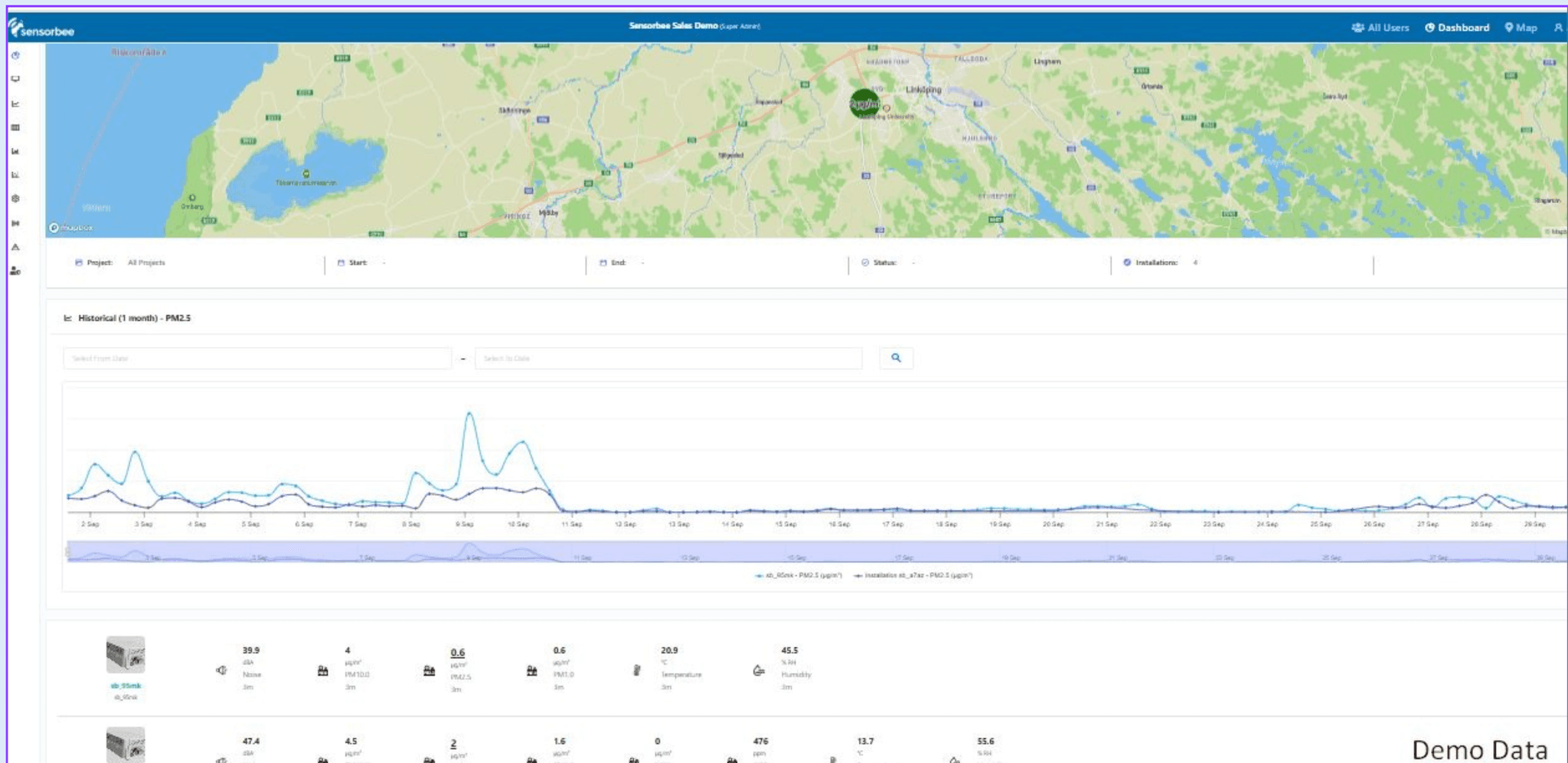
Data flows to the Sensorbee Cloud platform for dashboards, alerts, and API integrations. Real-time threshold alerting notifies site managers within seconds when a limit is exceeded, enabling immediate mitigation before an exceedance becomes a compliance breach.
Certification and Data Quality
In the UK, the Environment Agency's MCERTS scheme is the primary quality standard for environmental monitoring equipment. MCERTS certification involves three phases: laboratory testing across the full measurement range, field collocation (12+ weeks alongside reference instruments), and a manufacturing quality audit ensuring production units match tested performance.
The Sensorbee Air Pro 2 holds MCERTS certification for PM2.5 and PM10 indicative monitoring. This matters because planning conditions, environmental permits, and enforcement investigations increasingly require data from certified equipment.
Calibration is equally important. Sensorbee's PM modules are individually factory calibrated with certificates. Electrochemical gas sensors typically require recalibration on 6–12 month cycles. A documented calibration history provides the audit trail regulators expect.
For a detailed exploration of the MCERTS scheme, see our guide to MCERTS certification for construction dust monitoring.
Choosing the Right Monitoring Approach
Regulatory compliance networks. Government bodies need reference-grade stations meeting EN 12341 (PM) and EN 14211/14212 (gases) — fixed, permanent installations.
Permit and planning compliance. Organisations with environmental permits or planning conditions need MCERTS-certified indicative monitoring. The Sensorbee Air Pro 2, weighing 1.9 kg and deploying in under 10 minutes with solar power, is purpose-built for this.
Spatial pollution mapping. Understanding how pollution varies across an area — around a construction site perimeter, across a borough, or along a transport corridor — requires dense sensor networks. Fifty indicative monitors at 200-metre intervals reveal pollution gradients that three reference stations cannot.
Construction site monitoring. Construction projects need multi-parameter coverage — dust (PM10, PM2.5, TSP), noise (LAeq, LAFmax), and vibration (PPV) measured simultaneously. A single solar-powered Air Pro 2 unit with PM, noise, and vibration modules covers all three requirements from one deployment point.
Temporary vs permanent deployment. Reference stations are permanent infrastructure. Sensor networks can be deployed, relocated, and redeployed as monitoring needs change — from a two-year construction project to a three-month baseline survey to incident response.
The strongest monitoring strategies often combine approaches: a reference station providing anchor data quality, surrounded by a network of certified indicative monitors for spatial coverage, all feeding into a single data platform.
Frequently Asked Questions
How accurate are low-cost air quality sensors?
The term covers everything from £30 consumer devices (±30% accuracy or worse) to professional MCERTS-certified instruments. The Sensorbee Air Pro 2 meets Environment Agency performance standards validated through independent testing, achieving ±5% precision for PM2.5. Accuracy depends on the certification standard, calibration rigour, and maintenance regime.
What is the difference between reference and indicative monitoring?
Reference monitoring uses laboratory-grade instruments (gravimetric samplers, chemiluminescence analysers) costing £20,000–50,000 each, requiring mains power and climate-controlled enclosures. Indicative monitoring uses MCERTS-certified sensors validated against reference equipment during 12+ week collocation studies, costing substantially less and deploying in minutes on solar power. Both produce data suitable for regulatory purposes, but reference monitoring serves national compliance networks while indicative monitoring covers permit compliance, planning conditions, and enforcement.
How often do air quality sensors need calibration?
Sensorbee's optical PM modules are individually factory calibrated with certificates and maintain calibration over extended periods, with annual recalibration recommended. Electrochemical gas sensors typically require recalibration every 6–12 months as cells degrade gradually. Temperature extremes and high pollutant exposure can accelerate drift. A documented calibration history is essential for regulatory confidence.
What does MCERTS certified mean for air quality monitors?
MCERTS (Monitoring Certification Scheme) is administered by the UK Environment Agency. It is independent, third-party certification — not a manufacturer's claim. Equipment is tested by the CSA Group through laboratory evaluation, 12+ week field collocation against reference instruments, and manufacturing quality audit. MCERTS certification gives regulators confidence that monitoring data meets a recognised standard, removing disputes about data credibility from compliance discussions.

Oscar Sjöberg
Partner & Embedded Software Engineering Manager