Loading...
OVERVIEW
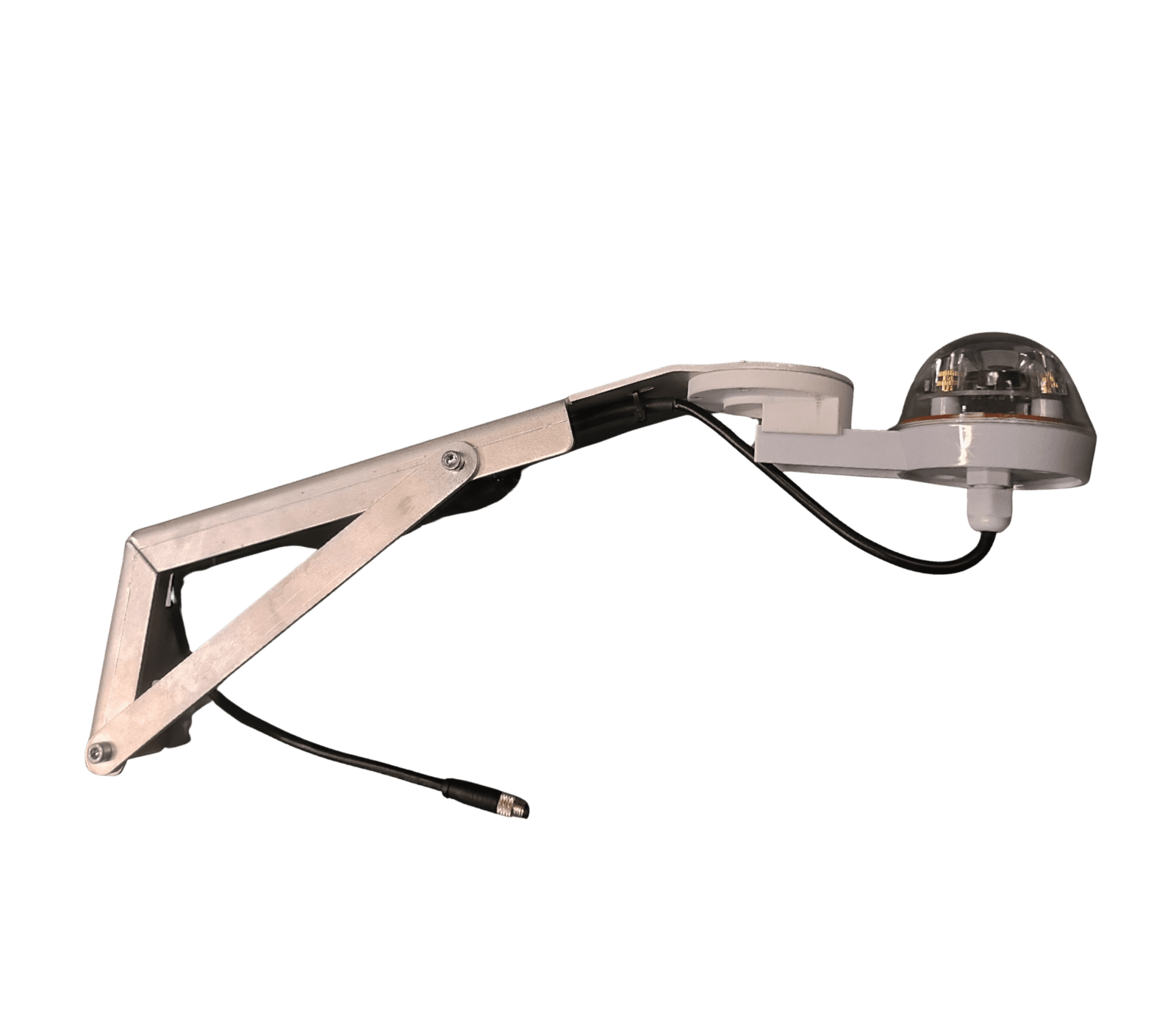
Solar radiation is the energy source driving photochemical reactions, thermal effects, and atmospheric dynamics — making it a key parameter for air quality interpretation, building energy analysis, and environmental research. The Sensorbee Pyranometer (SB3662) measures hemispheric solar radiation from 0 to 1,600 W/m² using an ISO 9060 Spectrally Flat Class C thermopile with a rugged glass dome, delivering calibrated irradiance data across the full 285–3,000 nm solar spectrum. With IEC 61724-1:2021 Class B compliance and a unique ball-levelling mechanism, it integrates seamlessly with the Sensorbee Pro series for real-time solar irradiance monitoring.
CAPABILITIES
ISO 9060:2018 Spectrally Flat Class C thermopile
IEC 61724-1:2021 Class B compliant
285–3,000 nm spectral range with glass dome
0–1,600 W/m² transmitted range
Calibration uncertainty <2.4% (k=2)
Ball-levelling mechanism for reliable installation
SPECIFICATIONS
| Measurement Method | Hemispheric solar radiation |
| Spectral Range | 285 to 3000 nm |
| Transmitted Range | 0 to 1600 W/m² |
| Calibration Uncertainty | <2.4% (k=2) |
| ISO Classification | ISO 9060:2018 Spectrally Flat Class C |
| IEC Compliance | IEC 61724-1:2021 Class B |
| Dimensions | 330 x 65 x 230 mm |
| Weight | 500 gram |
| Operating Temperature | -15 to +55 C |
| Operating Humidity | 0 to 100 %RH |
| Operational Life | >2 Years |
| Mounting | Universal wall/pole bracket, 2x hose clamps included |
The pyranometer uses a thermopile detector beneath a precision glass dome that transmits solar radiation across the 285–3,000 nm spectral range — covering ultraviolet through the full visible and near-infrared spectrum. Unlike silicon photodiode sensors limited to 300–1,100 nm, the thermopile measures the complete solar energy spectrum reaching the Earth's surface. The thermopile generates a voltage proportional to the incident solar radiation intensity, which is converted to an irradiance reading in watts per square metre (W/m²).
The glass dome provides angular correction and protects the thermopile from environmental contamination. The anodised aluminium housing ensures long-term durability, while the integrated ball-levelling mechanism simplifies installation by allowing precise horizontal alignment without additional mounting hardware.
Calibration uncertainty is less than 2.4% (k=2), meeting the requirements for ISO 9060:2018 Spectrally Flat Class C classification and IEC 61724-1:2021 Class B compliance.
Solar irradiance data supports environmental monitoring in several ways:
The pyranometer measures from 0 to 1,600 W/m² with calibration uncertainty below 2.4%. The 1,600 W/m² upper range exceeds the maximum clear-sky irradiance at sea level (approximately 1,000–1,100 W/m²), providing headroom for the irradiance enhancement that occurs when direct sun and reflected cloud edge radiation combine.
The 285–3,000 nm spectral range captures the complete solar spectrum from UV-B through the full visible and infrared bands. This broad thermopile response provides more accurate total irradiance measurement than silicon photodiode sensors, which are limited to approximately 300–1,100 nm and miss a significant portion of the solar infrared energy.
At 330 × 65 × 230 mm and 500 grams, the pyranometer features a robust anodised aluminium housing built for long-term outdoor deployment. The -15 to +55°C operating range and 0–100% RH humidity tolerance ensure reliable operation across all seasons and climatic conditions. The universal wall/pole mounting bracket with included hose clamps simplifies integration with existing monitoring station masts.
The pyranometer connects to the Air Pro 2 via the M8 interface. Solar radiation data is logged alongside all other environmental parameters and transmitted to the Sensorbee Cloud.
For a complete environmental and meteorological monitoring capability, the pyranometer complements:
On the Sensorbee Cloud, solar radiation data can be visualised alongside air quality measurements, enabling time-series analysis of photochemical relationships — for example, plotting ozone concentration against cumulative daily irradiance to characterise the photochemical ozone formation potential at a monitoring site.
Mount the pyranometer on a horizontal surface with an unobstructed view of the sky hemisphere. The sensor must be level — even small deviations from horizontal introduce systematic measurement errors, particularly at low solar elevations. Avoid mounting positions where buildings, masts, trees, or other structures shade the sensor at any time of day or year.
The M8 connector cable routes to the Air Pro 2 base station. No calibration, orientation alignment, or software configuration is required at the deployment site.
Maintain the sensor by periodically cleaning the optical surface — dust, bird droppings, and condensation residue on the photodiode reduce measured irradiance. A soft cloth and clean water are sufficient; avoid abrasive cleaning materials that could damage the cosine-corrected optics.
GHI is the total amount of solar radiation received on a horizontal surface. It includes direct beam radiation from the sun, diffuse radiation scattered by the atmosphere and clouds, and reflected radiation from the ground and surroundings. GHI is the standard measurement for characterising the solar resource at a location.
Silicon photodiode pyranometers are less expensive but measure a narrower spectral range (typically 300–1,100 nm), missing a significant portion of the solar infrared energy. The Sensorbee thermopile pyranometer covers the full 285–3,000 nm solar spectrum for more accurate total irradiance measurement, with ISO 9060 Class C classification ensuring reliable, standards-compliant data.
The pyranometer measures whatever solar radiation is present — including reduced irradiance under cloud cover. Overcast conditions typically produce 50–200 W/m², partly cloudy conditions produce highly variable readings, and clear skies produce the maximum irradiance for that time of year and latitude.
Periodic cleaning of the glass dome is recommended — monthly in dusty environments, less frequently in clean environments. Contamination of the dome surface systematically reduces measured irradiance, potentially biasing long-term datasets.
The pyranometer is designed for horizontal (GHI) measurement. Mounting on a tilted surface measures the irradiance on that specific plane, which can be useful for solar panel performance assessment. However, the calibration is optimised for horizontal mounting; tilted measurements should be interpreted with this in mind.
MORE PRODUCTS
Speak to our technical team about specifications, site suitability, and pricing.