Loading...
SB3602
OVERVIEW
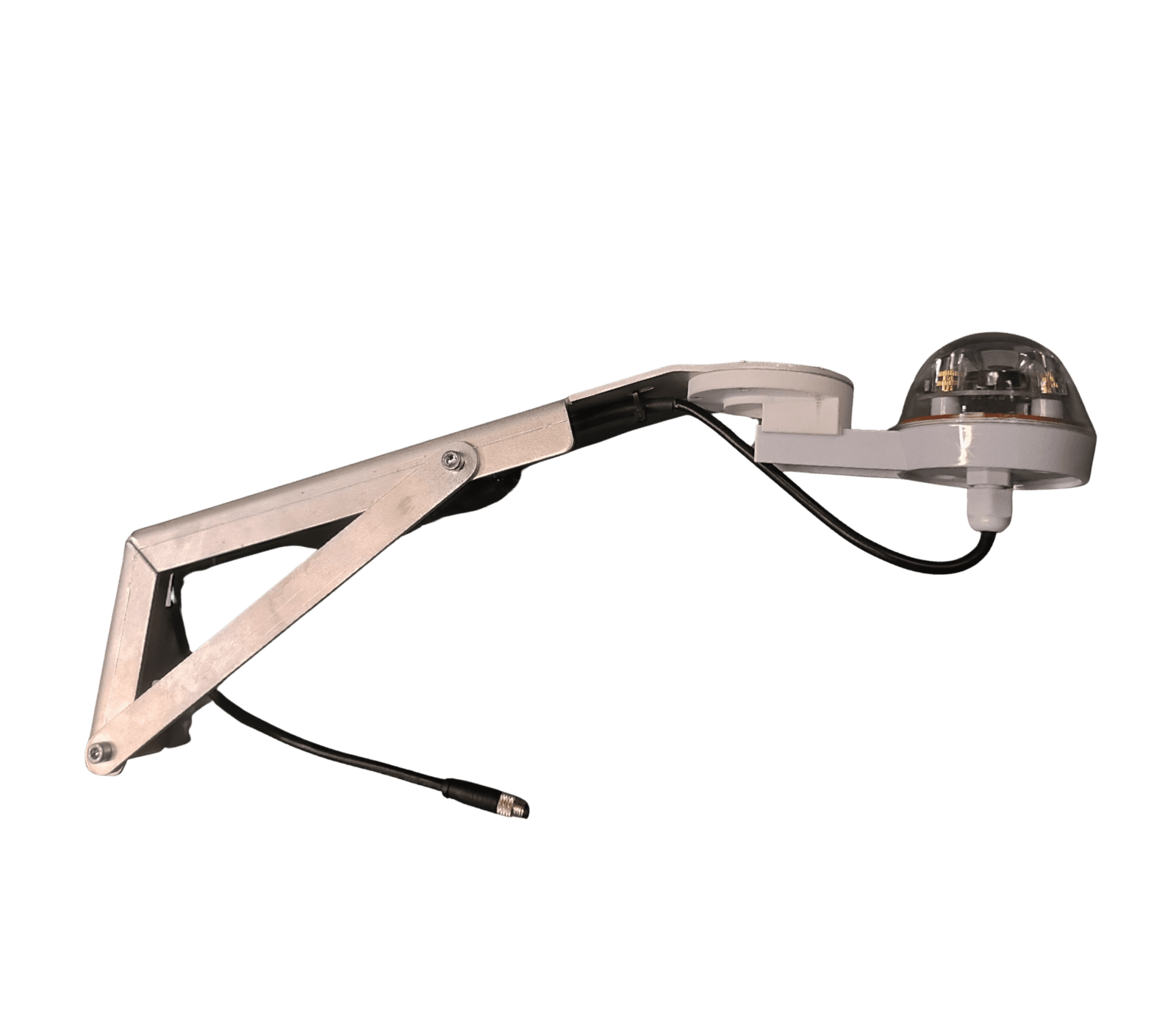
Environmental monitoring programmes that require wind and rainfall data typically deploy separate instruments — a cup anemometer and wind vane for wind, a tipping bucket rain gauge for precipitation. Each adds mounting complexity, maintenance requirements, and failure points. The Sensorbee Wind and Rain Combo Sensor combines ultrasonic wind measurement with infrared optical rainfall detection in a single unit with no moving parts. Wind speed to 45 m/s, direction to ±1°, and precipitation with 0.2 mm resolution — all from one maintenance-free device that integrates with the Air Pro 2 monitoring platform.
CAPABILITIES
Two sensors in one — wind speed, direction, and rainfall
Ultrasonic wind measurement with no moving parts
Infrared optical rain detection — no tipping bucket to maintain
0.2 mm rainfall resolution with ±10% accuracy
Wind speed 0–45 m/s with 1% RMS accuracy
>2 year operational life, fully maintenance-free
SPECIFICATIONS
| Wind Measurement | Ultrasonic |
| Wind Speed Range | 0.5 to 45 m/s |
| Wind Accuracy | 1% RMS at 10 m/s, 0.5 m/s threshold |
| Wind Direction Accuracy | +/-1 deg RMS at 10 m/s |
| Precipitation Method | Infrared optical sensor |
| Rain Resolution & Accuracy | 0.2 mm, +/-10% |
| Dimensions | 330 x 65 x 230 mm |
| Weight | 950 gram |
| Operating Temp (Wind) | -15 to +55 C |
| Operating Temp (Rain) | 0 to +55 C |
| Operating Humidity | 0 to 100 %RH |
| Operational Life | >2 Years |
| Mounting | Universal wall/pole bracket, 2x hose clamps included |
The combo sensor integrates two measurement technologies in a single housing:
Ultrasonic wind measurement uses the same transit-time principle as the standalone wind sensor (SB3612). Pairs of ultrasonic transducers emit sound pulses along two perpendicular axes. The difference in transit times between upwind and downwind pulses on each axis resolves both wind speed and direction simultaneously, with no rotating parts.
Infrared optical rainfall detection measures precipitation using a fundamentally different approach from traditional tipping bucket rain gauges. An infrared optical sensor detects raindrops as they pass through the measurement volume, determining rainfall intensity and accumulation without the mechanical tipping mechanism that dominates conventional rain gauge designs.
This dual-technology approach means the entire sensor operates without a single moving part — no cups, vanes, bearings, or tipping buckets.
Wind and rainfall data together provide the meteorological context needed for comprehensive environmental assessment:
The elimination of moving parts is the combo sensor's primary operational advantage:
No tipping bucket — traditional rain gauges use a small bucket that fills and tips at a calibrated volume, counting tips to calculate rainfall. These mechanisms block with debris, insects, and bird droppings. The infrared optical approach has no funnel to clog, no pivot to seize, and no bucket to contaminate.
No cup anemometer — rotating cups wear bearings, accumulate ice, and lose calibration accuracy over time. The ultrasonic wind measurement is electronically stable and requires no mechanical calibration.
Over 2 years operational life without maintenance intervention — reducing site visits, maintenance costs, and the data gaps that occur when instruments are offline for servicing.
Wind performance matches the standalone wind sensor: 1% RMS accuracy at 10 m/s reference speed, ±1° direction accuracy, and 0–45 m/s speed range. The 1 m/s threshold provides reliable measurement across the wind speed range relevant to environmental monitoring and construction site safety.
Rainfall performance delivers 0.2 mm resolution with ±10% accuracy. The infrared optical method measures rainfall intensity continuously rather than in discrete bucket-tip increments, providing smoother precipitation data without the stepwise artefacts that characterise tipping bucket recordings. The rain sensor operates from 0 to +55°C — note the higher lower limit compared to the wind function, as the optical sensor requires above-freezing conditions for liquid precipitation measurement.
The choice depends on whether your monitoring programme requires precipitation data:
Both sensors share the same wind measurement specifications and mounting system. The combo sensor adds approximately 500 g and the infrared rain detection capability.
The combo sensor connects to the Air Pro 2, providing wind and rainfall data alongside air quality, noise, and vibration measurements. The Sensorbee Cloud presents all meteorological parameters alongside environmental data, enabling:
For a complete weather station capability, combine the wind and rain combo with:
Mount the combo sensor at an appropriate height with clear exposure to wind and precipitation from all directions. The included universal bracket and hose clamps support pole and wall mounting. Position away from buildings and structures that would obstruct wind flow or create rain shadow effects.
Connect the cable to the Air Pro 2 base station. The platform automatically detects both the wind and rain measurement channels and begins logging data. No calibration, orientation adjustment, or software configuration is needed at the deployment site.
The rain sensor element should remain unobstructed — avoid mounting positions where overhanging structures could shield the sensor from rainfall or cause dripping artefacts that produce false precipitation readings.
The infrared optical sensor measures liquid precipitation. Snowfall, sleet, and freezing rain below 0°C are outside the rain sensor's operating range. The wind measurement function continues operating down to -15°C regardless of precipitation type.
Tipping buckets are the traditional standard and offer very precise volumetric measurement when properly maintained. The infrared optical sensor trades some absolute accuracy (±10%) for zero maintenance, no moving parts, and continuous measurement without discrete tipping artefacts. For environmental monitoring applications where ±10% rainfall accuracy is acceptable, the optical approach eliminates the maintenance burden of keeping tipping bucket mechanisms clean and functional.
The ultrasonic wind measurement operates through rainfall without significant impact. Very heavy precipitation may cause brief signal attenuation, but the sensor algorithms are designed to maintain wind measurement quality through all but the most extreme rainfall events.
Yes — the sensor ships with a universal wall/pole bracket and two hose clamps, ready for installation on standard poles or wall surfaces.
The wind sensor (SB3612) and wind and rain combo (SB3602) use the same mounting system. Upgrading involves replacing the sensor unit on the existing mount and connecting the new cable to the base station.
MORE PRODUCTS
Speak to our technical team about specifications, site suitability, and pricing.