Ambient carbon monoxide monitoring explained: UK exposure limits, electrochemical sensor technology, and when CO monitoring is needed for tunnels, car parks, and industry.
Carbon monoxide is colourless and odourless, which makes it uniquely dangerous among air pollutants. You cannot see it, smell it, or taste it. At low ambient concentrations, it produces no immediate symptoms — yet epidemiological studies consistently link even modest increases in outdoor CO to higher rates of cardiovascular hospital admissions. Effective carbon monoxide monitoring ambient programmes depend on understanding where CO comes from, what concentrations matter, and which sensor technologies deliver reliable measurement in real-world conditions.
Where Ambient Carbon Monoxide Comes From
Road traffic has historically been the dominant source of ambient CO in UK towns and cities. Petrol engines produce carbon monoxide through incomplete combustion, and before catalytic converters became standard, urban CO concentrations were a serious public health concern. Catalytic converter adoption since the early 1990s has reduced vehicle CO emissions by over 90%, which is why ambient concentrations have fallen so dramatically.
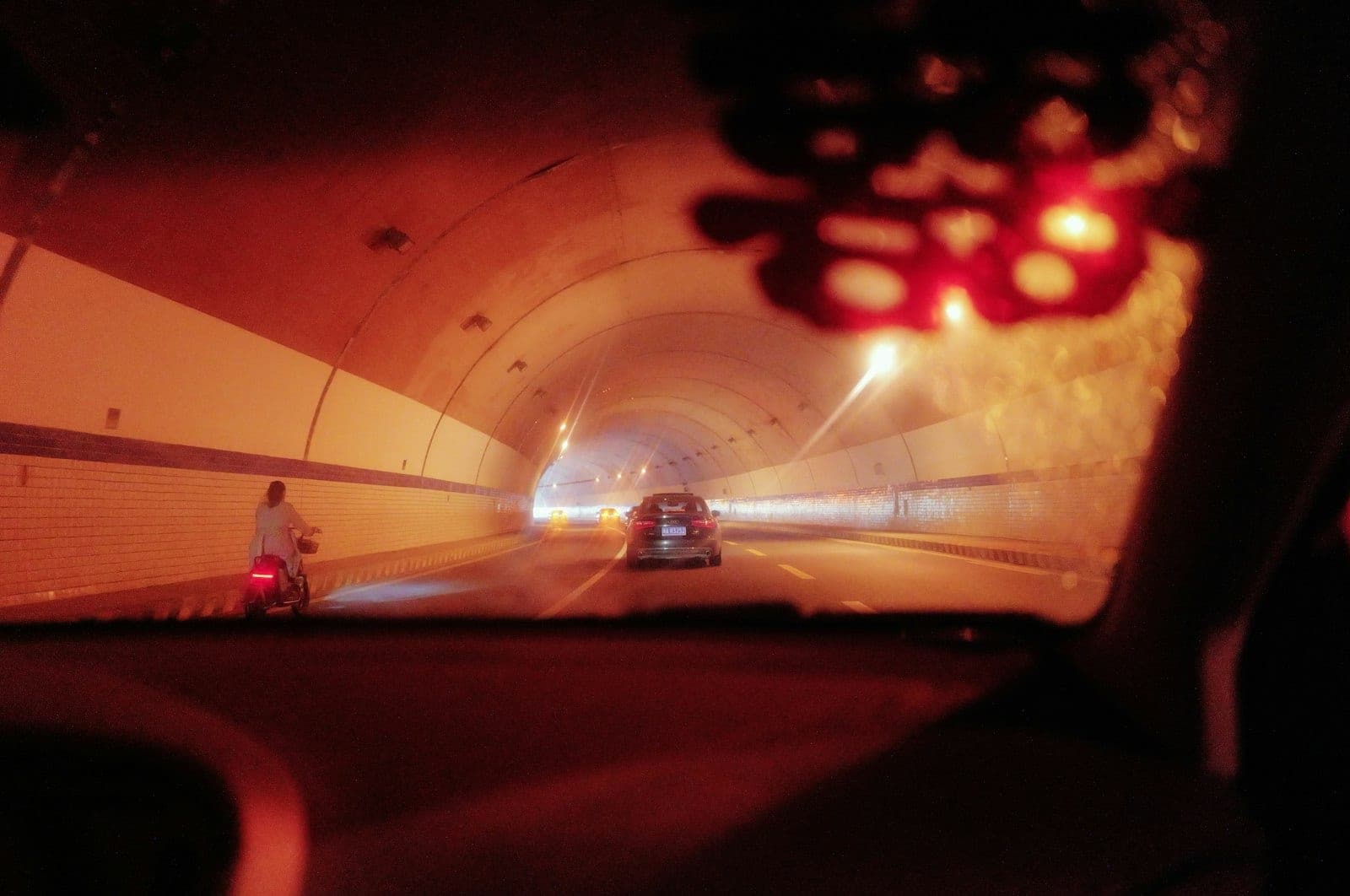
However, traffic remains a significant source in enclosed and semi-enclosed environments. Tunnels, multi-storey car parks, and loading docks concentrate exhaust gases in limited airspace. Cold engine starts produce two to five times more CO than warmed engines, making car park entry and exit ramps particular hotspots for CO monitoring outdoor applications.
Industrial processes contribute the next largest share. Steel manufacturing, petroleum refining, chemical processing, and waste incineration all produce CO as a byproduct of incomplete combustion or as a process gas. Blast furnace gas contains 20 to 30 percent carbon monoxide by volume — a concentration that demands rigorous fenceline monitoring where these facilities adjoin residential or public areas.
Domestic and commercial heating is a growing contributor. The increasing popularity of wood-burning stoves in the UK has added a new dimension to ambient CO emissions, particularly in residential areas during winter months. Gas boilers, biomass systems, and open fires all release CO when combustion is incomplete.
UK Exposure Limits and the Regulatory Framework
The Air Quality Standards Regulations 2010 set the UK limit value for carbon monoxide at 10 mg/m3 as a maximum daily 8-hour running mean — equivalent to approximately 8.6 ppm. This limit derives from the EU Air Quality Directive 2008/50/EC and has been retained in UK law. The UK has achieved compliance with this standard across all monitoring zones and agglomerations since 2003.
The World Health Organisation guidelines are more conservative. The 2021 WHO update recommends a 24-hour mean of 4 mg/m3, an 8-hour mean of 10 mg/m3, a 1-hour mean of 35 mg/m3, and a 15-minute peak of 100 mg/m3. These guidelines reflect growing evidence of health effects at concentrations below traditional regulatory thresholds.
For workplace settings, the UK Health and Safety Executive document EH40 specifies a CO exposure limits UK framework of 20 ppm as an 8-hour time-weighted average and 100 ppm as a 15-minute short-term exposure limit. Tunnel and car park operators must additionally comply with EN 50545-1, the European standard governing fixed gas detection apparatus in these environments, which specifies alarm thresholds — typically 30 ppm for the first alarm, 60 ppm for maximum ventilation, and 200 ppm for evacuation.
Because Defra does not require local authorities to report on CO under the Local Air Quality Management framework — the objective having been met for over two decades — ambient CO monitoring has fallen off many councils' radar. Yet the need for continuous monitoring in specific high-risk environments remains as pressing as ever.
Health Effects of Carbon Monoxide Exposure
Carbon monoxide binds to haemoglobin approximately 200 to 250 times more readily than oxygen, forming carboxyhaemoglobin (COHb) and reducing oxygen delivery to tissues. The heart and brain are most vulnerable to this oxygen deprivation.
At ambient concentrations, the effects are subtle but measurable. Research shows that a 1 ppm increase in maximum daily one-hour CO exposure is associated with a 0.96 percent increase in cardiovascular hospitalisations among people over 65. Exposure to 3 to 7 ppm correlates with a 6 percent rise in asthma-related hospital admissions. For each 1 mg/m3 increase, hospital admissions for cardiac failure among the elderly rise by 6 percent.
Vulnerable populations — including older adults, infants, pregnant women, and those with existing cardiovascular or respiratory conditions — face disproportionate risk. This is precisely why ambient CO measurement matters even in areas that comfortably meet regulatory limits: localised exceedances near tunnels, car parks, or industrial boundaries can affect nearby communities.
How Electrochemical Carbon Monoxide Sensors Work
The dominant technology for ambient CO measurement is the electrochemical cell. A three-electrode design — working, counter, and reference electrodes — sits within an electrolyte solution behind a gas-permeable membrane.
Carbon monoxide diffuses through the membrane and undergoes oxidation at the working electrode: CO reacts with water to produce carbon dioxide, hydrogen ions, and electrons. The resulting current is directly proportional to the CO concentration. This proportional response gives electrochemical sensors good linearity across their measurement range, which typically spans 0 to 500 ppm for ambient-grade sensors.
Resolution is usually better than 0.5 ppm, with a T90 response time of 15 to 30 seconds — fast enough for real-time ambient monitoring. Sensor operating temperatures range from -20 degrees C to +50 degrees C, covering UK ambient conditions year-round.
Cross-sensitivities are the primary accuracy consideration for any carbon monoxide sensor. Hydrogen is the most significant interferent, followed by hydrogen sulphide and alcohols. Quality sensors incorporate an internal organic vapour filter that reduces hydrocarbon interference, and manufacturers report cross-sensitivity to interfering gases below 3 percent at concentrations up to 5 ppm. Temperature and humidity affect both baseline readings and sensitivity — correction algorithms are essential for reliable data in field deployments. Sensor lifetime is typically two to three years, with periodic recalibration recommended to address drift.
When Ambient CO Monitoring Is Required
Several environments create specific obligations or strong practical reasons for continuous CO monitoring.
Tunnels. Road and rail tunnels require continuous ambient CO measurement to control mechanical ventilation systems. Fixed sensors at regular intervals detect rising concentrations and automatically adjust fan speeds. Driver safety depends on keeping CO below action thresholds — typically aligned with workplace exposure limits. Modern tunnel monitoring systems integrate CO data with traffic flow and ventilation capacity in real time.
Car parks. Underground and multi-storey car parks must comply with EN 50545-1, which sets construction and testing requirements for fixed CO and NO2 detection systems. Typical sensor deployment follows a coverage radius of approximately 15 metres per device. Alarm systems trigger at graduated thresholds: enhanced ventilation at the first level, full extraction at the second, and evacuation at the third. As electric vehicle adoption increases, CO concentrations in car parks are declining — but mixed fleets mean monitoring remains necessary for the foreseeable future.
Industrial fenceline. Refineries, steel works, and waste incineration facilities may have environmental permit conditions requiring boundary CO monitoring. Fugitive emissions from process units, incomplete combustion events, and abnormal operating conditions can all release CO beyond the site boundary. Continuous fenceline data provides both compliance evidence and early warning of process deviations.
Urban and roadside. Traffic corridors, Clean Air Zone assessments, and municipal air quality networks all benefit from CO as one parameter in multi-pollutant monitoring. While urban ambient CO rarely exceeds regulatory limits, localised measurements near busy junctions and street canyons inform health impact assessments.
Construction sites. Diesel generators, petrol-powered plant, and demolition activities near old gas infrastructure can produce localised CO. Monitoring is particularly important in confined or semi-confined work areas adjacent to occupied buildings.
Adding CO to a Multi-Parameter Monitoring Station
In most practical deployments, carbon monoxide is not the only pollutant of interest. Tunnel operators monitor CO alongside NO2. Industrial fenceline programmes measure CO with particulate matter and other gases. Construction sites need dust, noise, and vibration data in addition to any gas monitoring.
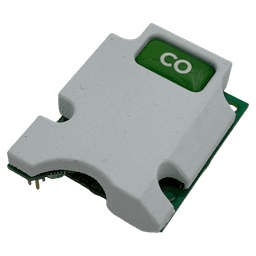
The Sensorbee CO Sensor Module (SB4262) addresses this by adding electrochemical CO detection to the Pro2 monitoring platform (SB8202/SB8203). The module plugs into the base unit and begins measuring immediately — no separate device, no additional power supply, no second data connection. CO data flows to the same cloud dashboard alongside PM2.5, PM10, noise, vibration, weather, and any other connected sensor modules.
This integrated approach eliminates the traditional requirement for standalone CO monitors at each location. A single solar-powered station at a tunnel approach can measure particulate matter, nitrogen dioxide, and carbon monoxide simultaneously. An industrial boundary station combines CO with H2S, SO2, dust, and wind data for comprehensive fenceline characterisation — powered entirely by the Pro2's 30 W solar panel and connected via NB-IoT or LTE-M.
Practical Considerations for CO Monitoring Deployment
Sensor placement determines whether readings represent the exposure you intend to measure. Locating a sensor directly beside a car park exhaust vent captures worst-case concentrations but does not reflect the ambient CO measurement experienced by pedestrians 20 metres away. Conversely, placing the sensor too far from the source may miss short-duration exceedances. Site-specific risk assessment should guide placement decisions.
Calibration management is essential for long-term data quality. Electrochemical sensors drift over their operational life, and uncorrected drift introduces systematic bias. Establish a calibration schedule — typically every six months for ambient monitoring — and document baseline checks between calibrations. Using certified monitoring equipment ensures data quality meets regulatory expectations. Co-location with reference instruments, where feasible, provides ongoing validation.
Finally, interpret CO data in context. Wind speed and direction affect dispersion from point sources. Temperature inversions trap pollutants near ground level. Correlating CO readings with meteorological data — which a multi-parameter station provides automatically — enables source attribution and more informed decision-making for both compliance and community health protection.