How to monitor sulphur dioxide from industrial and shipping sources. SO2 sensor technology, UK limits, IMO regulations, and port monitoring explained.
UK sulphur dioxide emissions have fallen by 98% since 1990. The closure of coal-fired power stations, the shift to gas and biomass, and tighter industrial controls have driven one of the most dramatic pollution reductions in modern environmental history. By 2024, total UK SO2 emissions stood at 84 thousand tonnes — the lowest figure on record.
But the pollutant has not disappeared. It has concentrated. Ports where cargo vessels idle at berth. Refineries processing crude oil. Chemical plants, smelters, and brick kilns still burning sulphur-containing fuels. In these locations, sulphur dioxide monitoring remains essential for protecting communities, meeting permit conditions, and verifying compliance with international shipping regulations.
Domestic shipping alone accounts for roughly 75% of SOx emissions within the UK transport sector. In port areas, up to 80% of local SO2 comes directly from vessels. For environmental consultants working near these sources, understanding SO2 measurement technology and the regulatory framework is fundamental to designing effective monitoring programmes.
Where SO2 Comes From — Persistent Industrial and Shipping Sources
The national picture tells a story of success: SO2 emissions from energy industries have dropped 99% since 1990, and industrial combustion sources have fallen by 95% over the same period. In 2024, the remaining emissions split across energy industry combustion (33% of the national total), industrial combustion (26%), and domestic combustion (16%).
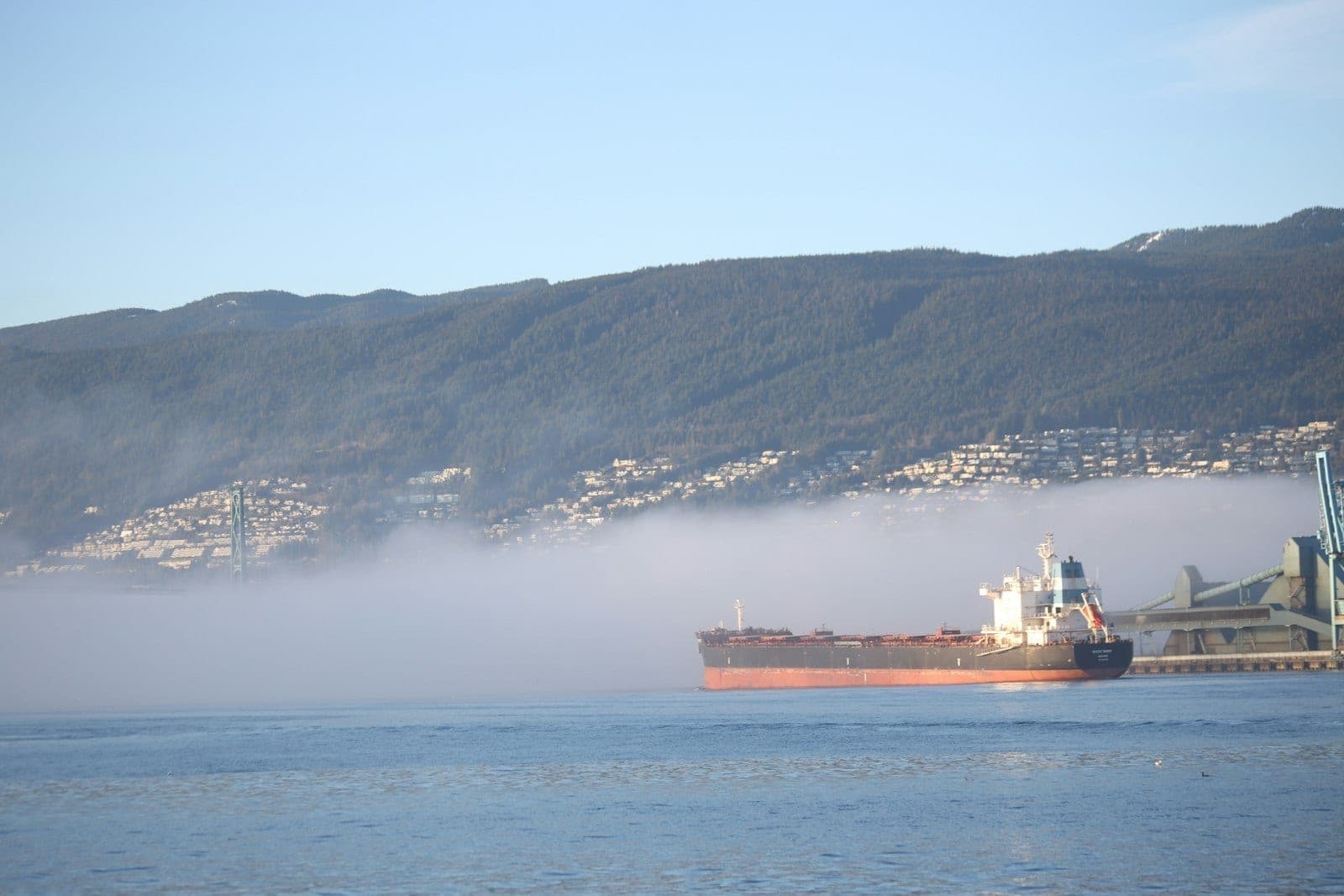
The problem is that these averages mask localised hotspots. A refinery perimeter can experience SO2 concentrations several orders of magnitude above the regional background. A busy commercial port with vessels running auxiliary engines at berth produces a concentrated plume of SO2 that drifts across surrounding residential areas — particularly when wind conditions trap emissions in the harbour basin.
Shipping is the most significant remaining mobile source. Despite the International Maritime Organization's global sulphur cap, vessels still burn fuel containing up to 0.50% sulphur outside Emission Control Areas. Within ECAs, the limit drops to 0.10%, but enforcement depends on monitoring — both onboard fuel sampling and shore-based SO2 emissions monitoring that can flag non-compliant ships as they enter port.
UK Sulphur Dioxide Limits and Regulatory Framework
The Air Quality Standards Regulations 2010 set legally binding limit values for SO2 across England, Wales, Scotland, and Northern Ireland.
For the protection of human health, two limit values apply:
- ·1-hour mean: 350 ug/m3 — not to be exceeded more than 24 times per calendar year
- ·24-hour mean: 125 ug/m3 — not to be exceeded more than 3 times per calendar year
For ecosystem protection, critical levels apply in rural and semi-rural areas:
- ·Annual mean: 20 ug/m3
- ·Winter mean (1 October to 31 March): 20 ug/m3
The National Emissions Ceiling Regulations 2018 set UK-wide emission ceilings for 2020 and 2030, while industrial installations operating under environmental permits must monitor SO2 at their site boundaries as a condition of their licence. The Environmental Agency and its devolved equivalents can require continuous monitoring where SO2 is a principal emission.
A new UK air quality framework is expected in 2026, with government plans to explore further controls on emissions from small industrial combustion plants. For operators near the current limit values, this signals a tightening regulatory trajectory.
IMO Shipping Regulations and Port SO2 Monitoring
The International Maritime Organization's MARPOL Annex VI governs sulphur emissions from ships worldwide. The headline measure — known as IMO 2020 — reduced the global fuel sulphur content limit from 3.5% to 0.50% mass by mass, effective January 2020.
Within designated Sulphur Emission Control Areas (SECAs), the limit is stricter at 0.10%. The North Sea and English Channel have been SECAs since 2015, meaning all vessels operating in UK coastal waters must already comply with this tighter standard. Ships can meet the requirement either by burning low-sulphur fuel or by fitting exhaust gas cleaning systems — commonly known as scrubbers.
The ECA network is expanding. The Mediterranean Sea became a SOx ECA in May 2025, with the Canadian Arctic and Norwegian Sea following from March 2027. Amendments to MARPOL Annex VI enter into force in March 2026, signalling continued regulatory tightening.
For port authorities and harbour operators, this creates both an obligation and an opportunity. Shore-based SO2 monitoring networks can detect vessels burning non-compliant fuel by measuring elevated SO2 concentrations as ships enter or transit the port. Combined with wind direction data, source attribution becomes straightforward — linking a spike in SO2 to a specific vessel or berth.
How Sulphur Dioxide Sensors Work — Electrochemical Detection
Electrochemical sensors are the dominant technology for SO2 monitoring in ambient air quality applications. The operating principle is straightforward: SO2 diffuses through a gas-permeable membrane into an electrolyte solution, where it undergoes an oxidation-reduction reaction at a working electrode. This reaction generates an electrical current directly proportional to the SO2 concentration — the higher the concentration, the greater the current.
Modern electrochemical SO2 sensors achieve detection limits of approximately 1 ppb (roughly 2.66 ug/m3), with measurement ranges extending from low ppb for ambient monitoring to hundreds of ppm for industrial safety applications. Response times are typically in the range of 15 to 30 seconds, making them suitable for continuous real-time monitoring.
The principal challenge with electrochemical SO2 sensors is cross-sensitivity. The sulphur dioxide sensor responds to some degree to ozone (O3), nitrogen dioxide (NO2), and carbon monoxide (CO). In a single-gas deployment, these interferences can introduce measurement uncertainty. However, when the SO2 sensor is deployed alongside dedicated O3, NO2, and CO sensors on the same monitoring platform, algorithmic correction becomes possible. The known responses of each sensor to interfering gases can be subtracted mathematically, improving the accuracy of all measurements simultaneously.
This is a practical reason why multi-parameter monitoring stations outperform single-gas instruments for SO2 industrial monitoring. The more gas parameters measured at the same location, the better each individual measurement can be corrected.
The Sensorbee SO2 Module for Port and Industrial Monitoring
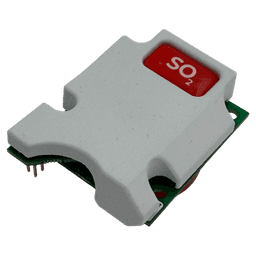
The Sensorbee SO2 Sensor Module (SB4252) is an electrochemical sulphur dioxide sensor designed to integrate with the Pro2 base unit (SB8202/SB8203). It measures ambient SO2 concentrations at ppb resolution, making it suitable for both environmental compliance monitoring and emissions tracking at industrial boundaries.
Because the Pro2 operates entirely on solar power with NB-IoT and LTE-M cellular connectivity, the SO2 module can be deployed in locations that would be impractical for mains-powered analysers — port jetties, harbour perimeters, refinery fencelines, and remote industrial boundaries. There is no need for electrical infrastructure, no cable runs, and no on-site internet connection.
The multi-gas architecture of the Pro2 platform directly addresses the cross-sensitivity challenge. Deploying the SB4252 alongside the NO2 module (SB4202), O3 module (SB4272), and CO module (SB4262) enables the algorithmic correction described above — each sensor's output helps refine the others. Add the dust monitoring capability built into the Pro2 base unit, and a single solar-powered station provides comprehensive SO2, gaseous pollutant, and particulate matter monitoring for port environmental compliance or industrial permitting.
A typical port deployment might place four to six stations around the harbour perimeter, each measuring SO2, NO2, PM2.5, PM10, wind speed, and wind direction. When a vessel enters the harbour burning high-sulphur fuel, the downwind station registers an SO2 spike within minutes. Wind data identifies the source direction. The timestamp narrows the cause to a specific ship movement. All data arrives at a cloud dashboard in near real time — no manual download, no site visit required.
Practical Deployment Considerations for SO2 Monitoring
Effective sulphur dioxide monitoring requires attention to placement, configuration, and maintenance.
Placement. Position sensors downwind of expected sources — or at multiple compass points around a source to capture variable wind conditions. For fenceline monitoring, stations go at the site boundary. For port monitoring, place sensors at harbour entrances, along quaysides, and near residential receptors. Sampling inlets should be at 1.5 to 4 metres above ground level, representing the breathing zone.
Data configuration. UK SO2 limit values are expressed as 1-hour and 24-hour means. Configure monitoring equipment to log at intervals that support these averaging periods — typically 1-minute or 15-minute resolution, from which hourly and daily averages are calculated. Set alert thresholds below the limit values to provide early warning before an exceedance occurs.
Wind data integration. SO2 monitoring without concurrent wind speed and direction data is of limited value. Wind data enables source attribution — distinguishing whether an elevated reading comes from a specific vessel, an industrial stack, or a more distant source. Co-locating a wind sensor with the SO2 monitor is standard practice.
Sensor maintenance. Electrochemical SO2 sensors have a typical operational lifespan of 12 to 24 months, depending on ambient conditions and exposure levels. Plan for periodic sensor replacement and field calibration checks. In corrosive environments — such as coastal ports with salt-laden air — inspect sensor housings and connections more frequently.
When Sulphur Dioxide Monitoring Matters Most
SO2 is no longer a nationwide crisis. The 98% reduction since 1990 is a genuine environmental achievement. But for those working near ports, refineries, power generation facilities, and heavy industrial sites, sulphur dioxide remains a pollutant that demands continuous attention.
The regulatory landscape continues to tighten — new Emission Control Areas for shipping, anticipated updates to the UK air quality framework, and increasingly stringent environmental permit and certification requirements all point in the same direction. Operators who establish robust SO2 monitoring now will be better prepared for the requirements ahead.
For port and industrial fenceline deployments where mains power is unavailable and continuous data is essential, a solar-powered, IoT-connected SO2 monitoring platform offers a practical path to compliance — measuring the pollutant where it matters, at the boundary between source and community.