How to monitor construction noise under BS 5228. Covers LAeq limits, Section 61 consent, noise prediction, and automated compliance reporting for UK sites.
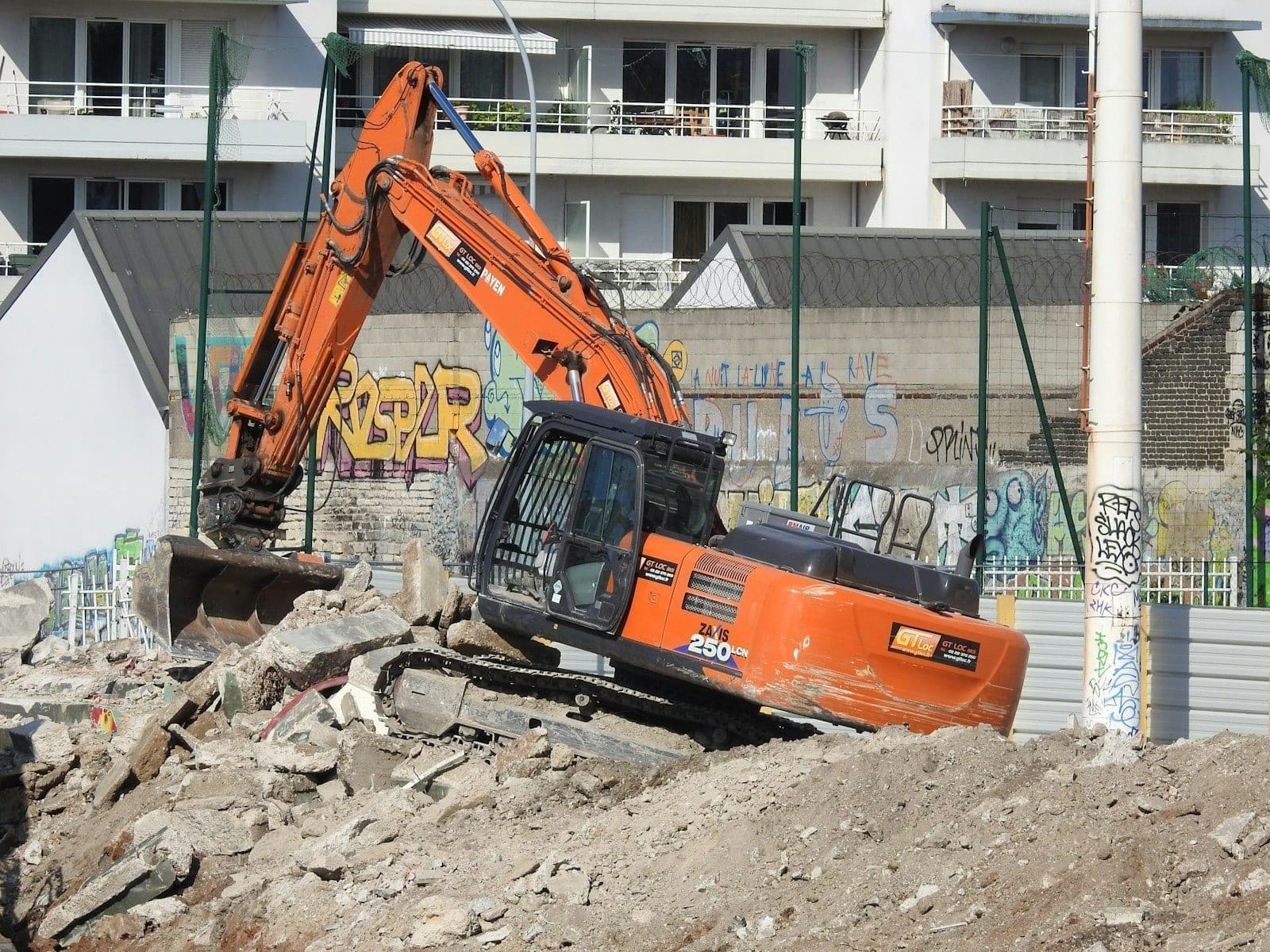
A demolition excavator generates around 90 dB(A) at 10 metres. A piling rig can exceed 100 dB(A). Without a decibel meter at the site boundary, there is no way to know when those levels are causing harm — or breaching your consent conditions. At the nearest residential property — perhaps 50 metres away — those levels translate into complaints, enforcement action, and project delays unless they are monitored and managed continuously.
Construction noise monitoring with a professional decibel meter or sound level meter is not just about measuring sound levels. It is about understanding what the numbers mean, what the regulations require, and how to demonstrate compliance on construction sites before a problem becomes a Section 60 notice on your site manager's desk.
Decibel Meter Basics — dB, dBA, LAeq, LAFmax, and LN Percentiles
Sound is measured in decibels (dB) using a decibel meter (also called a sound level meter), a logarithmic scale where every 3 dB increase represents a doubling of sound energy, and every 10 dB increase is perceived by the human ear as roughly twice as loud.
For environmental noise assessment, raw decibels are not enough. The metrics that matter are weighted and averaged to reflect how humans actually perceive sound.
| Metric | What it measures | When it is used |
|---|---|---|
| dBA | A-weighted decibels — filtered to match human hearing sensitivity | All environmental noise measurements |
| LAeq | Equivalent continuous sound level — the average sound energy over a defined period | Primary compliance metric for construction noise |
| LAFmax | Maximum sound level with fast time weighting (125 ms response) | Night-time sleep disturbance assessment |
| L90 | Level exceeded for 90% of the measurement period | Background noise level |
| L10 | Level exceeded for 10% of the measurement period | Indicates peak noise events |
| 10-hour LAeq | Average level between 08:00 and 18:00 | Standard daytime construction noise assessment |
LAeq is the metric regulators care about. It captures the total acoustic energy over a measurement period, smoothing out the fluctuations inherent in construction work — the gap between a quiet setup period and the moment a breaker starts. A site that generates 95 dB(A) for 10 minutes and silence for 50 minutes has a very different LAeq from one that sustains 80 dB(A) for the full hour.
LAFmax matters at night. Even if the LAeq is within limits, a single loud event — a dropped steel beam, a reversing alarm — can wake residents. Night-time conditions typically set LAFmax limits alongside LAeq to protect against sleep disturbance.
LN percentiles provide statistical context. L90 tells you the background noise level (the quiet baseline). L10 tells you what the loudest 10% of the period sounded like. The difference between L10 and L90 indicates how variable the noise environment is — useful for characterising impact.
Common Decibel Levels — Reference Table
A decibel meter reading only means something in context. This reference table shows typical sound levels measured in dBA to help interpret what your decibel meter is telling you:
| Source | Typical Level (dBA) | Perception |
|---|---|---|
| Quiet rural area at night | 20–25 dB | Near silence |
| Whisper at 1 metre | 30 dB | Very quiet |
| Library / quiet office | 40 dB | Quiet |
| Normal conversation | 55–65 dB | Moderate |
| Busy road at 10 metres | 70–75 dB | Loud |
| Excavator at 10 metres | 80–85 dB | Very loud |
| Pneumatic breaker at 10 metres | 90–95 dB | Risk of hearing damage |
| Piling rig at 10 metres | 95–105 dB | Painful if sustained |
| Jet aircraft at 250 metres | 105–110 dB | Threshold of pain nearby |
The logarithmic nature of the decibel scale means that a 10 dB increase represents a tenfold increase in sound energy. A construction site generating 85 dB is not slightly louder than one generating 75 dB — it is ten times more powerful acoustically.
BS 5228 — The UK Framework for Construction Noise
BS 5228-1:2009+A1:2014 is the code of practice for noise control on construction and open sites. It is not legislation, but it is routinely referenced in planning conditions, Section 61 consents, and environmental impact assessments. In practical terms, it defines how construction noise monitoring should be conducted in the UK.
What BS 5228 Requires
Noise prediction. Before work begins, BS 5228 provides a method for predicting noise levels at sensitive receptors based on equipment source data and distance attenuation. These predictions form the basis for noise limits in Section 61 applications.
Monitoring methodology. Measurements should be taken in dBA LAeq. The standard measurement period is 08:00 to 18:00 Monday to Friday and 08:00 to 13:00 on Saturdays. Monitoring positions are typically at the site boundary nearest to sensitive receptors.
Distance corrections. Monitors placed at the site boundary are often closer to the noise source than the nearest dwelling. Figures F2 and F4 in BS 5228-1 provide standard distance corrections, or noise prediction software can calculate site-specific adjustments.
Best Practicable Means (BPM). The underlying compliance standard is not an absolute noise level but the demonstration that Best Practicable Means are being applied to minimise noise — considering available technology, cost, and local circumstances.
Typical Construction Noise Limits
Noise limits vary between local authorities and projects, but common thresholds are:
| Period | Typical LAeq limit at receptor | LAFmax limit |
|---|---|---|
| Daytime (08:00–18:00) | 70–75 dB | — |
| Evening/Weekend | 55–65 dB | — |
| Night-time (23:00–07:00) | 45–55 dB | 60–70 dB |
These are indicative. The actual limits for your project are set in the Section 61 consent or planning conditions.
Section 61 Prior Consent — What Contractors Need to Know
Section 61 of the Control of Pollution Act 1974 allows contractors to apply for prior consent before construction works begin. It is the mechanism by which noise monitoring conditions are formally agreed with the local authority.
The Application Process
- Submit at least 28 days before works start. The application must include predicted noise levels (using BS 5228 methodology), proposed working hours, noise mitigation measures, and a monitoring plan.
- Agree the monitoring regime. The local authority specifies monitoring locations (typically site boundary positions nearest sensitive receptors), measurement parameters (LAeq, LAFmax, LN percentiles), reporting frequency, and trigger levels for corrective action.
- Demonstrate Best Practicable Means. The application must show that reasonable steps will be taken to minimise noise — equipment selection, timing of noisy works, use of barriers, and acoustic enclosures.
During Construction
- ·If monitoring exceeds predicted levels by more than 3 dB at any period, corrective action is required — reviewing works, adjusting methods, or deploying additional mitigation.
- ·Monitoring results must be submitted to the council throughout the project.
- ·Section 61 consent provides legal protection: if conditions are met, the local authority cannot serve a Section 60 notice (which can halt works) for the consented activities.
The practical implication is clear: automated, continuous construction noise monitoring is not a nice-to-have — it is the mechanism that protects your project from enforcement action.
Automated Noise Monitoring — How It Works
Manual noise surveys capture snapshots. A consultant visits the site, takes readings for 15 minutes, and writes a report. This approach misses the 3 AM piling that woke half a street, the Sunday morning concrete pour that generated 40 complaints, or the gradual creep in background noise that pushed cumulative exposure over the limit.
Automated noise monitoring stations measure LAeq, LAFmax, and LN percentiles continuously — 24 hours a day, seven days a week. Data transmits to a cloud platform in real time, where it is:
- ·Compared against threshold limits set in the Section 61 consent
- ·Flagged automatically when levels approach or exceed triggers — alerts reach site managers via SMS, email, or push notification within minutes
- ·Compiled into compliance reports — daily, weekly, or monthly summaries showing LAeq against limits for each monitoring period, ready for submission to the local authority
- ·Stored for evidence — time-stamped records provide defensible data if complaints or enforcement actions arise
Some advanced systems also record audio snippets when thresholds are exceeded, enabling source identification — distinguishing construction noise from traffic, aircraft, or other ambient sources that should not count against the site's allocation.
Sensorbee Sound Level Monitoring — Combined with Dust and Vibration
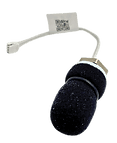
The Sensorbee Sound Level Metre (SB4652) is an add-on module for the Pro2 monitoring station (SB8202/SB8203). It captures real-time noise data through an integrated microphone, measuring in A-weighted decibels with configurable alert thresholds and automated reporting compliant with EU noise regulation directives.
What makes this approach distinctive is not the noise measurement alone — it is what the noise module combines with on a single station.
A typical Section 61 consent requires monitoring of dust, noise, and vibration at each boundary position. With conventional equipment, that means three separate instruments at each location:
| Parameter | Conventional approach | Sensorbee approach |
|---|---|---|
| Dust (PM10) | Standalone dust monitor, mains powered | SB4102 PM Module on Pro2 |
| Noise (LAeq, LAFmax) | Standalone sound level metre, mains powered | SB4652 Sound Level Metre on Pro2 |
| Vibration (PPV) | Standalone vibration sensor, battery powered | SB3641 Vibration Sensor on Pro2 |
| Power | 3 mains connections | 1 solar panel |
| Data | 3 platforms, 3 logins | 1 cloud dashboard |
| Deployment | Half a day per position | Under 5 minutes per position |
For a project with four boundary monitoring positions, the conventional approach requires 12 instruments, 12 power connections, and three separate data platforms. The Sensorbee approach requires four Pro2 stations — solar-powered, IoT-connected — deployed in under 20 minutes total.
The combined approach also eliminates the correlation problem. When a noise complaint coincides with a dust exceedance, having both datasets on the same timeline from the same location makes it straightforward to identify the source activity and demonstrate whether BPM was applied.
What to Look For in a Construction Noise Monitor
| Criterion | What to check | Why it matters |
|---|---|---|
| IEC 61672-1 compliance | Class 1 (±0.7 dB tolerance) or Class 2 (±1.0 dB) | Class 1 preferred for regulatory compliance |
| Parameters | LAeq, LAFmax, LN percentiles as minimum | All three needed for comprehensive assessment |
| Automated alerts | Real-time threshold notifications | Enables corrective action before exceedance becomes a breach |
| Cloud reporting | Automated compliance reports in BS 5228 format | Saves consultant time and ensures consistent submission |
| Power source | Solar as standard vs mains required | Site boundaries rarely have grid power |
| Multi-parameter | Can it also measure dust (PM10) and vibration (PPV)? | Section 61 requires all three — one device saves cost and complexity |
| Weather resistance | IP rating, operating temperature range | UK construction sites are wet and cold |
The highest-specification standalone sound level metre is of limited value if it cannot be powered at the monitoring location, requires manual data download, or needs a separate instrument beside it for dust compliance. The most effective construction noise monitoring system is one that integrates noise with the other parameters your Section 61 consent requires. For a comparison of how Sensorbee's integrated approach stacks up against a dedicated noise and dust monitoring provider, see our Sensorbee vs LivEnviro comparison. For Sensorbee's specific construction-site noise workflow — receptor placement, time-of-day thresholds, audit-ready Section 61 reports — see our construction noise monitoring page.
Frequently Asked Questions
What noise level is acceptable on a construction site?
Typical construction noise limits at the nearest sensitive receptor are 70–75 dB LAeq during standard daytime hours (08:00–18:00), 55–65 dB during evenings and weekends, and 45–55 dB at night. The actual limits for your project are specified in the Section 61 consent or planning conditions and vary between local authorities. BS 5228-1 provides the framework for setting and assessing these limits.
What is the difference between LAeq and LAFmax?
LAeq is the equivalent continuous sound level — it represents the average acoustic energy over a measurement period and is the primary metric for construction noise compliance. LAFmax is the maximum sound level measured with fast time weighting (125 ms response time) — it captures the loudest single moment during the period. LAeq is used for daytime assessment; LAFmax is additionally used at night to assess sleep disturbance potential.
Do I need a Section 61 consent for construction works?
Section 61 consent is not mandatory for all construction works, but it is strongly recommended for projects involving significant noise-generating activities near residential properties. The consent must be applied for at least 28 days before works begin. Its key benefit is legal protection: if you comply with the agreed conditions, the local authority cannot serve a Section 60 notice (which can impose additional restrictions or halt work) for the consented activities.
Can one device monitor noise, dust, and vibration together?
Yes. Modular monitoring stations like the Sensorbee Pro2 accept separate sensor modules for noise (sound level monitoring), dust (PM1, PM2.5, PM10), and vibration (PPV) on a single solar-powered unit. This provides all three parameters required for Section 61 compliance from one device at each boundary position, with data unified on a single cloud dashboard. The alternative is deploying three separate instruments at each location, each with its own power supply and data platform.