
Posted by David Löwenbrand on · 5 min read
Every Sensorbee Particle, Gas, and Base Unit now receives individual MCERTS-standard calibration. This means each unit shipped is verified against MCERTS performance requirements — not just the product line as a whole.
Individual calibration ensures that the specific device deployed on your site meets the accuracy and precision standards that regulators expect, providing a per-unit calibration certificate rather than relying on batch-level type approval alone.
As a result of this enhancement, pricing has been adjusted. For the latest price list, contact our sales team at hello@sensorbee.com.
What Individual Calibration Means
Most environmental monitoring equipment is certified at the product type level. A representative sample of units is tested against the relevant performance standard, and if it passes, every unit of that model is deemed certified. This is type approval — practical for manufacturers, but it means the specific unit deployed on your site has never been individually verified.
Sensorbee's approach is different. Every Air Pro 2, every Particle Matter Module, and every gas sensor is individually calibrated before dispatch. This means:
- ·The unit you receive has been measured — not a statistical representative of your model
- ·The calibration certificate is specific to your serial number — traceable to that exact device
- ·3-point calibration across the measurement range confirms linearity, not just a single-point check
- ·Data from day one is verified — no break-in period or on-site commissioning required to establish measurement confidence
For regulatory applications — planning conditions, environmental permits, Section 61 consents — this level of traceability removes any question about whether the specific instrument on your site meets the standard.
Particle Matter Module (SB4102)
The Particle Matter Module measures PM1, PM2.5, and PM10 using an optical particle counter with 2.5 lpm airflow and 1 μg/m³ resolution. The module is MCERTS certified and now individually 3-point calibrated across its full measurement range of 0–1,000 μg/m³.
Key calibration specifications:
- ·PM2.5 precision: ±5% (0.3–2.5 μm)
- ·PM10 precision: ±10% (0.3–10.0 μm)
- ·Heating element activation: above 60% relative humidity — prevents false readings from condensation and fog
- ·Each unit ships with its own calibration certificate, traceable to the specific serial number
For construction dust monitoring, where PM10 action levels under IAQM guidance are set at 190 μg/m³ as a 1-hour mean, the accuracy and traceability of individual calibration directly supports the evidential chain that planning authorities require.
Air Pro 2 Base Unit (SB8202)
The Air Pro 2 Cellular multi-sensor monitoring station combines individually calibrated particulate, gas, and environmental sensors in a single solar-powered unit weighing 1.9 kg. Each base unit now undergoes individual calibration covering its internal sensors and connectivity before dispatch.
The Air Pro 2 supports up to 6 gas modules via its expansion architecture and connects to external sensors including the Vibration Sensor and Sound Level Meter via Modbus RTU. With LTE-M and NB-IoT cellular connectivity and a 20 Ah internal battery charged by a compatible solar panel, the unit operates entirely off-grid — no mains power or cabling required.
Each Air Pro 2 ships with its own calibration certificate, ensuring that the base unit data chain from sensor to Sensorbee Cloud platform maintains the same individual traceability as the sensor modules it hosts.
Gas Sensors
Sensorbee's gas sensor range covers CO, NO, NO₂, O₃, SO₂, H₂S, CO₂, VOCs, and NH₃. Each gas sensor module now receives individual calibration before dispatch, with its own calibration certificate.
Gas sensor calibration covers the specified measurement range for each analyte, with individual verification ensuring that concentration-to-output linearity is confirmed for the specific unit rather than assumed from type-approval data.
For applications where gas monitoring data will be submitted to regulators or cited in environmental reports, individual gas sensor calibration provides the same per-unit traceability as the particle monitoring chain.
Why This Matters for Compliance
The shift to individual calibration addresses a gap that regulators and environmental consultants are increasingly aware of. When monitoring data is challenged — in enforcement proceedings, planning appeals, or permit compliance reviews — the question shifts quickly from "what did the equipment measure?" to "can you demonstrate that the equipment was performing correctly?"
Type approval demonstrates that a product model can meet a standard. Individual calibration demonstrates that the specific unit deployed met that standard on the date it was dispatched. For legally defensible monitoring data, this distinction matters.
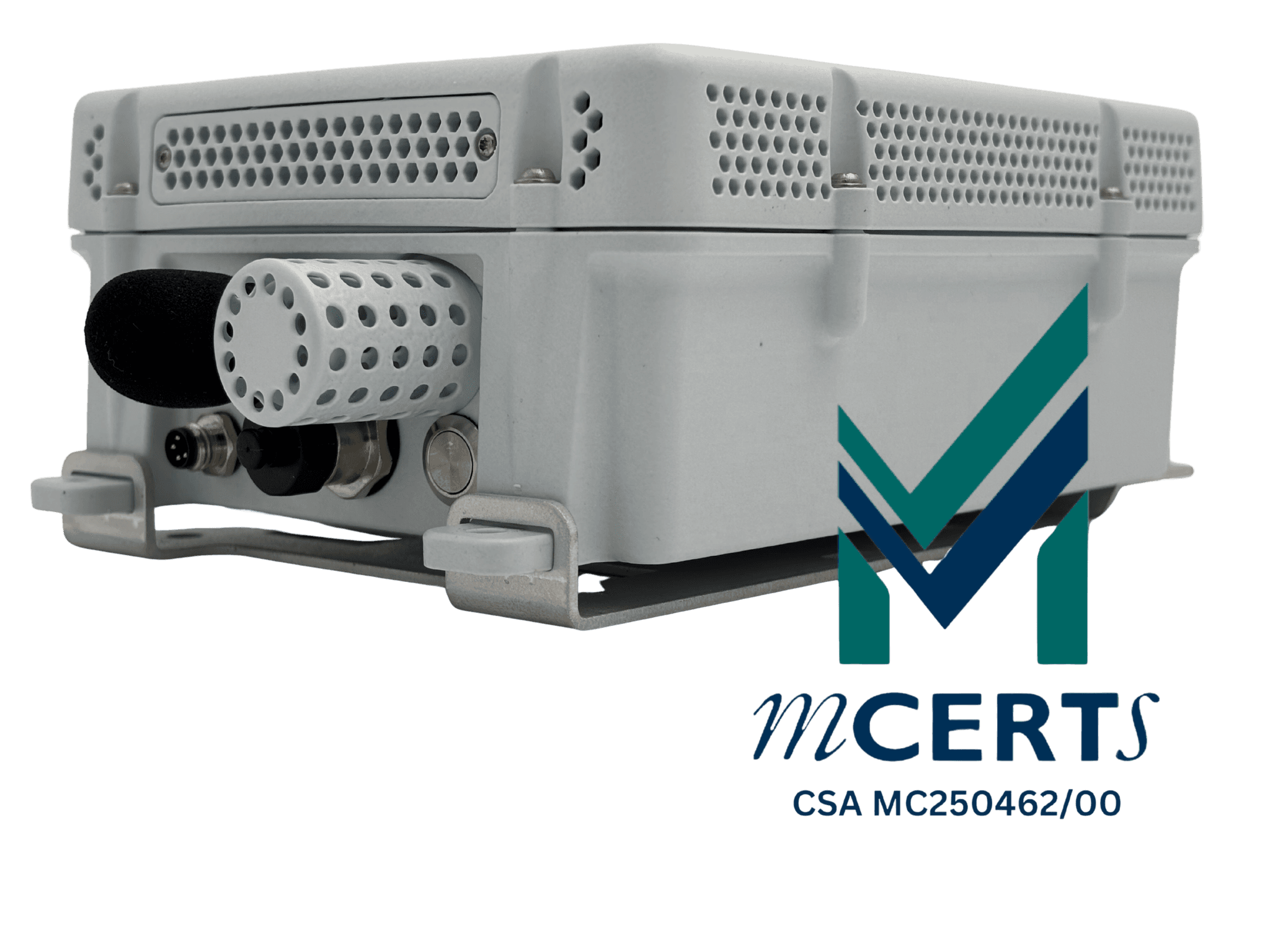
Sensorbee's MCERTS certification (Certificate No: CSA MC250462/00) covers the Particle Matter Module for PM10 and PM2.5 indicative monitoring, tested against the reference-grade Fidas 200S system. Individual unit calibration builds on this foundation by extending measurement traceability to every device leaving the production line.
Pricing
Individual calibration represents a significant investment in quality assurance per unit. As a result, pricing across the Air Pro 2, Particle Matter Module, and gas sensor range has been adjusted to reflect this enhancement.
For the current price list, contact our sales team directly at hello@sensorbee.com or use our contact form.
Frequently Asked Questions
What is the difference between individual calibration and type approval?
Type approval certifies a product model — a representative sample of units is tested against the performance standard, and the entire model range is deemed certified. Individual calibration verifies each physical unit before it ships. Every Air Pro 2, Particle Matter Module, and gas sensor receives its own calibration test and ships with a calibration certificate specific to its serial number.
Does individual calibration affect MCERTS certification status?
Individual calibration is an enhancement on top of MCERTS type certification. The Particle Matter Module remains MCERTS certified (Certificate No: CSA MC250462/00) for PM10 and PM2.5 indicative monitoring. Individual calibration adds per-unit traceability to the existing type-level certification, strengthening the evidential chain for each deployed device.
What does the calibration certificate include?
Each calibration certificate is specific to the unit's serial number and covers the calibration date, measured values across the calibration points, the applicable standard, and the calibrating technician's details. The certificate provides the traceability documentation required for regulatory submissions and compliance records.
Does individual calibration need to be repeated after deployment?
Factory calibration establishes the baseline measurement performance at dispatch. Sensorbee recommends periodic recalibration to maintain accuracy over the operational life of the unit — typically aligned with the manufacturer's recommended service intervals. For projects with ongoing regulatory reporting requirements, periodic calibration verification can be arranged through our service team.
How do I obtain the calibration certificate for my unit?
Calibration certificates are dispatched with each unit. If you require a replacement certificate or need calibration documentation for a previously purchased unit, contact hello@sensorbee.com with your unit serial number.

David Löwenbrand
Founder & CEO