
Complete guide to particulate matter in the UK — PM2.5 and PM10 sources, health effects, UK legal limits, measurement methods and MCERTS-certified monitoring
Particulate matter in the UK kills more people than road traffic accidents. Long-term exposure to PM2.5 contributes to approximately 29,000 premature deaths annually in the UK alone, making it the single largest environmental risk to public health. Yet many UK environmental monitoring programmes still rely on equipment that either measures the wrong size fractions, uses unreliable estimation methods, or delivers data 24 hours too late to trigger meaningful action.
Effective particulate matter monitoring — whether for PM2.5, PM10, or PM1 — requires understanding what you are measuring, why each size fraction matters, and which measurement methods actually deliver the accuracy your UK compliance obligations demand.
What Are PM1, PM2.5, PM10, and TSP?
Particulate matter is classified by aerodynamic diameter — the size at which a particle behaves in air. This determines how deep into the respiratory system it penetrates and, consequently, how much harm it causes.
| Fraction | Diameter | Penetration | Key Sources | Health Impact |
|---|---|---|---|---|
| PM1 | ≤1 µm | Deepest lung tissue, enters bloodstream | Combustion, vehicle exhaust, secondary formation | Cardiovascular disease, systemic inflammation |
| PM2.5 | ≤2.5 µm | Deep lungs (alveoli) | Traffic, domestic burning, industrial processes | Stroke, lung cancer, COPD, asthma |
| PM10 | ≤10 µm | Upper airways, bronchi | Construction dust, road dust, quarrying | Respiratory disease, bronchitis |
| TSP | All sizes | Nose, throat | Demolition, earthworks, wind-blown soil | Nuisance, visibility, soiling |
PM2.5 is the fraction of greatest health concern. These fine particles bypass the body's natural filtration — nose hairs and mucous membranes cannot trap them. They penetrate deep into the alveoli and, for the smallest particles, cross into the bloodstream. The World Health Organisation links PM2.5 exposure to ischaemic heart disease, stroke, chronic obstructive pulmonary disease, and lung cancer.
PM10 matters particularly on construction sites, where mechanical activities — demolition, earthmoving, concrete cutting — generate coarse particles in concentrations far exceeding urban background levels. A single unmitigated demolition operation can produce PM10 levels 10 to 20 times the 24-hour limit.
UK Particulate Matter Limits and Standards
The UK operates a layered regulatory framework for particulate matter, with different targets at different levels of ambition.
| Standard | PM2.5 Annual | PM2.5 24-hour | PM10 Annual | PM10 24-hour |
|---|---|---|---|---|
| UK Air Quality Regulations | 20 µg/m³ | — | 40 µg/m³ | 50 µg/m³ (max 35 exceedances) |
| Environment Act 2023 target | 10 µg/m³ by 2040 | — | — | — |
| WHO 2021 guidelines | 5 µg/m³ | 15 µg/m³ | 15 µg/m³ | 45 µg/m³ |
The gap between current UK limits and WHO recommendations is stark. The UK's annual PM2.5 limit of 20 µg/m³ is four times the WHO guideline of 5 µg/m³. The Environment Act 2023 set a legally binding target of 10 µg/m³ by 2040, alongside a 35% reduction in population exposure — still double the WHO recommendation.
For construction sites, dust monitoring requirements are typically set through Section 61 notices under the Control of Pollution Act 1974 or as planning conditions. These commonly specify continuous PM10 monitoring at site boundaries, with trigger levels (often 190 µg/m³ as a 15-minute mean, or site-specific thresholds) that require immediate dust suppression action.
The National Emission Ceilings Regulations require the UK to reduce PM2.5 emissions by 46% compared to 2005 levels by 2030 — driving demand for monitoring across industrial, urban, and construction settings.
How Particulate Matter Is Measured
Three principal methods exist for measuring airborne particulate matter. Each involves trade-offs between accuracy, cost, and real-time capability.
Optical Particle Counting (OPC)
An OPC draws air through a measurement chamber where a laser beam illuminates individual particles. Each particle scatters light in proportion to its size. A photodetector counts the scattering events and classifies particles into size bins — simultaneously reporting PM1, PM2.5, PM10, and optionally TSP concentrations.
OPC delivers continuous, real-time data. Results are available every second, making it the only practical method for automated threshold alerts on construction sites.
Two design features separate reliable OPC instruments from unreliable ones:
High air flow rate. PM10 particles are heavy enough to settle quickly. A sensor with low air flow will under-sample large particles, systematically under-reporting PM10. Instruments designed for accurate PM10 measurement use flow rates significantly higher than those adequate for PM2.5 alone.
Heated inlet. In humid conditions — common on UK construction sites — water droplets can be counted as particles, inflating readings. A heated inlet evaporates moisture before air enters the measurement chamber, preventing false high readings. Not all monitors include this feature; those without it produce unreliable data in conditions above roughly 80% relative humidity.
A third issue affects low-cost monitors: some devices only measure PM2.5 and then estimate PM10 using a mathematical ratio. This assumes a fixed relationship between fine and coarse particles — an assumption that fails on construction sites where the coarse fraction dominates. These monitors can under-report PM10 by 50% or more during demolition and earthworks.
Gravimetric Method (Reference)
The gravimetric method is the regulatory reference standard. Air is drawn through a size-selective inlet and collected on a pre-weighed filter for 24 hours. The filter is then weighed in a controlled laboratory environment. The mass difference, divided by the volume of air sampled, gives the concentration.
Gravimetric measurement is the most accurate method, but it cannot provide real-time data. Results arrive 24 to 48 hours after the sampling period. For compliance reporting, this is acceptable. For dust management on an active construction site, it is too slow — by the time you know PM10 spiked, the damage is done.
TEOM (Tapered Element Oscillating Microbalance)
TEOM instruments measure mass continuously by collecting particles on a vibrating element. The change in vibration frequency corresponds to the mass of deposited particles. TEOM provides near-reference-quality data in real time.
However, TEOM instruments are expensive, require mains power, and typically need a weatherproof enclosure. They are standard equipment in the UK's national Automatic Urban and Rural Network (AURN) but impractical for temporary construction site deployments.
MCERTS Certification — What It Means for Dust Monitoring
MCERTS (Monitoring Certification Scheme) is the Environment Agency's quality assurance framework for environmental monitoring equipment. For dust monitors, the relevant category is Indicative Ambient Particulate Monitors.
To achieve MCERTS certification, a dust monitor must pass:
- ·Performance testing: 80 days of consistent measurement data demonstrating less than ±50% uncertainty against a reference method
- ·Manufacturing audit: the production process must meet certified quality standards
- ·Review: the Environment Agency and a steering committee assess the application
Certification is administered by CSA Group on behalf of the Environment Agency. The process typically takes several months.
Why MCERTS matters: regulators in England and Wales expect MCERTS-certified equipment for dust monitoring required by environmental permits, Section 61 notices, and planning conditions. Using non-certified equipment risks having monitoring data rejected during enforcement proceedings — even if the instrument is technically accurate.
MCERTS-Certified Dust Monitors Compared
| Monitor | PM Fractions | Heated Inlet | Power | Solar Standard | Noise/Vibration |
|---|---|---|---|---|---|
| Sensorbee SB4102 | PM1, PM2.5, PM10 | Yes | Solar | Yes | Yes (with modules) |
| Aeroqual Dust Sentry | PM1, PM2.5, PM4, PM10, TSP | Yes | Solar/battery | Optional | No |
| Sonitus DM30 | PM1, PM2.5, PM10 | Yes | Mains | No | No |
| Sonitus DM30N | PM1, PM2.5, PM10 + noise | Yes | Mains | No | Noise only |
| EarthSense Zephyr | PM | — | — | No | No |
| Oizom Dustroid Pro | PM1, PM2.5, PM10, TSP | — | Solar | Yes | No |
| AQMesh | PM1, PM2.5, PM10 | — | Solar/Mains | Optional | No |
If you are considering alternatives to AQMesh or other air quality monitors listed above, our AQMesh alternatives guide provides a detailed comparison of specifications, certifications, and total cost of ownership.
Sensorbee PM Sensor Module — MCERTS-Certified Dust Monitoring
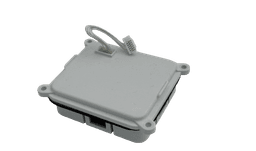
The Sensorbee Particle Matter Module (SB4102) is a rugged optical particle counter built for outdoor deployment. It measures PM1, PM2.5, and PM10 simultaneously using laser light scattering, with a high air flow rate designed specifically for reliable PM10 measurement.
Each SB4102 module includes a heated inlet element that compensates for humidity — critical for accurate readings on UK construction sites where relative humidity regularly exceeds 80%. Every module is individually 3-point calibrated against reference standards and ships with its own calibration certificate, providing full measurement traceability for regulatory submissions.
The SB4102 carries MCERTS certification for PM2.5 and PM10, meeting the Environment Agency's Performance Standard for Indicative Ambient Particulate Monitors. Paired with the Sensorbee Pro2 data logger (SB8202), it operates entirely on solar power — unlike most MCERTS-certified monitors, which require mains electricity.
For construction compliance, the SB4102 combines with the Sound Level Metre (SB4652) and Vibration Sensor (SB3641) on a single Pro2 station. This delivers dust, noise, and vibration monitoring — all three parameters required for Section 61 compliance — from one solar-powered device at each boundary position.
The SB4103 variant uses the same optical particle counter design without individual MCERTS calibration, suitable for indicative monitoring applications where formal certification is not required.
Construction Dust Monitoring — Compliance Requirements
On construction sites, dust monitoring is not optional — it is a condition of operating. For dust-specific deployment patterns, IAQM action levels, and Section 61 reporting workflow, see our dedicated construction dust monitoring page. Section 61 notices under the Control of Pollution Act 1974 and planning conditions imposed by local authorities routinely require:
- ·Continuous PM10 monitoring at site boundaries
- ·Automated alerts when trigger levels are exceeded (commonly 190 µg/m³ as a 15-minute mean)
- ·MCERTS-certified equipment for data to be accepted by regulators
- ·Real-time data access for site managers and, increasingly, for regulators and community stakeholders
- ·Historical data retention for compliance reporting and dispute resolution
The practical challenge is that construction site boundaries rarely have mains power. Monitoring positions change as the project progresses. Equipment must withstand weather, dust, and the general chaos of an active site.
This is why solar-powered, IoT-connected dust monitoring construction equipment — often described as MCERTS dust monitors or TSP monitoring devices — has become the standard. They deploy in minutes, move when the site layout changes, and transmit data without any on-site infrastructure.
Choosing a Dust Monitor — Key Criteria
| Criterion | What to check | Why it matters |
|---|---|---|
| MCERTS certification | Is the device certified for indicative ambient PM? | Non-certified data may be rejected by regulators |
| PM fractions | Does it measure PM1, PM2.5, AND PM10? | PM10 is the primary construction metric; PM2.5 increasingly required |
| Heated inlet | Does it compensate for humidity? | Without it, UK weather conditions produce false high readings |
| Measurement method | Does it measure PM10 directly or estimate from PM2.5? | Estimation under-reports coarse dust by up to 50% |
| Power source | Solar as standard or mains required? | Construction boundaries rarely have grid power |
| Multi-parameter | Can it monitor noise and vibration too? | Section 61 compliance requires all three |
| Calibration | Individual calibration certificate included? | Provides traceability for regulatory submissions |
Frequently Asked Questions
What is the difference between PM2.5 and PM10?
PM2.5 refers to particles with an aerodynamic diameter of 2.5 micrometres or less. PM10 covers particles up to 10 micrometres. PM2.5 penetrates deeper into the lungs and causes more serious health effects (cardiovascular disease, lung cancer). PM10 is more relevant to construction dust, where mechanical activities generate larger particles. Most regulatory frameworks require monitoring of both fractions.
Do I need MCERTS certification for dust monitoring on construction sites?
In England and Wales, regulators expect MCERTS-certified equipment for dust monitoring required by Section 61 notices and environmental permits. While there is no absolute legal mandate specifying MCERTS in all cases, using non-certified equipment risks having your monitoring data challenged or rejected during enforcement proceedings. For any project where compliance data will be submitted to regulators, MCERTS certification is effectively essential.
How accurate are optical particle counters compared to gravimetric methods?
MCERTS-certified optical particle counters must demonstrate less than ±50% uncertainty against reference gravimetric methods over 80 days of testing. In practice, well-designed OPC instruments with heated inlets and high air flow rates achieve significantly better accuracy than this threshold. The trade-off is that gravimetric provides the most accurate mass measurement but cannot deliver real-time data — making OPC the only practical choice for continuous site monitoring with automated alerts.
What are the current UK PM2.5 limits?
The UK Air Quality Regulations set an annual mean limit of 20 µg/m³ for PM2.5. The Environment Act 2023 introduced a legally binding target of 10 µg/m³ to be achieved by 2040, alongside a 35% reduction in population exposure. The WHO recommends an annual mean of just 5 µg/m³. These tightening targets are driving increased demand for PM2.5 monitoring across construction, industrial, and urban settings.