Loading...
SB4252
OVERVIEW
Sulfur dioxide emissions from shipping, power generation, and heavy industry remain a significant air quality concern — particularly in port cities and industrial zones where SO2 concentrations can spike during vessel operations or combustion processes. The Sensorbee SO2 Sensor is an electrochemical gas sensor module that detects sulfur dioxide at concentrations as low as 3 parts per billion, with 1 ppb resolution across a 0–10,000 ppb measurement range. Certified to CEN/TS 17660-1:2022, this 25-gram plug-in module integrates with the Sensorbee Air Pro 2 monitoring platform to provide continuous SO2 data for port authorities, environmental consultants, and industrial operators.
CAPABILITIES
Electrochemical sensing with 3 ppb limit of detection
1 ppb resolution across 0–10,000 ppb range
CEN/TS 17660-1:2022 certified performance
Essential for maritime and industrial emissions monitoring
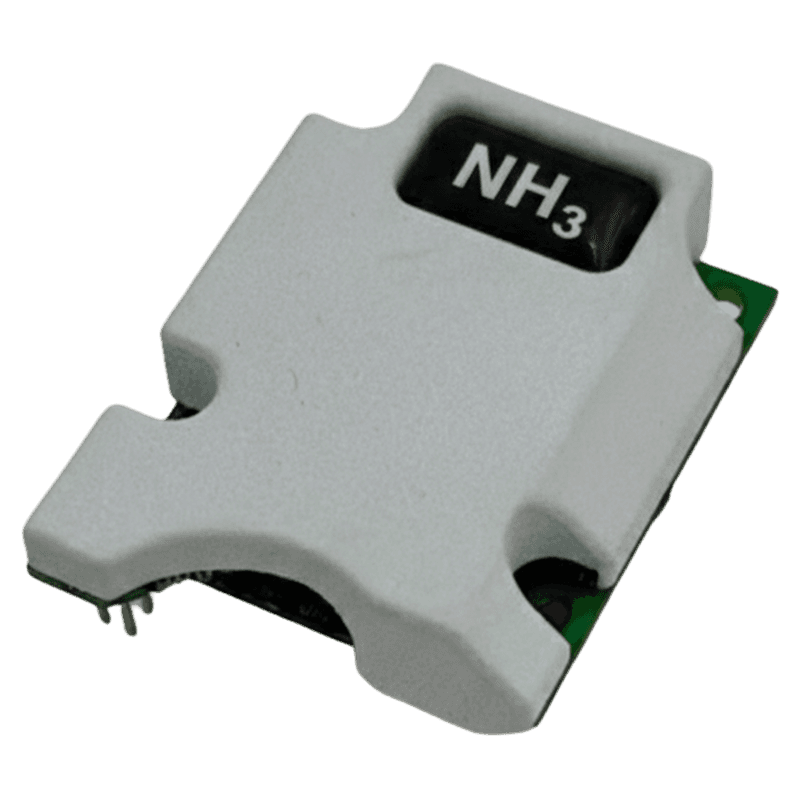
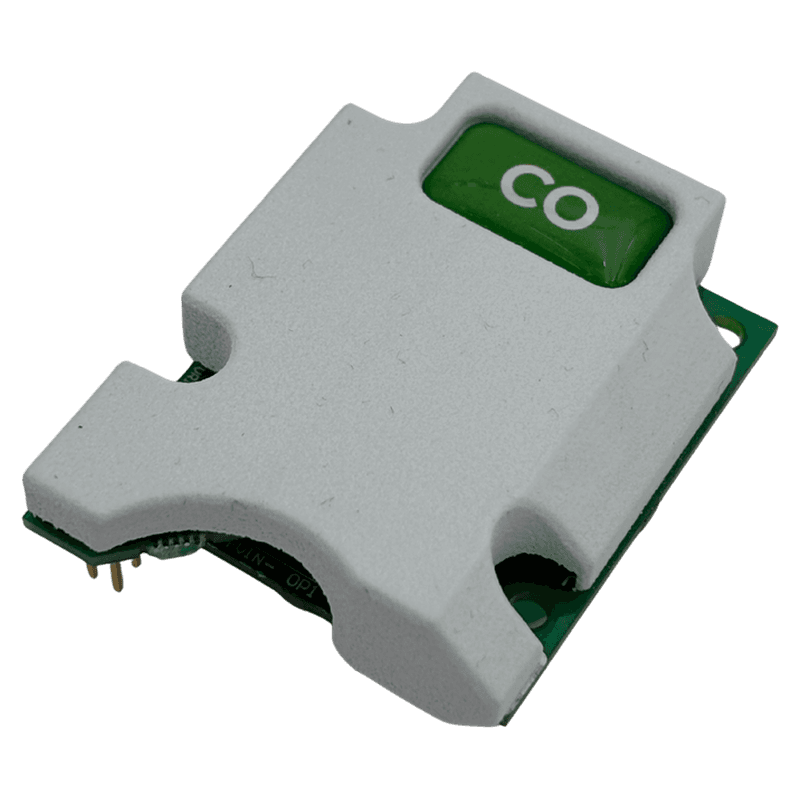
Compact 25 g plug-in module with polyamide enclosure
>1 year operational life with field replacement
SPECIFICATIONS
| Sensor Type | Electrochemical |
| Measurement Range | 0 to 10,000 ppb |
| Resolution | 1 ppb |
| Limit of Detection | 3 ppb (CEN/TS 17660-1:2022) |
| Repeatability | 5 ppb (CEN/TS 17660-1:2022) |
| Typical Accuracy | +/-15 ppb |
| Response Time | <80 sec |
| Guarantee Range | 20 ppm |
| Dimensions | 55 x 40 x 30 mm |
| Weight | 25 gram |
| Enclosure | Polyamide |
| Operating Temperature | -30 to +40 C |
| Operating Pressure | 800 to 1200 hPa |
| Operating Humidity | 15 to 85 %RH |
| Operational Life | >1 Year |
The SO2 sensor uses electrochemical detection technology. Sulfur dioxide molecules diffuse through a gas-permeable membrane and react at a working electrode, producing an electrical current directly proportional to the SO2 concentration in the sampled air. This electrochemical approach delivers the low parts-per-billion sensitivity needed to track ambient SO2 levels and detect emission events, without requiring the complex wet chemistry or UV fluorescence systems used in reference-grade analysers.
The sensor module measures 55 × 40 × 30 mm and weighs 25 grams in a polyamide enclosure rated for outdoor operation from -30 to +40°C. It connects to the Air Pro 2 as a plug-in module — the base station handles signal conditioning, temperature compensation, data logging, and cellular transmission. Each module is factory-calibrated and requires no field setup beyond physical insertion into the base station.
Sulfur dioxide is a respiratory irritant and a precursor to acid rain and fine particulate matter (PM2.5) formation. While SO2 emissions from power generation have decreased significantly in many regions due to fuel switching and flue gas desulfurisation, maritime shipping remains a major source — particularly since the IMO 2020 regulation reduced the global sulfur cap for marine fuel from 3.5% to 0.5%.
Key monitoring scenarios include:
The 3 ppb limit of detection ensures the Sensorbee SO2 sensor can resolve the baseline concentrations and small emission events that characterise modern low-sulfur environments, not just major pollution incidents.
The SO2 sensor provides ±15 ppb typical accuracy with 5 ppb repeatability. Response time is under 80 seconds — appropriate for the one-minute and five-minute averaging periods used in ambient air quality monitoring. The 0–10,000 ppb measurement range covers the full spectrum from clean background air (typically below 5 ppb) through urban and port environments (10–50 ppb typical) to near-source industrial monitoring where short-term concentrations may reach several hundred ppb.
The 20 ppm guarantee range provides protection against sensor damage during extreme emission events, ensuring the module recovers and continues accurate measurement after high-concentration exposure.
The SO2 sensor is particularly valuable for port environmental monitoring programmes. Under IMO 2020, ships must use fuel with a maximum sulfur content of 0.5% (or use exhaust gas cleaning systems). Port authorities worldwide are deploying ambient SO2 monitoring networks to identify non-compliant vessels remotely — avoiding the need to board every vessel for fuel sampling.
The monitoring approach relies on detecting SO2 concentration spikes that correlate with vessel movements. When a ship passes through or berths near a monitoring station, its exhaust plume briefly elevates local SO2 levels. The magnitude of this spike, combined with wind data, can indicate whether the vessel is burning compliant fuel. Dense monitoring networks using multiple Sensorbee SO2 sensors create overlapping coverage that increases detection probability and supports enforcement action.
The SO2 sensor module plugs directly into the Air Pro 2 environmental monitoring station. The base station automatically recognises the sensor and begins data acquisition — no software configuration or address setting is required.
For comprehensive port or industrial monitoring, the SO2 sensor operates alongside other gas modules (NO2, O3, CO, H2S, NO) on the same base station. This multi-gas capability allows a single monitoring station to track the full range of combustion-related pollutants, providing a complete emissions fingerprint for source identification.
SO2 data is transmitted to the Sensorbee Cloud via the base station's cellular connection, where real-time alerts can be configured to notify operators when concentrations exceed defined thresholds — enabling rapid response to emission events.
Install the SO2 sensor by inserting the module into an available sensor port on the Air Pro 2 base station. The module is recognised immediately, and measurement data begins flowing within the sensor's warm-up period. No tools, wiring, or calibration equipment are needed.
The sensor has an operational life exceeding one year. Replacement involves removing the depleted module and inserting a new factory-calibrated unit — a two-minute process that requires no site recalibration. For port monitoring programmes operating multiple stations, bulk sensor replacement on an annual schedule minimises maintenance visits and maximises data capture rates.
The SO2 sensor measures ambient concentrations, not stack emissions directly. However, by correlating SO2 concentration spikes with vessel AIS positions and meteorological data, port monitoring networks can identify vessels likely burning non-compliant fuel for further investigation and fuel sampling.
Both use electrochemical technology in the same 25-gram form factor, but each is optimised for its target gas. The SO2 sensor has 5 ppb repeatability and ±15 ppb accuracy tuned for sulfur dioxide detection, while the NO2 sensor achieves 4 ppb repeatability and ±7 ppb accuracy for nitrogen dioxide. Both can be deployed simultaneously on the same base station.
Each module ships factory-calibrated and ready for deployment. Field calibration is not required for standard monitoring. For regulatory monitoring programmes requiring traceable calibration records, co-location comparisons with reference instruments can be performed using the Air Pro 2 platform.
Electrochemical SO2 sensors have known cross-sensitivities, particularly to ozone and nitrogen dioxide. The Sensorbee platform applies algorithmic corrections using data from co-deployed O3 and NO2 sensors (when present) to compensate for cross-interference and improve SO2 measurement accuracy.
The Air Pro 2 supports multiple gas sensor modules simultaneously. You can deploy the SO2 sensor alongside NO2, O3, CO, H2S, NO, and other available modules to create a comprehensive multi-gas monitoring station from a single platform.
LEARN MORE
Looking for AQMesh alternatives? Compare Sensorbee, Aeroqual, Kunak, and other air quality monitoring systems with specs, certifications, and honest guidance for UK projects.
Read More →Compare Sensorbee and EarthSense Zephyr — both MCERTS-certified, UK-focused air quality monitors. Specs, cartridge systems, noise and vibration, and buyer guidance.
Read More →Detailed comparison of Sensorbee and Kunak air quality monitoring systems. Specs, gas sensors, certifications, noise and vibration capabilities, and buyer guidance for UK projects.
Read More →Speak to our technical team about specifications, site suitability, and pricing.
Used in: Ports monitoring