

Posted by Oscar Sjöberg on · 7 min read
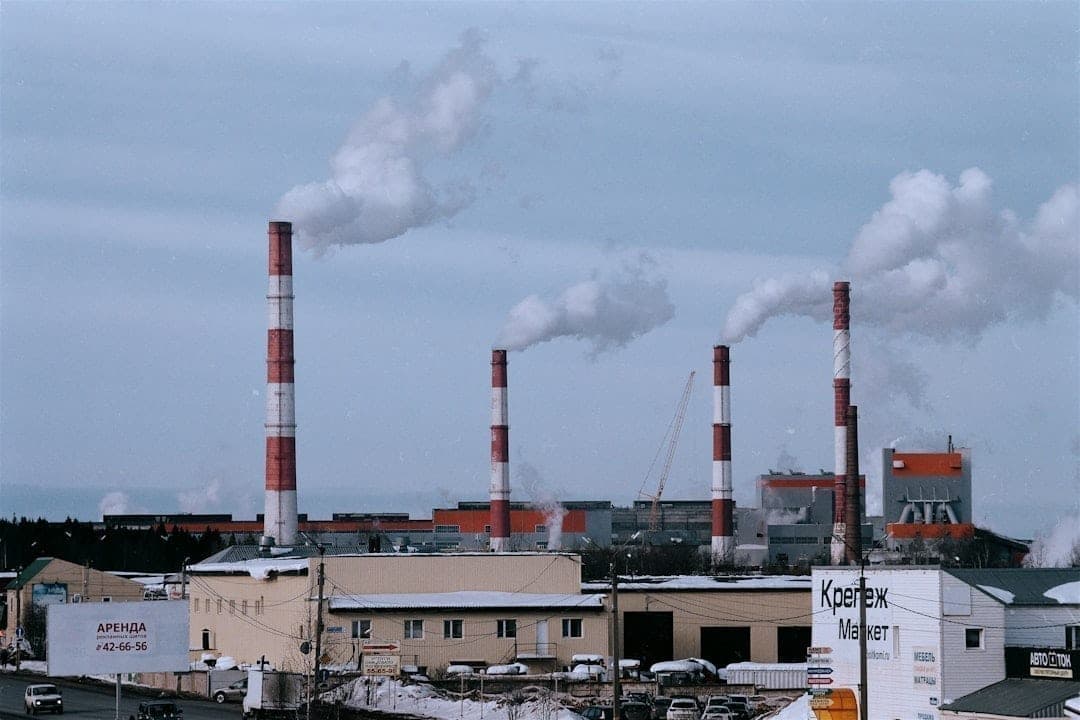
Benzene, toluene, formaldehyde, and xylene are among the most common volatile organic compounds (VOCs) found on construction sites, industrial facilities, and land remediation projects. Several are classified as Group 1 carcinogens by the International Agency for Research on Cancer. Yet unlike dust or noise, VOCs are often invisible and odourless at the concentrations that cause chronic health damage. Without continuous monitoring, elevated VOC levels can persist for weeks before anyone notices.
What VOCs Are and Where They Come From
Volatile organic compounds are carbon-based chemicals that evaporate readily at ambient temperatures. The term covers thousands of individual compounds with very different toxicity profiles. Some, like ethanol, pose minimal risk at typical environmental concentrations. Others, like benzene, have no safe exposure threshold according to the World Health Organisation.
Common VOC sources on monitored sites include:
- ·Construction activities: Painting, coating, adhesive application, waterproofing, and asphalt laying all release significant VOC concentrations. Demolition of older buildings can liberate VOCs from legacy materials.
- ·Industrial processes: Chemical manufacturing, fuel handling and storage, solvent use, printing operations, and waste treatment generate continuous or episodic VOC emissions.
- ·Land remediation: Excavation of contaminated ground releases trapped VOCs, particularly on former industrial land, petrol station sites, and areas with historical waste deposits.
- ·Vehicle and plant exhaust: Diesel and petrol combustion produces a complex mixture of VOCs alongside NOx and particulate matter.
- ·Natural sources: Vegetation emits biogenic VOCs (isoprene, terpenes) that interact with anthropogenic NOx to form ground-level ozone.
The regulatory framework for VOC control in the UK spans multiple instruments: the Environmental Permitting Regulations (transposing the Industrial Emissions Directive 2010/75/EU) for industrial emissions, COSHH requirements for workplace exposure, and planning conditions that may specify VOC monitoring on sensitive development sites. For facilities covered by IED, Best Available Techniques Reference Documents (BREFs) set BAT-Associated Emission Levels (BAT-AELs) that operators must meet or justify departures from.
Health Effects at Environmental Concentrations
Short-term VOC exposure at elevated concentrations causes headaches, dizziness, eye and respiratory irritation, and nausea. These symptoms are common among workers on sites with poor ventilation or inadequate emission controls, but they also affect nearby communities during emission events.
Long-term exposure to specific VOCs carries more serious risks. Benzene exposure is linked to leukaemia. Formaldehyde is associated with nasopharyngeal cancer. Toluene affects the central nervous system at chronic low-level exposure. These are not solely occupational risks. Residential areas downwind of emission sources can experience sustained exposure at levels that exceed WHO guideline values.
VOCs also drive secondary pollution. In the presence of sunlight and nitrogen oxides, VOCs undergo photochemical reactions that produce ground-level ozone and secondary particulate matter. This means VOC emissions contribute to PM2.5 concentrations and ozone episodes that affect populations far from the original source.
Why Periodic Sampling Falls Short
Traditional VOC assessment relies on grab samples, sorbent tubes, or periodic canister sampling analysed in a laboratory. These methods provide accurate identification and quantification of individual compounds, but they have significant limitations for site management:
- ·Temporal gaps. A 15-minute grab sample captures conditions at one moment. VOC emissions from construction activities, industrial batch processes, or weather-driven releases can spike and subside within minutes. Periodic sampling misses these events entirely.
- ·Delayed results. Laboratory analysis typically takes 5-10 working days. By the time results arrive, the emission event is long past, and the opportunity for timely intervention has been lost.
- ·Limited spatial coverage. Budget constraints typically limit periodic sampling to a few fixed positions. Mobile or diffuse sources may generate highest concentrations at locations between sampling points.
Continuous real-time monitoring addresses these gaps by measuring VOC concentrations every few seconds, generating immediate alerts when levels exceed action thresholds, and building a complete temporal record that periodic methods cannot replicate.
How Real-Time VOC Sensors Work
The VOC sensor used in environmental monitoring typically employs photoionisation detection (PID) or metal oxide semiconductor (MOS) technology. Each has distinct characteristics:
PID sensors use ultraviolet light to ionise VOC molecules, generating a current proportional to total VOC concentration. They respond to a broad range of compounds with high sensitivity, typically detecting total VOC (TVOC) concentrations from as low as 1 ppb up to 10,000 ppm depending on the lamp energy (10.6 eV lamps cover most common VOCs; 11.7 eV lamps extend detection to compounds with higher ionisation potentials, including formaldehyde). PID sensors excel at detecting sudden concentration changes, making them effective for leak detection and emission event monitoring.
MOS sensors measure changes in electrical resistance when VOC molecules interact with a heated metal oxide surface. They offer good sensitivity across a wide concentration range (typically 10 ppb to several thousand ppm) and are well-suited to continuous monitoring applications where long-term stability and low power consumption matter. MOS sensors are less selective than PID sensors but provide reliable trend data for ambient TVOC screening.
Both approaches measure total VOC concentration rather than individual compound speciation. For applications requiring compound-specific identification, real-time sensor data serves as a trigger for targeted grab sampling when elevated levels are detected.
Deploying VOC Monitoring on Site
Effective VOC monitoring requires thoughtful sensor placement aligned with the monitoring objectives. Common deployment configurations include:
Fenceline monitoring around industrial facilities or remediation sites positions VOC sensors along the site boundary at intervals determined by prevailing wind patterns and site geometry. This configuration detects emissions reaching the site perimeter and provides early warning before VOCs affect neighbouring receptors.
Source monitoring places sensors close to identified emission points, such as storage tanks, process vents, excavation areas, or painting operations. High temporal resolution at these positions helps operators identify which activities generate the highest emissions and assess the effectiveness of control measures.
Receptor monitoring at sensitive locations, schools, residential boundaries, hospitals, measures the actual exposure experienced by the population of concern. Combining receptor data with wind direction measurements from the same monitoring station helps attribute elevated readings to specific upwind sources.
Roaming or phased deployment suits construction and remediation sites where emission sources move as work progresses. Solar-powered, cellular-connected units like the Air Pro 2 Cellular relocate in minutes without infrastructure changes, tracking the active work zone throughout the project.
Combining VOC Data with Other Parameters
VOCs rarely occur in isolation. Construction and industrial sites that generate VOC emissions typically also produce particulate matter, noise, and potentially vibration. Measuring these parameters together from a single monitoring station provides several advantages:
- ·Correlation analysis identifies whether VOC spikes coincide with specific activities that also elevate dust or noise levels, simplifying source identification.
- ·Meteorological context from integrated temperature, humidity, and wind sensors explains why the same activity produces different VOC concentrations on different days. Temperature strongly influences VOC volatility, while wind speed and direction determine dispersion patterns.
- ·Unified reporting through Sensorbee Cloud presents all parameters in a single dashboard, reducing the time environmental managers spend switching between data sources.
Additional gas sensors for NO2, SO2, CO, CO2, and ammonia can be configured alongside the VOC sensor in the same monitoring station, tailoring the measurement suite to the specific emission profile of each site.
Data Management and Threshold Alerts
Continuous VOC monitoring generates large volumes of data. Without structured data management, the information overload can be as problematic as the data gaps of periodic sampling.
Cloud-based platforms solve this by applying automated threshold screening, trend analysis, and alert generation. When TVOC concentrations exceed a pre-set action level, the system immediately notifies designated personnel by SMS or email. Tiered alert levels, for example at 50%, 75%, and 100% of a workplace exposure limit, enable graduated responses before a breach occurs.
Historical data stored in Sensorbee Cloud supports regulatory reporting, environmental impact assessments, and post-project analysis. Data export in standard formats allows integration with third-party analysis tools and regulatory submission systems.
Frequently Asked Questions
What is the difference between TVOC and individual VOC measurement?
TVOC (total volatile organic compounds) sensors measure the combined concentration of all detectable VOCs present in the air, expressed as a single value typically referenced to isobutylene or toluene. They do not identify individual compounds. For applications requiring compound-specific data, such as confirming benzene concentrations against workplace exposure limits, laboratory analysis of grab samples remains necessary. Real-time TVOC monitoring is most effective as a screening and alert tool that triggers targeted sampling when elevated levels are detected.
What TVOC concentration levels should trigger concern?
Context determines the answer. UK workplace exposure limits vary by compound: benzene has a WEL of 1 ppm, while toluene is 50 ppm. For ambient environmental monitoring, there is no single UK standard for TVOC, but readings consistently above 300-500 ppb at site boundaries warrant investigation. Many site monitoring schemes set action levels based on baseline measurements, with alerts triggered at multiples of the established background concentration.
Can VOC sensors operate in harsh weather conditions?
Yes. Environmental-grade VOC sensors are housed in weatherproof enclosures rated for outdoor deployment across UK temperature ranges, rainfall, and humidity conditions. Solar-powered units operate continuously without mains power, and cellular connectivity eliminates the need for site Wi-Fi. Regular calibration checks, supported by automated sensor health monitoring, maintain measurement accuracy across seasonal conditions.
How often do VOC sensors need calibration?
Calibration intervals depend on sensor technology and operating conditions. Typical field deployments require calibration verification every 3-6 months, with full recalibration annually or when sensor health monitoring indicates drift beyond acceptable tolerances. Modular sensor cartridges can be swapped on-site without specialist equipment, minimising downtime during maintenance.

Oscar Sjöberg
Partner & Embedded Software Engineering Manager