
Posted by Carlo Apas on · 3 min read
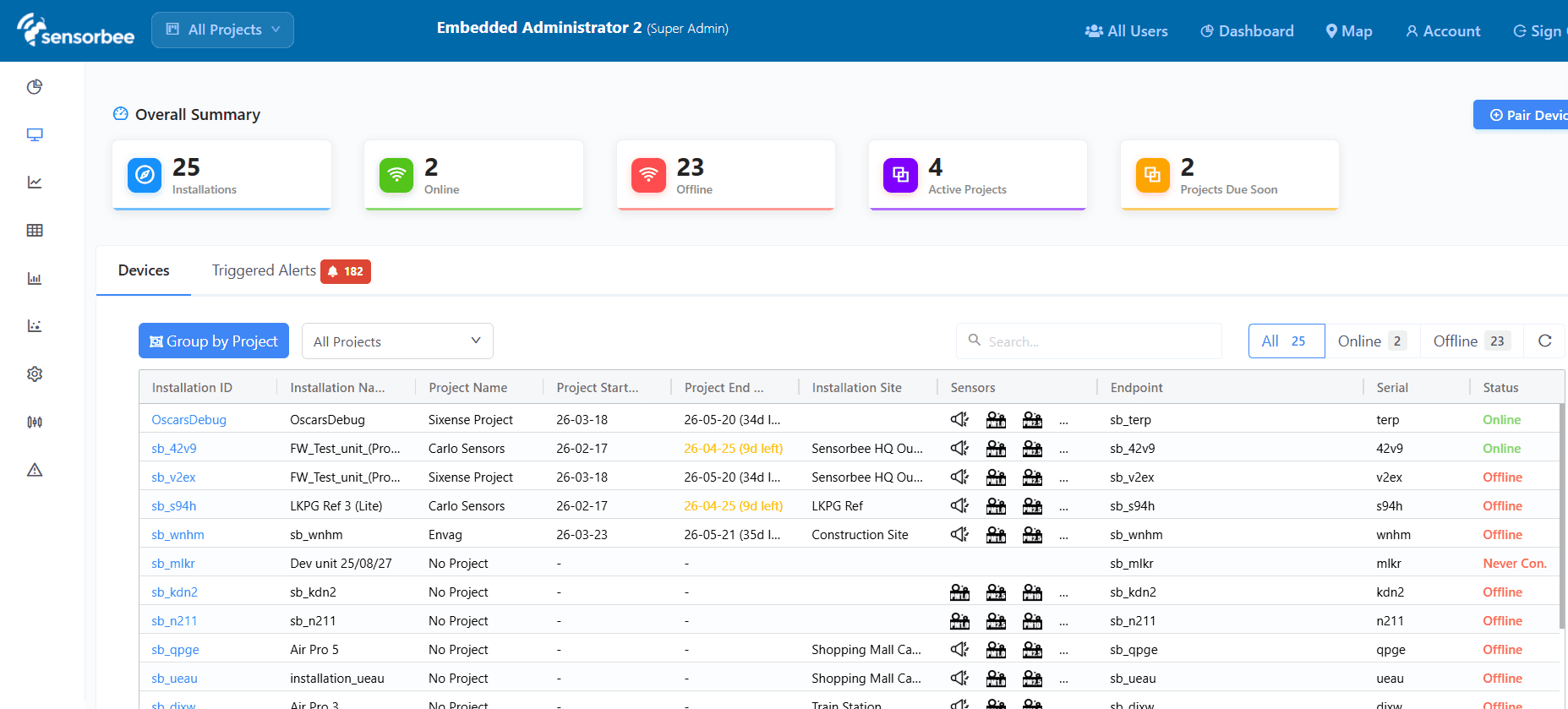
The latest Sensorbee Cloud deployment went live on 26 June. This release focuses on two things that matter day-to-day for consultants and site teams: compliance-ready vibration alerting and a clearer picture of sensor health across your projects.
Vibration alert limits per BS 7385
Vibration alert thresholds in Sensorbee Cloud now support BS 7385 peak-frequency limits, with separate limit configurations for different building types — so the platform applies the frequency-dependent guide values the standard defines, rather than a single flat PPV trigger.
In practice, this means you can configure alerts that follow the same damage criteria an assessor would apply: lower thresholds at low frequencies where structures are most vulnerable, higher ones as frequency rises. Combined with our triaxial vibration sensor, it closes the loop from measurement to standards-based alerting without manual threshold arithmetic.
If you want the background on how PPV measurement and BS 7385-2 damage thresholds work, our construction vibration monitoring guide covers it in depth.
Online status and last-received timestamp for every sensor
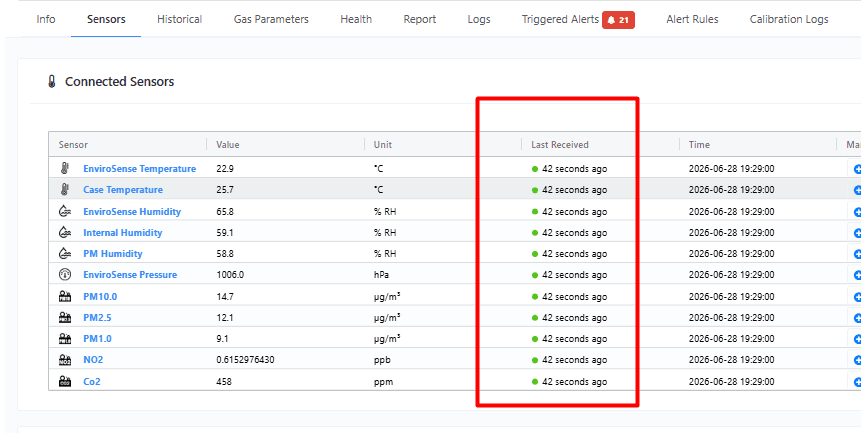
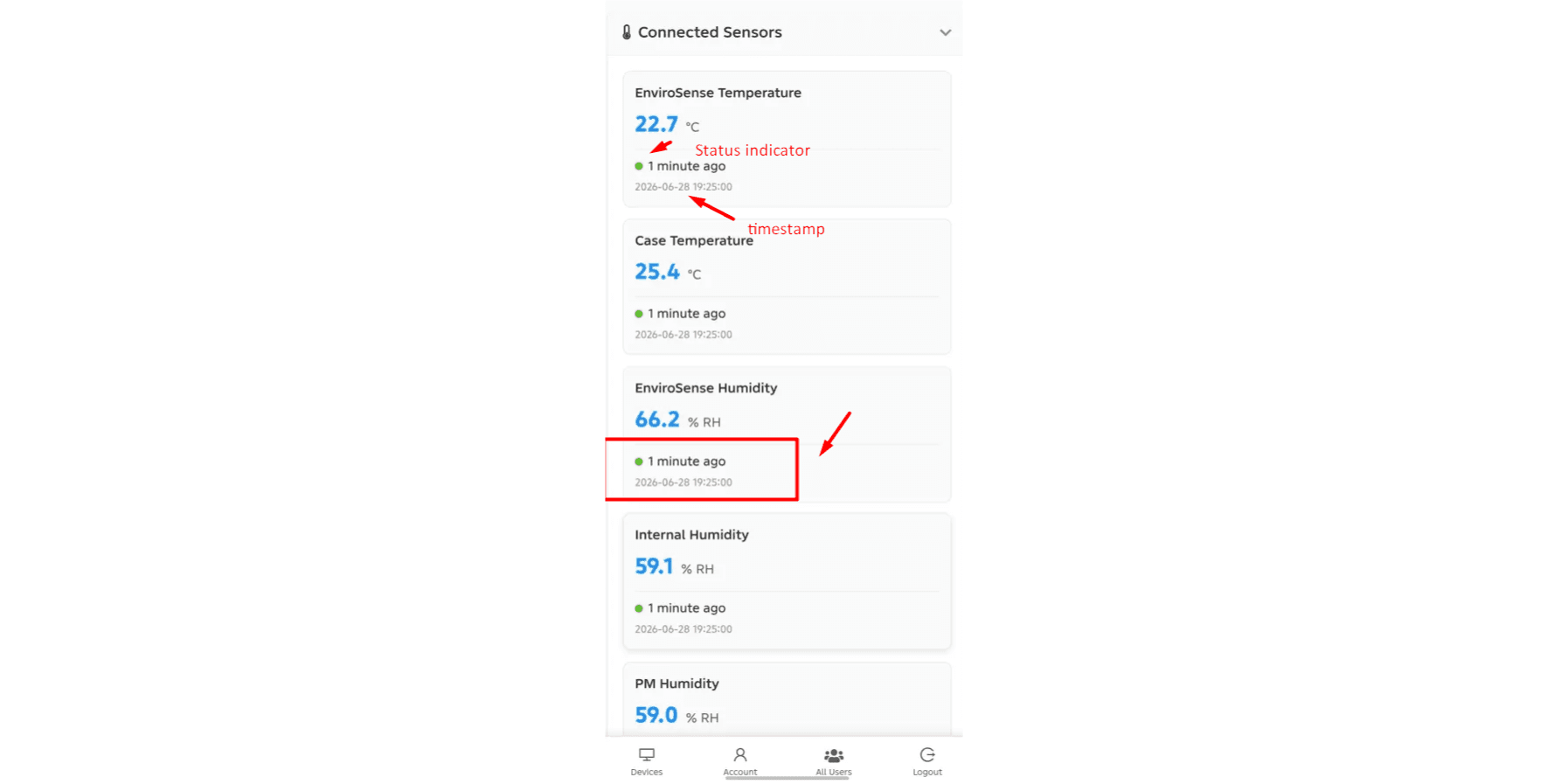
The device page — and the mobile view — now show a live online/offline indicator and the last-received data timestamp for each sensor. Instead of opening graphs to check whether data is flowing, you can see connectivity for a whole installation at a glance.
For anyone running unattended monitors on remote sites, this is the quickest way to confirm everything is reporting before a compliance deadline — or to spot a silent sensor before it becomes a data gap.
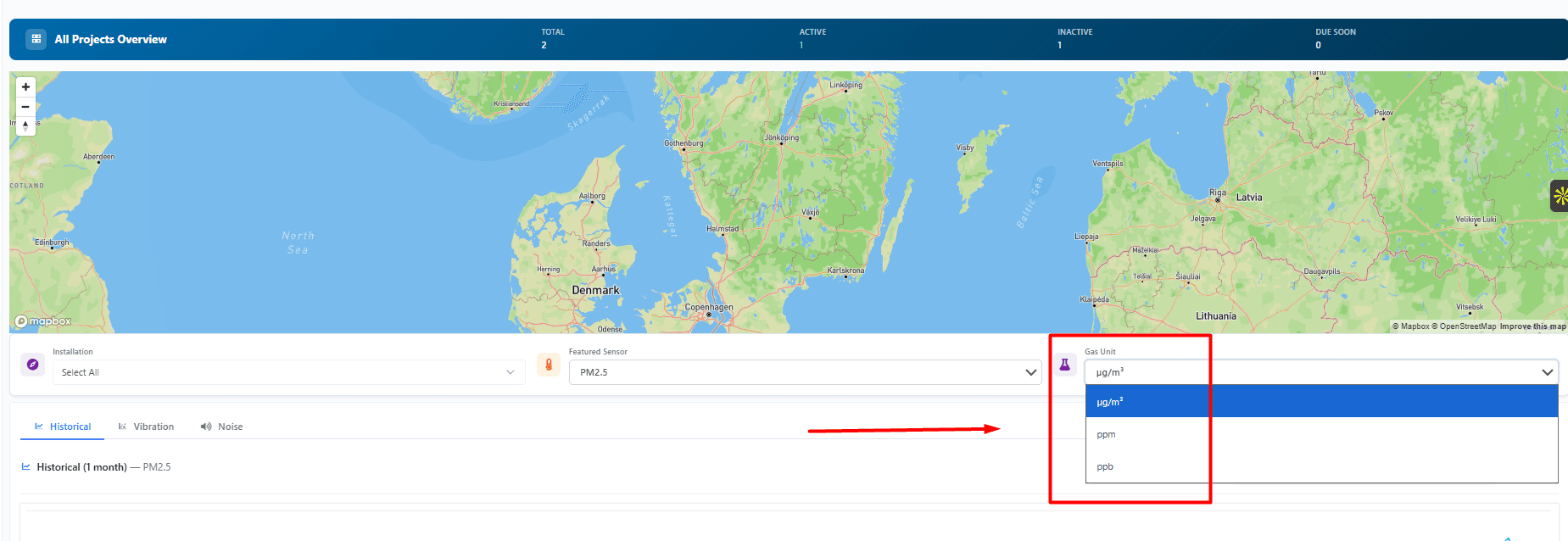
Switch gas units between ppm and µg/m³ on the map
Gas metrics on the dashboard map can now be toggled between ppm and µg/m³ directly. Regulatory limit values are typically expressed in µg/m³, while much of the industry works in ppm — now you can read the map in whichever unit your report or client expects, without converting by hand.
Alert thresholds in manual project reports
Manually generated project reports now include alert threshold indicators, showing where readings sit relative to your configured limits directly in the exported document. Reports handed to clients or regulators carry the compliance context with them, not just the raw numbers.
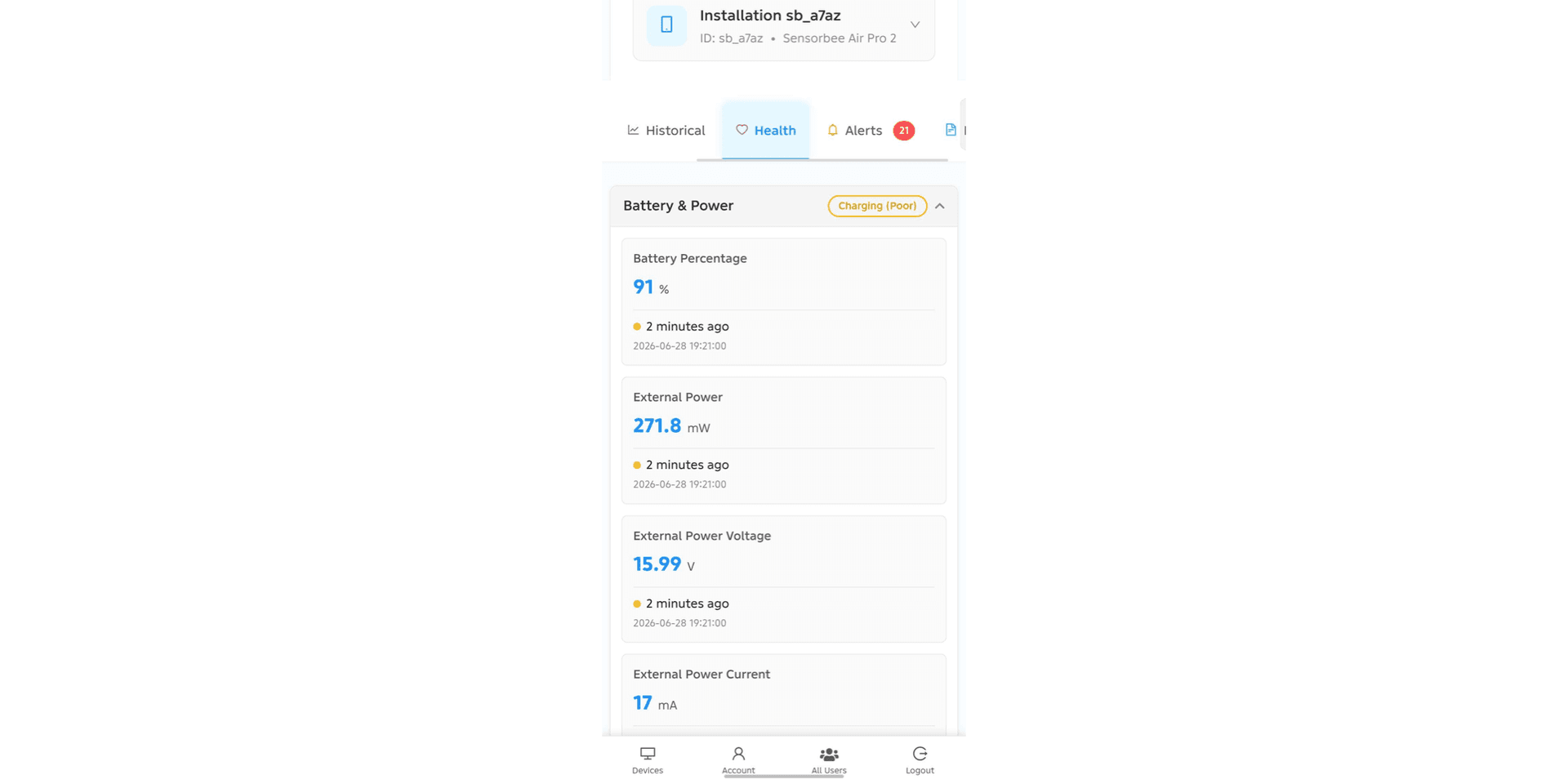
Health metrics as a sensor-style list on mobile
The mobile view now presents device health metrics as a compact list of last-read values rather than graphs — faster to load and easier to scan when you are standing next to the unit on site.
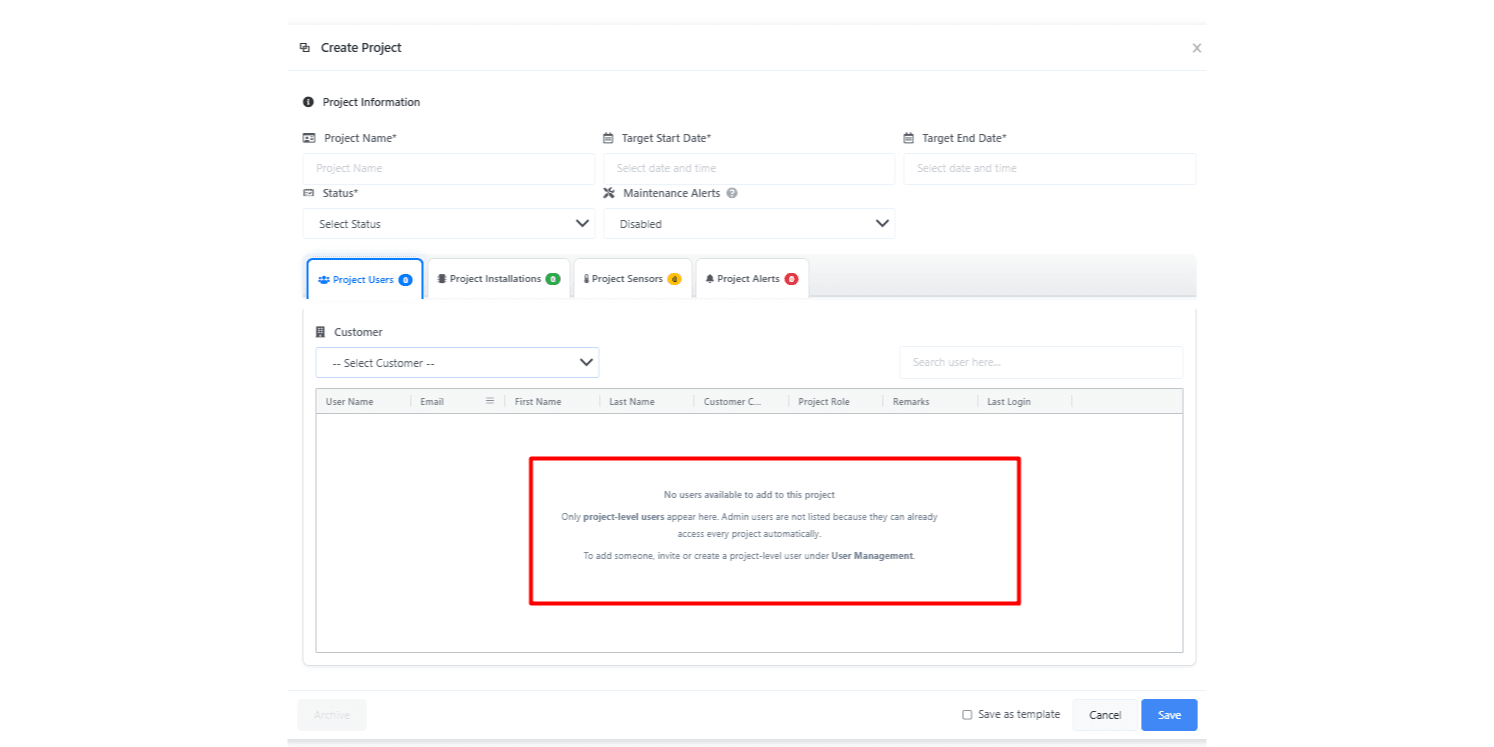
Clearer project setup
When every account user has already been added to a project, the project setup dialog now explains this — and points you to User Management to invite someone new — instead of showing an empty list.
Alongside these features, the release includes stability improvements to background processing and alerting reliability.
Sensorbee Cloud is the standard data platform for all Sensorbee monitoring stations — no separate software purchase required. To see the platform with your own project data, book a demo or get in touch, or download the product catalogue.

Carlo Apas
Technical Support Engineer