

Posted by Filip Sobecki on · 7 min read
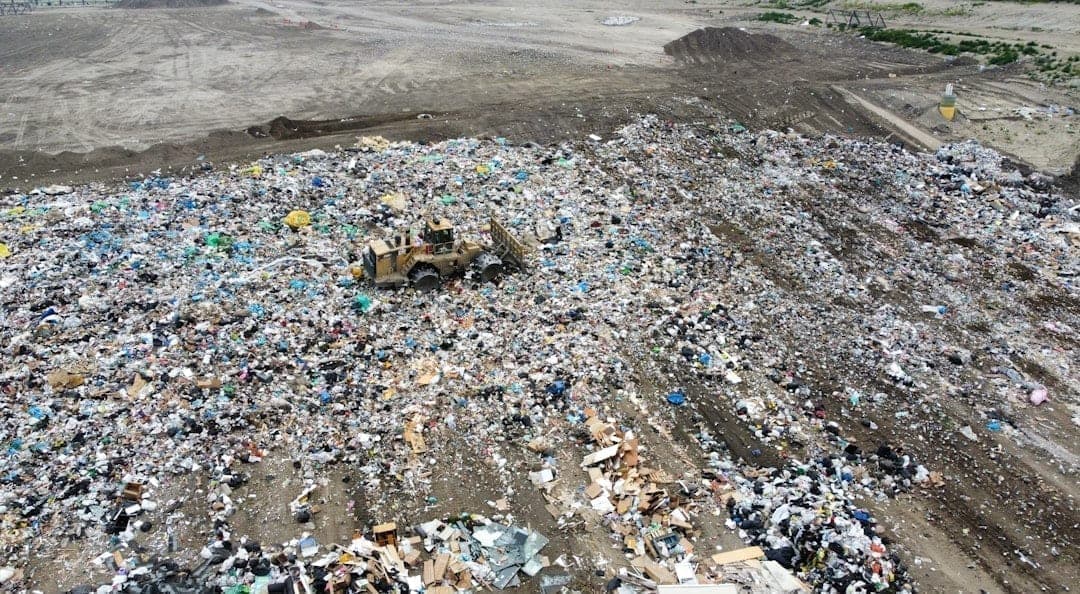
A typical municipal landfill generates between 100 and 400 cubic metres of landfill gas per tonne of waste per year. That gas contains roughly 50% methane (CH₄), 40% carbon dioxide (CO₂), and a volatile mix of hydrogen sulphide (H₂S), ammonia (NH₃), and over 100 trace volatile organic compounds (VOCs). Left unmonitored, these emissions create odour nuisance, health risks for workers and nearby residents, and significant greenhouse gas contributions. Methane alone has a global warming potential 80 times that of CO₂ over a 20-year horizon.
For landfill operators in the UK, the Environmental Permitting Regulations require continuous demonstration that emissions remain within permit limits. The Environment Agency's LFTGN 07 guidance expects operators to monitor landfill gas migration and ambient air quality at site boundaries. Complaints from nearby communities about odour are the single most common trigger for enforcement action, and they are rising year on year.
The Challenge of Landfill Emissions
Landfill gas emissions are inherently unpredictable. Decomposition rates vary with waste composition, moisture content, temperature, and barometric pressure. A sudden drop in atmospheric pressure can cause gas to escape through cracks in the cap or along poorly sealed well heads. Seasonal changes alter microbial activity. New waste cells produce different gas profiles than older, stabilised areas.
This variability makes periodic spot-sampling inadequate. A monthly walkover survey might record normal readings on the day of the visit while missing a week-long emission event that triggered dozens of odour complaints. Manual sampling also exposes workers to hazardous concentrations, particularly of H₂S, which is acutely toxic above 10 ppm and can cause olfactory fatigue at concentrations that are still dangerous.
Key pollutants requiring monitoring at landfill sites include:
- ·Methane (CH₄): Explosive at 5–15% concentration in air. Migrates laterally through soil, posing risks to adjacent properties. Regulated under Environmental Permitting Regulations and the Landfill Directive.
- ·Hydrogen sulphide (H₂S): Detectable by smell at 0.02 ppm but causes olfactory fatigue above 100 ppm. The UK workplace exposure limit is 5 ppm (8-hour TWA). Primary cause of odour complaints.
- ·Ammonia (NH₃): Released from decomposing organic nitrogen. Irritating to eyes and respiratory tract above 25 ppm. Contributes to secondary particulate matter formation.
- ·Volatile organic compounds (VOCs): Include benzene, toluene, and xylene from industrial waste. Some are carcinogenic. Contribute to ground-level ozone formation.
- ·Carbon dioxide (CO₂): Displaces oxygen in confined spaces. An asphyxiation hazard in poorly ventilated areas. Indicator of decomposition activity.
- ·Particulate matter (PM2.5 and PM10): Generated by vehicle movements, waste handling, and wind erosion of exposed surfaces.
Why Continuous Perimeter Monitoring Matters
Regulatory guidance increasingly expects landfill operators to demonstrate continuous awareness of boundary emissions rather than relying on periodic surveys. The reasons are practical.
Odour complaints typically occur during evenings and weekends when atmospheric conditions trap emissions close to ground level. A temperature inversion at 6 PM on a Friday evening creates conditions that a Monday morning walkover survey will never capture. Without continuous data, operators cannot correlate complaints with actual emission events, making it impossible to identify the source or take corrective action.
Continuous monitoring also protects operators from unjustified complaints. When a nearby resident reports odour, having timestamped perimeter data showing low H₂S and VOC concentrations at that time provides a factual basis for response. Without data, every complaint becomes a potential enforcement investigation.
For sites with gas collection and flaring systems, continuous monitoring verifies that the extraction system is performing. A rise in perimeter methane concentrations indicates that the gas collection network needs attention, whether from blocked wells, damaged pipework, or insufficient vacuum.
Deploying a Landfill Monitoring Network
An effective landfill monitoring network places sensors at strategic boundary locations and near operational areas where emissions are most likely. The Sensorbee Air Pro 2 is designed for exactly this type of deployment.
Each station operates on solar power with battery backup, eliminating the need for mains electricity at remote perimeter locations. Cellular connectivity via LTE-M or NB-IoT transmits data directly to Sensorbee Cloud without requiring site-wide Wi-Fi or wired network infrastructure. Installation takes under 10 minutes per station using a standard pole mount.
The modular sensor architecture allows each station to be configured for the specific pollutants relevant to its location:
- ·Perimeter fence-line stations: VOC sensor for total volatile organic compounds, H₂S detection for odour assessment, and PM module for dust from vehicle movements
- ·Near gas infrastructure: Methane and CO₂ sensor modules for leak detection around well heads, collection manifolds, and flare stacks
- ·Downwind of active cells: Ammonia sensor and VOC modules to capture emissions from fresh waste placement
- ·Near leachate treatment: H₂S and NH₃ monitoring where liquid waste processing generates concentrated off-gases
Real-Time Data and Automated Alerts
Sensorbee Cloud processes incoming data continuously and makes it available through dashboards, historical trend charts, and geospatial maps. Operators set threshold alerts for each parameter. When H₂S at a boundary station exceeds 1 ppm, or when methane concentrations at a perimeter point rise above 1% by volume, the system sends immediate notifications by email or webhook.
This enables a response workflow that addresses problems before they generate complaints:
- Alert received: H₂S at southern boundary exceeds threshold at 18:30 on a Friday
- Wind data reviewed: Wind sensor on the same station shows southerly wind at 3 m/s, carrying emissions toward residential area
- Source identified: Correlation with gas well pressure data indicates Well 47 cap seal failure
- Action taken: On-call engineer dispatched. Temporary cap applied within 2 hours
- Documentation: Entire event logged with timestamped data for regulatory reporting
Without continuous monitoring, the same scenario results in weekend odour complaints reaching the Environment Agency on Monday morning, followed by an enforcement investigation with no data to support the operator's response.
Compliance and Regulatory Reporting
UK landfill permits typically require quarterly or annual reporting of ambient air quality at site boundaries. Sensorbee Cloud simplifies compliance reporting by providing automated data exports in standard formats. Historical data is stored indefinitely, enabling trend analysis that demonstrates continuous improvement.
For sites subject to Environment Agency compliance assessment, having a documented, continuous monitoring record with certified equipment demonstrates proactive environmental management. This can influence the operator's Compliance Classification Scheme score, affecting future inspection frequency and public reputation.
The platform also supports integration with existing environmental management systems via REST API, allowing landfill operators to incorporate air quality data alongside leachate quality, groundwater monitoring, and waste input records in unified reporting dashboards.
Cost Comparison With Traditional Methods
Traditional landfill gas monitoring relies on handheld instruments, monthly boundary walks, and periodic laboratory analysis. A qualified technician spending half a day per month on boundary monitoring costs EUR 700 to EUR 1,400 per visit, yielding 12 snapshots per year. Laboratory VOC analysis adds EUR 180 to EUR 350 per sample.
A network of six solar-powered Sensorbee stations covering a medium-sized landfill perimeter provides 52,560 data points per parameter per year per station, compared to 12 per year from monthly manual surveys. The stations require no ongoing labour for data collection, no mains power, and no network infrastructure.
The operational cost difference is significant, but the risk reduction is more important. A single enforcement action following sustained odour complaints can result in permit conditions that require far more expensive monitoring solutions, remediation costs, and operational restrictions that affect the entire site.
Frequently Asked Questions
Can the sensors detect H₂S at the low concentrations that cause odour complaints?
Yes. Odour complaints from landfills typically correlate with H₂S concentrations above 0.02 to 0.1 ppm at receptor locations. The Sensorbee platform detects H₂S at concentrations well within this range, providing early warning before levels reach complaint thresholds at nearby properties.
How do solar-powered stations perform in winter when daylight hours are short?
The Air Pro 2 is designed and tested in Nordic conditions with minimal winter daylight. Its solar panel and battery system maintains continuous 24/7 operation through UK winters. Even during extended overcast periods, the battery capacity sustains several days of autonomous operation.
What maintenance do the sensors require?
Gas sensors have a defined operational lifespan, typically 18 to 24 months depending on the sensor type and exposure conditions. Sensor modules are field-replaceable without tools. The cloud platform monitors sensor health and alerts operators when replacement is approaching. There are no filters to change, no pumps to service, and no consumables to replenish.
Can the system integrate with our existing landfill management software?
Sensorbee Cloud provides a REST API for data access, webhook notifications for real-time alerts, and automated CSV/JSON exports for scheduled reporting. This allows integration with environmental management platforms, SCADA systems, or custom landfill management databases.
Next Steps
Effective landfill gas monitoring protects communities, satisfies regulators, and gives operators the data they need to manage emissions proactively. Explore the Air Pro 2 platform and available gas sensor modules, or request a quote for a perimeter monitoring network designed for your site. For complex multi-point deployments, contact our team to discuss network design and sensor configuration.

Filip Sobecki
Production & Logistics Manager