Loading...
OVERVIEW
The Sensorbee Air Pro 2 (Non-MCERTS) is a professional environmental monitoring station that delivers the same multi-parameter measurement capability as the MCERTS-certified Air Pro 2, using the standard optical particle module (SB4103) for indicative monitoring applications. Solar powered with a 20 Ah internal battery and LTE-M or NB-IoT cellular connectivity, this station measures dust, temperature, humidity, gases, noise, and vibration from a single 1.9 kg device — without the cost premium of MCERTS-certified particle measurement.
CAPABILITIES
Professional multi-sensor monitoring station
Solar powered with 20Ah internal battery
LTE-M / NB-IoT cellular connectivity
Supports up to 6 gas modules
Modbus RTU expansion port
Rugged outdoor design (IP65)
SPECIFICATIONS
| Communication | LTE-M or NB-IoT (Nano SIM) |
| Cloud Protocol | Sensorbee Cloud (LwM2M >=1.1) |
| External Connectors | M8 for Sensorbee sensors (up to 4 connectors) |
| Dimensions | 145 x 200 x 80 mm |
| Weight | 1.9 kg |
| Material | Polyamide |
| Power Input | 5 to 24 VDC |
| Internal Battery | 20 Ah |
| Operating Temperature | -20 to +60 C |
| Operating Humidity | 0 to 99 %RH |
| Modules Supported | 6 gas modules + Sound Level Meter |
| Mounting | Pole/Wall mounting bracket |
The Air Pro 2 (Non-MCERTS) uses the same hardware platform and modular architecture as the MCERTS-certified variant. The key difference is the particle sensor module: this version ships with the SB4103 standard optical particle counter instead of the MCERTS-certified SB4102. Both modules measure PM1, PM2.5, and PM10 concentrations using optical particle counting technology — the SB4103 provides accurate indicative measurements suitable for screening, trend analysis, and general air quality assessment, while the SB4102 carries formal MCERTS certification for regulatory reporting.
Environmental data — including particulate matter, temperature, humidity, and barometric pressure — is sampled continuously, processed onboard, and transmitted at configurable intervals over LTE-M or NB-IoT cellular networks to the Sensorbee Cloud platform.
Every Air Pro 2 (Non-MCERTS) ships with two integrated sensor modules as standard:
Additional gas sensor modules (NO2, SO2, CO, O3, H2S, NH3) and a sound level meter can be added at any time without replacing the base unit.
Choosing between the MCERTS and Non-MCERTS Air Pro 2 depends on how the monitoring data will be used:
Both versions use identical hardware platforms. You can upgrade from Non-MCERTS to MCERTS at any time by swapping the SB4103 particle module for the MCERTS-certified SB4102 — no base unit replacement required.
The Non-MCERTS variant offers the full Air Pro 2 capability set at a lower entry cost, making professional multi-parameter monitoring accessible for projects where formal certification is not a regulatory requirement.
The Air Pro 2 (Non-MCERTS) uses the same compact 145 × 200 × 80 mm housing and mounting system as the MCERTS variant. At 1.9 kg, a single technician installs the unit in under five minutes: mount the bracket, attach the station, insert the SIM card, and power on. The unit automatically connects to the Sensorbee Cloud and begins transmitting environmental data. No mains power, cable routing, or civil works required.
For projects that start with indicative monitoring and later require regulatory-grade data, the modular design allows a field upgrade. Swap the SB4103 particle module for the MCERTS-certified SB4102, and the same base station delivers certified measurement data without any additional infrastructure changes.
Yes. The Air Pro 2 uses a modular sensor architecture. Replace the SB4103 standard particle module with the SB4102 MCERTS-certified module, and the same base station delivers MCERTS-grade particulate matter data. No other hardware changes are needed.
Yes. The SB4103 optical particle counter provides accurate indicative measurements that are well-suited for screening, trend identification, and comparative analysis. MCERTS certification adds formal third-party validation for regulatory reporting — it does not indicate a fundamental difference in measurement technology.
The MCERTS variant (SB8202) ships with the SB4102 particle module, which holds MCERTS certification for indicative ambient PM measurement. The Non-MCERTS variant (SB8203) ships with the SB4103, which uses the same optical counting principle without formal MCERTS certification. All other included modules (EnviroSense) are identical.
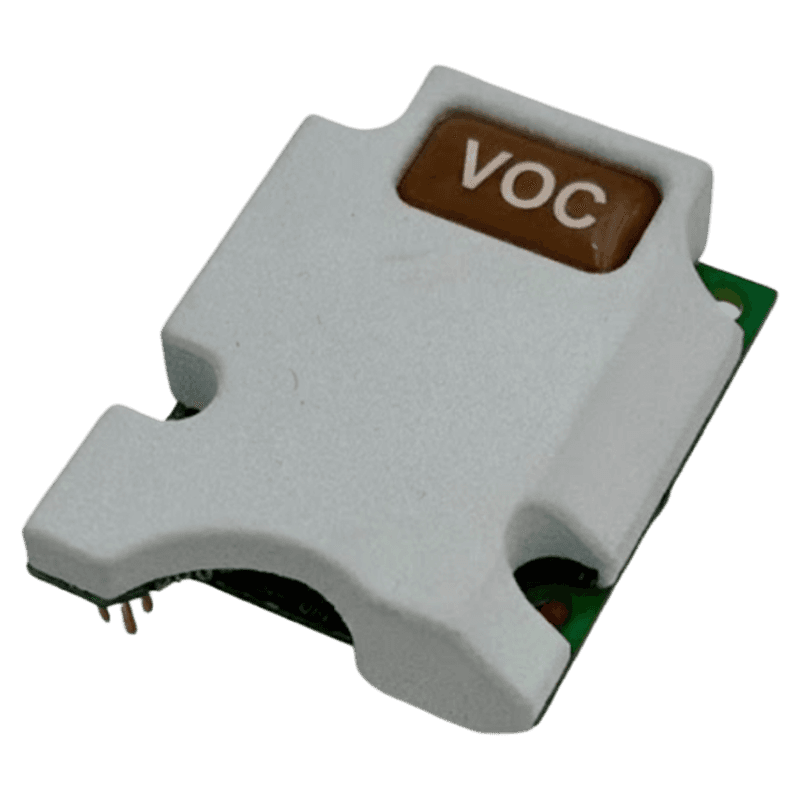
Yes. The Non-MCERTS Air Pro 2 accepts all the same expansion modules as the MCERTS version — up to six gas sensors (NO2, SO2, CO, CO2, O3, H2S, NH3, NO, VOC) and a sound level meter.
The 20 Ah internal battery provides several days of autonomous operation depending on reporting frequency and active sensor modules. With the included solar panel, the station operates indefinitely in most outdoor conditions.
MORE PRODUCTS
Speak to our technical team about specifications, site suitability, and pricing.