Compare Sensorbee and EarthSense Zephyr — both MCERTS-certified, UK-focused air quality monitors. Specs, cartridge systems, noise and vibration, and buyer guidance.
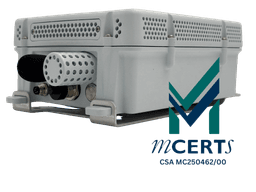
The Sensorbee Pro 2 and EarthSense Zephyr are both compact, MCERTS-certified environmental monitors designed for UK projects. Both can be solar-powered. Both target environmental consultants, local authorities, and construction operators. But their approaches differ — the Zephyr is a dedicated air quality sensor with a cartridge-based calibration model, while Sensorbee integrates air quality with noise and vibration monitoring in a single platform.
This comparison uses publicly available specifications, product datasheets, and MCERTS certification records from both manufacturers.
At a Glance: Sensorbee vs EarthSense Zephyr
| Feature | Sensorbee Pro 2 | EarthSense Zephyr |
|---|---|---|
| Dust | PM1, PM2.5, PM10 | PM1, PM2.5, PM10 |
| Gases (standard) | VOC | NO2, NO, O3 |
| Gases (expanded) | Up to 6 modules (NO2, SO2, CO, O3, H2S, CO2, NH3) | Enhanced cartridge: CO, H2S, SO2 |
| Noise | LAeq (dB) | Not available |
| Vibration | PPV | Not available |
| MCERTS | PM10 & PM2.5 | Indicative ambient particulate monitors |
| Weight | ~1.9 kg | Max 2 kg |
| Power | Solar + 20 Ah battery | Solar + internal rechargeable battery; mains or battery optional |
| Connectivity | LTE-M / NB-IoT | GSM (2G, 4G, 5G NB-IoT, LTE Cat-M1), Wi-Fi, Bluetooth, RS232/RS485 |
| IP rating | IP65 | Not publicly documented |
| Calibration | Factory calibrated sensors | Cartridge system — calibrated to MCERTS reference site |
| Data platform | Sensorbee Cloud | MyAir web app + API |
| Pricing model | Hardware purchase | Subscription (includes cartridges, data hosting, SIM, support) |
| Made in | Sweden | UK (Made in Britain accredited) |
What the EarthSense Zephyr Offers
EarthSense is a UK company (Made in Britain accredited) that manufactures the Zephyr — an award-winning indicative ambient air quality monitor. The Zephyr measures harmful gases (NO2, NO, O3 as standard; CO, H2S, SO2 with an enhanced cartridge) and particulate matter (PM1, PM2.5, PM10) along with temperature and humidity.
The Zephyr uses a cartridge system — replaceable sensor cartridges that are calibrated against a MCERTS reference site before deployment. This approach means calibration happens before the cartridge reaches your site — no in-field calibration is required. Cartridges use active sampling with a built-in fan, and data is uploaded at configurable intervals (typically every 15 minutes for standard, 60 minutes for enhanced).
EarthSense operates on a subscription model: the subscription includes cartridge calibration, data hosting, SIM connectivity, continuous monitoring by in-house data scientists, replacement cartridges, MyAir/API access, technical support, and full warranty. This is similar to Clarity's Sensing-as-a-Service approach — the customer pays an ongoing fee rather than purchasing hardware outright.
The MyAir web app provides mapped Zephyr locations, data charting and download (KML/CSV), MappAir modelling data overlays, satellite imagery, AURN and AQMA map overlays, source apportionment, and historic plus forecast data. EarthSense also offers MappAir — a separate air quality modelling product using hyperlocal data fusion and dispersion modelling.
A notable partnership: EarthSense has an exclusive integration with Siemens Mobility for traffic management applications. A smaller variant (ZephyrS) is available exclusively through Siemens for traffic signal installation.
With 87 UK keywords and approximately 472 monthly organic visits, EarthSense has a modest search presence but ranks for valuable terms including "air quality monitors" and "air quality sensor."
What Sensorbee Offers
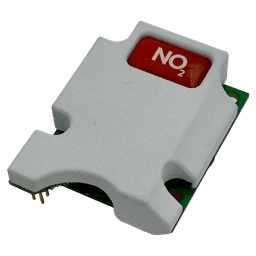
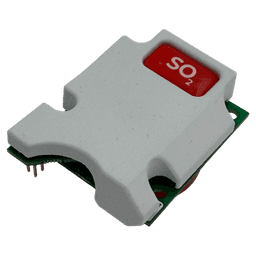
The Sensorbee Pro 2 measures dust (PM1, PM2.5, PM10), noise (LAeq), vibration (PPV), temperature, humidity, pressure, and VOC in a single 1.9 kg device. It holds MCERTS certification for PM10 and PM2.5. Up to six gas sensor modules add NO2, SO2, CO, O3, H2S, and CO2.
Sensorbee is sold as hardware — you purchase the station and own it. Solar power with a 20 Ah battery is standard. Data is transmitted to Sensorbee Cloud via NB-IoT or LTE-M.
Key Differences
Noise and Vibration
The Zephyr does not measure noise or vibration. It is a dedicated air quality sensor. The Sensorbee Pro 2 includes both noise (LAeq) and vibration (PPV) as standard parameters.
For construction monitoring under Section 61 consent conditions — where dust, noise, and vibration are typically all required — Sensorbee provides a single-station solution. With the Zephyr, you would need separate noise and vibration monitoring equipment, adding cost and complexity.
Calibration Approach
EarthSense's cartridge system is a genuinely different approach to calibration. Each cartridge is calibrated at a MCERTS reference site before shipping to the customer. When a cartridge needs recalibration, EarthSense sends a replacement and the old one is returned. No in-field calibration is required, and EarthSense data scientists continuously monitor data quality.
Sensorbee uses factory-calibrated sensor modules connected via M8 ports. Modules can be swapped in the field, but calibration is performed at the factory rather than at a MCERTS reference site.
For projects where demonstrating traceable calibration to a reference standard is important (e.g., regulatory submissions, LAQM), the Zephyr's cartridge model provides a clear calibration chain. For projects where speed of deployment and field serviceability are priorities, Sensorbee's approach may be more practical.
Air Quality Gas Range
Both systems measure the key UK regulatory gases, but through different approaches:
- ·Zephyr standard cartridge: NO2, NO, O3 — the three gases most relevant to urban air quality in the UK
- ·Zephyr enhanced cartridge: Adds CO, H2S, SO2 — relevant for industrial and port applications
- ·Sensorbee: Up to 6 gas modules selected from NO2, SO2, CO, O3, H2S, CO2, NH3, VOC — broader selection including CO2 and NH3
The Zephyr's standard cartridge targets exactly the gases that matter most for LAQM and Clean Air Zone monitoring. Sensorbee offers more gas options but requires individual module selection.
Pricing Model
Like Clarity, EarthSense operates on a subscription model. The subscription includes not just the hardware but calibration cartridges, data hosting, cellular connectivity, data scientist monitoring, replacement cartridges, support, and warranty. For organisations that prefer operational expenditure, this removes the burden of asset management.
Sensorbee is a hardware purchase. Over multi-year deployments, ownership typically delivers lower total cost — but you manage calibration, connectivity, and maintenance yourself.
Data Platform and Modelling
EarthSense offers something unique in this comparison: MappAir, a hyperlocal air quality modelling platform that combines Zephyr sensor data with dispersion modelling to generate air quality maps at street level. This is valuable for urban planners and transport authorities who need citywide air quality intelligence beyond what point sensors alone provide.
Sensorbee Cloud focuses on real-time sensor data monitoring, alerting, and export. It does not include air quality modelling or forecasting capabilities.
UK Focus
Both companies target the UK market. EarthSense is UK-based (Made in Britain accredited) with UK support hours (09:00–17:00). Sensorbee is Swedish-designed but specifically targets UK environmental regulations (MCERTS, BS 5228, BS 7385).
Which Is Right for Your Project?
EarthSense Zephyr may be the better choice if:
- ·Your project is purely air quality focused (no noise or vibration requirements)
- ·Traceable cartridge calibration against a MCERTS reference site is important for your regulatory submission
- ·You want air quality modelling (MappAir) integrated with sensor data
- ·Traffic management integration (Siemens Mobility) is a requirement
- ·A subscription model with data scientist oversight fits your organisation
Sensorbee Pro 2 may be the better choice if:
- ·You need combined noise, dust, and vibration monitoring from a single device
- ·Your project requires vibration monitoring under BS 7385
- ·Broader gas monitoring is needed (CO2, NH3, VOC alongside regulatory gases)
- ·Hardware ownership across multiple projects is preferred
- ·You need the smallest, lightest possible station (~1.9 kg vs ~2 kg)
For UK construction and demolition projects, Sensorbee's integrated NDV capability is the decisive factor — the Zephyr simply does not measure noise or vibration. For urban air quality networks and LAQM programmes, the Zephyr's cartridge calibration model and MappAir modelling platform offer compelling advantages for pure air quality applications.
Frequently Asked Questions
Does the EarthSense Zephyr measure noise or vibration?
No. The Zephyr is a dedicated air quality sensor measuring gases and particulate matter. It does not include noise or vibration measurement. For projects requiring combined air quality, noise, and vibration monitoring, you would need separate equipment alongside the Zephyr.
How does the Zephyr's cartridge calibration work?
Each Zephyr cartridge is calibrated against a MCERTS reference site before being sent to the customer. When a cartridge needs recalibration (typically based on the subscription schedule), EarthSense sends a pre-calibrated replacement. You swap the cartridge in the field — no specialist calibration equipment or expertise is needed on site.
Is the Zephyr suitable for construction monitoring?
The Zephyr can monitor air quality on construction sites — PM10, PM2.5, PM1, and gases. EarthSense promotes the Zephyr for construction use, highlighting its lightweight design (max 2 kg) and easy installation. However, it does not measure noise or vibration, so you would need additional equipment to meet typical Section 61 consent conditions that require dust, noise, and vibration monitoring.
Which system has better gas accuracy?
EarthSense calibrates each cartridge against a MCERTS reference site and employs data scientists to continuously monitor data quality. This provides a documented calibration chain. Sensorbee gas sensor modules are factory calibrated. For direct accuracy comparisons, request co-location or validation data from both manufacturers for the specific gases relevant to your project.
Can I use both systems together?
Yes. Some projects deploy Zephyr sensors for detailed air quality monitoring alongside Sensorbee stations for NDV compliance monitoring. The data would be managed through separate platforms (MyAir and Sensorbee Cloud), which adds reporting complexity but allows each system to be used for its strengths.
Explore the full specifications — download the Sensorbee product catalogue or contact our team to discuss your monitoring requirements.