Detailed comparison of Sensorbee and Kunak air quality monitoring systems. Specs, gas sensors, certifications, noise and vibration capabilities, and buyer guidance for UK projects.
Sensorbee and Kunak both manufacture compact, solar-capable environmental monitoring stations. Both target environmental consultants, urban air quality networks, and industrial operators. But they come from different starting points — Kunak is a dedicated air quality platform with deep gas measurement capabilities, while Sensorbee combines air quality with noise and vibration monitoring in a single device.
This comparison uses publicly available specifications, co-location field study data, and product datasheets. Where specifications are not publicly documented, we note it.
At a Glance: Sensorbee vs Kunak
| Feature | Sensorbee Pro 2 | Kunak AIR Pro | Kunak AIR Lite |
|---|---|---|---|
| Dust | PM1, PM2.5, PM10 | PM1, PM2.5, PM10 | PM1, PM2.5, PM10 |
| Gases | Up to 6 modules (NO2, SO2, CO, O3, H2S, CO2, NH3, VOC) | Up to 5 gases + PM | Up to 2 gases + PM |
| Noise | LAeq (dB) | Optional external probe | Optional external probe |
| Vibration | PPV | Not available | Not available |
| Dust certification | MCERTS (PM10 & PM2.5) | Not publicly documented | Not publicly documented |
| Dimensions | 145 x 200 x 80 mm | 257 x 270 x 225 mm | 200 x 153 x 185 mm |
| Weight | ~1.9 kg | under 3.5 kg | under 2.3 kg |
| Power | Solar + 20 Ah battery | Solar + 2.9 Ah or 26 Ah battery | Solar + 2.9 Ah or 20 Ah battery |
| Connectivity | LTE-M / NB-IoT | Cellular (4G/3G), Ethernet, Modbus RTU, Wi-Fi | Cellular, Ethernet, Modbus RTU |
| IP rating | IP65 | IP65 | IP65 |
| Data platform | Sensorbee Cloud | Kunak AIR Cloud | Kunak AIR Cloud |
| Price | Contact for quote | Contact for quote | Contact for quote |
What Kunak Offers
Kunak is a Spanish manufacturer specialising in air quality monitoring. Their product range centres on two main stations — the AIR Pro and AIR Lite — plus a range of interchangeable gas sensor cartridges.
The Kunak AIR Pro is their flagship station, measuring up to five gases and particulate matter simultaneously. It uses a patented cartridge system — plug-and-play gas sensor modules that can be swapped in the field without tools. Cartridges are available for O3 (±8 ppb accuracy), NO2 (±5 ppb), H2S (±10 ppb), CO (±80 ppb), SO2, NH3, VOC, and others. The station includes built-in temperature, humidity, pressure, and dew point sensors, and supports external probes for wind, rain, noise, and UV.
The Kunak AIR Lite is a more compact version measuring up to two gases plus particulate matter, designed for dense network deployments where cost per node matters.
Both stations are solar-capable with battery backup, IP65 rated, and connect to Kunak AIR Cloud — a web-based platform for data visualisation, reporting, alarm management, and remote configuration. Kunak offers cellular, Ethernet, and Modbus RTU connectivity, with an embedded eSIM for cellular deployments.
Kunak has a significant online presence with 991 UK keywords and approximately 2,540 monthly organic visits, though much of this traffic targets broad informational queries rather than product-specific terms.
What Sensorbee Offers
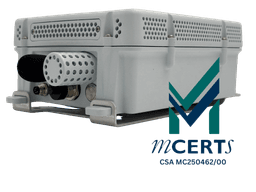
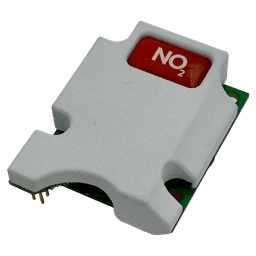
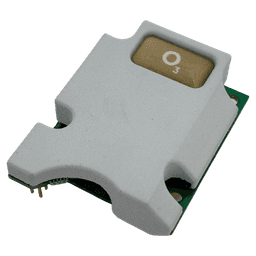
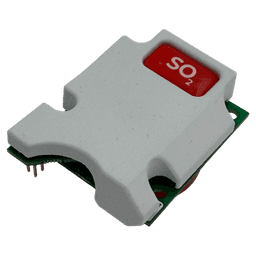
The Sensorbee Pro 2 combines air quality, noise, and vibration monitoring in a single device. It measures PM1, PM2.5, and PM10 (with MCERTS certification), noise (LAeq), vibration (PPV), temperature, humidity, pressure, and VOC as standard. Up to six additional gas sensor modules can be connected via M8 ports — NO2, SO2, CO, O3, H2S, CO2, and more.
At 145 x 200 x 80 mm and 1.9 kg, the Pro 2 is significantly smaller and lighter than the Kunak AIR Pro. It runs on solar power with a 20 Ah internal battery and connects via NB-IoT or LTE-M — low-power wide-area network technologies designed for IoT sensors.
Key Differences
Noise and Vibration: Sensorbee's Unique Capability
This is the most significant differentiator. Kunak stations do not include built-in noise or vibration measurement. An optional external sound level meter probe can be connected to the AIR Pro, but vibration (PPV) is not available at all.
The Sensorbee Pro 2 measures both noise (LAeq) and vibration (PPV) as standard — no additional hardware, no additional cost. For UK projects that require combined NDV (noise, dust, vibration) monitoring, particularly construction sites operating under Section 61 or BS 5228/BS 7385 conditions, Sensorbee provides a single-station solution where Kunak would require separate noise and vibration equipment.
Gas Measurement Breadth
Kunak's cartridge system is genuinely impressive for air quality applications. The AIR Pro handles up to five gases simultaneously with documented accuracy claims backed by co-location field studies (e.g., NO2 at ±5 ppb, O3 at ±8 ppb). The cartridges are field-swappable, meaning you can change your gas measurement configuration without returning the unit for service.
Sensorbee supports up to six gas modules with a similar modular approach. Both platforms cover the key regulatory gases — NO2, SO2, CO, O3, H2S — plus VOCs and CO2. Kunak additionally offers ultrafine particle (UFP) and methyl mercaptan measurement, which Sensorbee does not currently provide.
For pure air quality network deployments where gas measurement flexibility and depth is the primary requirement, Kunak's longer track record in this specific application is worth considering.
Size and Deployment
The Sensorbee Pro 2 is roughly half the volume and weight of the Kunak AIR Pro (1.9 kg vs under 3.5 kg). Both units are IP65 rated and solar-capable.
Kunak offers more connectivity options — cellular, Ethernet, Wi-Fi, and Modbus RTU — which provides flexibility for integration into existing monitoring infrastructure. Sensorbee focuses on NB-IoT and LTE-M, which offer better power efficiency and indoor/ground-level penetration at the cost of bandwidth (sufficient for sensor data but not for firmware updates over-the-air in the same way).
Certifications
Sensorbee holds MCERTS certification for PM10 and PM2.5 — the UK Environment Agency's performance standard for indicative ambient particulate monitors. Kunak's MCERTS certification status for particulate monitoring is not publicly documented on their product pages.
For UK projects where consent conditions specify MCERTS-certified dust data, this is a material consideration. Verify Kunak's current certification status directly with them if this applies to your project.
Data Platforms
Both platforms offer cloud-based data management with real-time visualisation, alerting, and reporting.
Kunak AIR Cloud includes advanced features such as remote calibration, automatic data flagging, forecasting tools, and an extensive API for third-party integration. The platform has been developed over several years and supports both the Pro and Lite product lines.
Sensorbee Cloud uses the LwM2M protocol, optimised for low-power IoT devices. It provides real-time monitoring, threshold alerts, and data export via a web interface.
Which Is Right for Your Project?
Kunak may be the better choice if:
- ·Your project is purely air quality focused — no noise or vibration requirements
- ·You need ultrafine particle or specialised gas measurement (e.g., methyl mercaptan)
- ·Ethernet or Modbus RTU integration with existing infrastructure is required
- ·You are deploying a dense urban air quality network where the AIR Lite's compact form factor and lower cost per node matters
Sensorbee may be the better choice if:
- ·You need combined noise, dust, and vibration monitoring from a single device
- ·Your project operates under UK construction regulations (Section 61, BS 5228, BS 7385)
- ·MCERTS-certified particulate matter monitoring is specified
- ·You want the smallest, lightest possible station for rapid redeployment
- ·Budget favours one multi-parameter station over separate air quality, noise, and vibration units
For UK environmental consultants working across both air quality and construction projects, Sensorbee's ability to handle NDV monitoring and air quality from a single platform reduces equipment inventory and simplifies procurement.
Frequently Asked Questions
Does Kunak measure noise and vibration?
Kunak does not include built-in noise or vibration measurement. An optional external sound level meter probe can be connected to the AIR Pro station, but vibration (PPV) measurement is not available. For projects requiring combined noise, dust, and vibration monitoring, you would need separate equipment alongside a Kunak station.
Is Kunak MCERTS certified?
Kunak's MCERTS certification status for particulate monitoring is not clearly documented on their public-facing product pages. They publish co-location field study results demonstrating accuracy, but whether this extends to formal MCERTS certification should be confirmed directly with Kunak if your project requires it.
Can Sensorbee match Kunak's gas measurement accuracy?
Both platforms use electrochemical sensors for gas measurement, which is the standard technology for indicative air quality monitoring. Kunak publishes detailed co-location study results (e.g., O3 at ±8 ppb, NO2 at ±5 ppb). Sensorbee's gas sensor accuracy specifications are documented per module — see individual product pages for NO2, O3, and other sensors.
Which system is better for urban air quality networks?
For purely air quality applications, both are capable choices. Kunak has a longer track record in urban network deployments (including FIA Formula E and mining applications). Sensorbee adds noise and vibration monitoring to every node, which is valuable for urban monitoring programmes that need to assess multiple environmental parameters — increasingly common in UK Clean Air Zones and Low Emission Zones.
Can I use Kunak's cartridge system with Sensorbee?
No. The sensor modules are proprietary to each platform. Sensorbee uses M8-connected modules designed for the Pro 2 station. Kunak uses their patented plug-and-play cartridge system. Both approaches offer field-swappable gas sensor modules, but they are not interchangeable.
Ready to compare specifications in detail? Download our product catalogue for full technical data, or contact our team to discuss which system fits your project requirements.