

Posted by Filip Sobecki on · 7 min read
Environmental monitoring on construction sites has always been constrained by power. Legacy systems required mains electrical connections, which meant monitors could only be placed where infrastructure existed. Perimeter boundaries, remote excavation zones, and temporary work areas — often the highest-risk locations for dust and noise — went unmonitored.
The practical consequence was coverage gaps. Compliance depended on where power sockets happened to be, not where monitoring was actually needed. For phased projects where work zones shift every few weeks, the cost of running temporary power to each new monitoring position made comprehensive coverage uneconomic.
Solar-powered monitoring systems have eliminated this constraint. Current-generation equipment deploys in minutes, operates autonomously for months, and costs a fraction of mains-powered alternatives. Here is how the technology works and what it means for construction site coverage.
The power problem with legacy monitoring
The electrical infrastructure barrier
Traditional environmental monitoring equipment was designed for permanent installations — government air quality stations and fixed industrial sites. When construction adopted these systems, they inherited the same dependency on mains electrical power.
In practice, this meant:
- ·Limited placement options: Monitors could only install near electrical outlets or street light connections
- ·Installation complexity: Electricians needed to run cables, install breakers, and certify connections
- ·High setup costs: Electrical work added EUR 1,200–3,500 per monitoring point
- ·Timeline delays: Installation took days rather than hours, delaying project start
Construction sites are dynamic, temporary environments. The electrical infrastructure that works for buildings does not exist during the earliest, dustiest phases when monitoring matters most.
The generator alternative
Some projects tried powering monitors with diesel generators. The problems were predictable:
- ·Fuel costs: EUR 25–60 daily for continuous operation
- ·Maintenance burden: Regular refuelling and servicing
- ·Noise complaints: Generators create the very problem sites need to avoid
- ·Security concerns: Fuel theft at unsecured perimeter locations
- ·Reliability issues: Monitoring gaps when generators run out or fail
Generators introduced as many problems as they solved — fuel logistics, additional noise, security risk, and monitoring gaps whenever they ran dry.
The coverage compromise
Most construction projects settled for strategic compromise:
- ·Monitor only near electrical connections
- ·Install single units instead of comprehensive networks
- ·Accept blind spots in high-dust areas
- ·Hope violations do not occur in unmonitored zones
This approach left projects exposed. Dust does not confine itself to areas with power outlets. Neighbours complain about what reaches their property boundaries. Regulators expect comprehensive coverage, not selective monitoring at convenient locations.
How solar monitoring became viable
Technology maturation
Three developments made solar-powered construction monitoring practical:
1. High-efficiency solar panels
Modern photovoltaic cells generate significant power from compact panels. What once required square metres of panels now fits in a device smaller than a laptop. The Sensorbee solar panel is purpose-built for environmental monitoring, delivering reliable charging in UK weather conditions.
2. Low-power sensors and electronics
Environmental sensors evolved to sip power rather than gulp it. Precision particulate monitors, noise sensors, and data transmission systems now operate on watts instead of requiring constant high power.
3. Advanced battery technology
Lithium battery packs store multiple days of operation capacity, ensuring 24/7 monitoring even during extended cloudy periods. Intelligent power management extends battery life to years, not months.
Together, these developments made continuous environmental monitoring feasible on solar power alone.
Cellular connectivity
Solar addressed power, but monitoring also needed reliable data transmission. Low-power cellular protocols solved this:
- ·Low power consumption: NB-IoT and LTE-M protocols are designed for low-power IoT devices, transmitting measurement data using a fraction of the energy consumed by conventional 4G connections
- ·Widespread coverage: NB-IoT's superior building penetration and range mean signals reach locations where standard mobile coverage is marginal — ideal for excavation sites and basement-level monitoring
- ·No WiFi required: Eliminates another infrastructure dependency
- ·Multi-network roaming: Devices automatically select the strongest available carrier, avoiding single-network dead spots
Combining solar power with cellular connectivity eliminated both dependencies that had plagued construction monitoring: power and data connections. Monitors could now deploy anywhere with clear sky and cellular coverage — which describes virtually every construction site in the UK. The Air Pro 2 Cellular and Air Lite Cellular both use this approach.
What solar monitoring enables
Placement driven by compliance, not infrastructure
Removing the power constraint means monitoring positions are determined by where data is needed:
- ·Perimeter boundaries: Install directly where dust impacts neighbours, regardless of power access
- ·Excavation zones: Monitor remote dig sites without running electrical cables
- ·Temporary work areas: Track demolition, material handling, and high-dust phases anywhere on site
- ·Sequential repositioning: Move monitors as project phases progress without electrician callouts
Monitoring placement is now determined by compliance needs, not electrical infrastructure.
The 10-minute deployment reality
- Mount sensor on light pole, fencing, or temporary structure
- Power on to activate solar charging
- Connect automatically via cellular
- Configure alerts through Sensorbee Cloud
- Monitor immediately from any device
No electricians. No permits for electrical work. No cable runs. No complexity. Just mount, power on, and monitor.
The financial impact is significant. Installation labour that once cost EUR 1,200–3,500 per unit drops to near zero. A site manager can deploy a full perimeter monitoring network in an afternoon rather than waiting a week for electricians.
Remote sites covered
The largest practical gain is at sites where electrical infrastructure does not exist:
- ·Rural construction projects
- ·Greenfield development sites
- ·Infrastructure projects (roads, bridges, utilities)
- ·Demolition sites awaiting redevelopment
- ·Temporary construction access routes
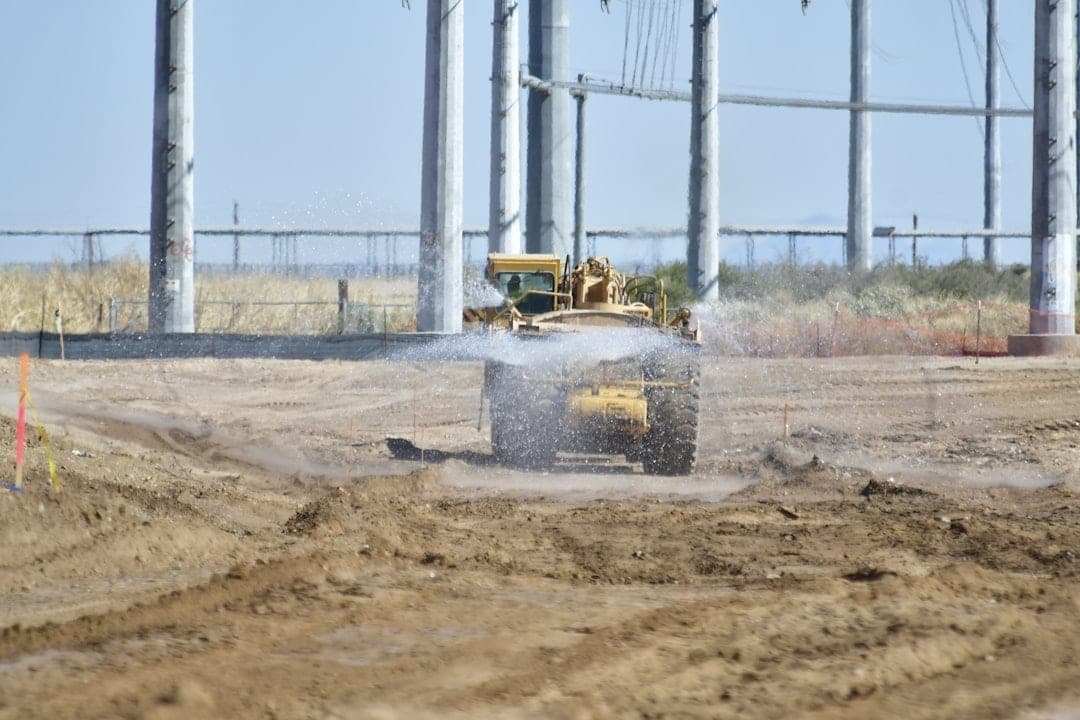
These sites previously operated without monitoring or relied on generators. Solar-powered systems make continuous coverage practical at these locations.
Additional benefits of solar operation
Environmental credentials
Solar-powered monitoring produces zero operational emissions and requires no fossil fuel. For projects with ESG reporting obligations or sustainability commitments, this is a straightforward alignment between the monitoring equipment and the environmental standards it is meant to uphold.
Project mobility
Solar systems move effortlessly between:
- ·Project phases (from clearing through finishing)
- ·Multiple sites operated by the same contractor
- ·Seasonal projects (winter shutdown, spring restart)
This mobility creates asset utilisation that electrical systems cannot match. A three-unit solar monitoring network might serve five projects annually, dramatically lowering per-project costs.
Reliability in extreme conditions
Solar systems can be more reliable than grid-powered alternatives in construction environments:
- ·No power outages: Construction frequently disrupts local electrical supply — temporary power boards are often the first casualties of earthmoving or cable strikes
- ·Storm resilience: Continues monitoring when temporary electrical fails
- ·On-board data buffering: If cellular connectivity drops during adverse weather, measurements are stored locally and uploaded automatically when the connection restores, ensuring zero data gaps in compliance records
The IP65-rated enclosure withstands rain, dust ingress, and temperature extremes from -20 °C to 60 °C — conditions that would damage unprotected legacy equipment.
Choosing solar construction monitoring
Essential features
When evaluating solar-powered construction site monitoring, verify:
1. Multi-day battery capacity
- ·Operates 10–14 days on battery alone
- ·Intelligent power management extends operational duration
2. Cellular connectivity
- ·Cellular data transmission without WiFi
- ·Low power consumption preserves battery
- ·Reliable communication in remote locations
3. True plug-and-play deployment
- ·10-minute setup without technical expertise
- ·No configuration programming required
- ·Cloud platform handles connectivity automatically
4. Multi-parameter capability
- ·Dust (PM1.0, PM2.5, PM10) via particle matter modules
- ·Noise monitoring
- ·Weather data (temperature, humidity, pressure) from wind sensors
- ·Optional expansion for vibration, VOCs, and gases
Implementation strategy
Start with perimeter boundaries: Deploy initial units where dust impacts neighbours — the highest-risk violation zones.
Add high-dust areas: Monitor excavation, demolition, and material handling zones as the project progresses.
Expand for comprehensive coverage: Once initial units prove value, expand the network to cover the entire site.
Reposition as needed: Move units between phases, work zones, or projects without installation costs.
Industry adoption
Major UK contractors are standardising on solar-powered monitoring. Municipal permit conditions increasingly accept solar-powered systems as equivalent to mains-powered equipment. Environmental consultancies are moving from legacy platforms to solar-based deployments that reduce setup time and travel costs across multi-site portfolios.
The underlying shift is straightforward: monitoring coverage is no longer constrained by electrical infrastructure. Sites that previously accepted gaps in their monitoring data — because running power was too expensive or too slow — can now achieve full perimeter coverage at lower cost.
Sensorbee solar-powered monitoring
The Sensorbee Air Pro 2 is designed for construction site deployment:
- ·10-minute setup using pole mount, wall bracket, or magnetic base
- ·Dust (PM1, PM2.5, PM10), noise, and weather measurement
- ·Cellular connectivity (NB-IoT / LTE-M) without WiFi
- ·Battery backup for 10–14 days without solar charging
- ·MCERTS-certified particulate monitoring
Frequently Asked Questions
How long do solar-powered construction monitors operate without sunlight?
Modern solar-powered monitors like the Air Pro 2 include lithium battery packs that provide 10–14 days of continuous operation without any solar charging. Intelligent power management extends this further. In typical UK weather conditions, the solar panel tops up the battery during daylight hours, meaning the system runs indefinitely without intervention.
Can solar-powered monitors deliver the same data quality as mains-powered systems?
Yes. The power source has no bearing on measurement accuracy. The Air Pro 2 holds full MCERTS certification from the UK Environment Agency — the same performance standard applied to mains-powered reference equipment. Solar-powered and mains-powered systems use identical sensor technology; only the power delivery differs.
What happens if cellular coverage is poor on a remote construction site?
The Air Pro 2 and Air Lite use multi-network cellular connectivity, automatically selecting the strongest available signal. In the vast majority of UK construction sites, cellular coverage is sufficient. The units also store data locally and upload when connectivity is restored, so no measurements are lost during brief signal interruptions.
How do solar monitoring costs compare to traditional mains-powered systems?
Traditional mains-powered monitoring typically costs EUR 24,000–51,000 per location when you factor in equipment, electrical installation, and climate-controlled housing. A solar-powered Air Pro 2 system costs approximately EUR 4,100–5,900 per location with near-zero installation costs — a saving of approximately EUR 19,000–45,000 per monitoring point. Solar systems can also be redeployed across multiple projects, further reducing per-project costs.

Filip Sobecki
Production & Logistics Manager