Choosing an MCERTS air quality monitor for UK compliance work? What certification covers, which projects require it, and what to check before you buy.
If a planning condition, environmental permit, or tender document specifies an "MCERTS air quality monitor", the equipment choice stops being a technical preference and becomes a compliance requirement. Data from non-certified instruments can be challenged or rejected by regulators — regardless of how accurate the instrument actually is.
This guide covers what MCERTS certification means for ambient air quality monitors, when UK projects require it, and the practical criteria that separate a certified monitor that works on site from one that only works in a laboratory.
What MCERTS Means on an Air Quality Monitor
MCERTS is the Environment Agency's Monitoring Certification Scheme. For ambient particulate monitors, certification means the instrument has passed independent testing by CSA Group — a UKAS-accredited certification body — against the EA's published performance standards for indicative ambient particulate monitors.
That testing is substantial:
- ·Laboratory validation of accuracy, precision, and linearity across the claimed measurement range
- ·Field collocation alongside reference-grade instruments for a minimum of 12 weeks, covering real UK weather
- ·Statistical equivalence to the EN 12341:2014 gravimetric reference method
- ·Manufacturing quality audit confirming every production unit matches the tested samples
The result is a certificate that regulators across the UK — the Environment Agency, SEPA, Natural Resources Wales, and NIEA — accept as evidence of data quality. For a deeper explanation of the scheme itself, see our article on what MCERTS certification is and why it matters.
Indicative vs reference monitoring
MCERTS-certified indicative monitors sit between low-cost sensors and reference stations:
| Class | Typical use | Regulatory standing |
|---|---|---|
| Low-cost sensor | Screening, awareness projects, spatial mapping | Data may be questioned or rejected |
| MCERTS indicative monitor | Construction boundaries, permits, urban networks | Accepted for permits, planning conditions, Section 61 |
| Reference station (EN 12341) | National legal networks (e.g. AURN) | Defines legal compliance |
For construction boundaries, industrial perimeters, and urban networks, indicative MCERTS monitoring delivers the data quality regulators require without the cost, mains power, and climate-controlled enclosures that reference stations demand.
When UK Projects Require an MCERTS Monitor
Construction sites. Planning conditions increasingly specify MCERTS-certified PM10 and PM2.5 monitoring at site boundaries, particularly within 350 metres of homes, schools, or hospitals. IAQM dust assessment guidance drives this: medium and high-risk sites need continuous boundary monitoring, and authorities want certified data. See our dedicated construction dust monitoring page for thresholds and deployment patterns.
Environmental permits. Installations regulated under the Environmental Permitting Regulations — waste sites, industrial facilities, landfills — routinely carry permit conditions referencing MCERTS for boundary air quality monitoring.
Section 61 consents. Applications under the Control of Pollution Act 1974 are strengthened by certified monitoring. Where dust is a consent condition alongside noise and vibration, certified PM data provides the evidential chain authorities expect.
Air Quality Management Areas. Local authorities assessing or managing AQMAs benefit from the regulatory acceptance MCERTS provides for supplementary monitoring.
If your monitoring data will be submitted to a regulator, cited in a planning application, or relied on in a dispute — certification is either required outright or strongly advisable.
What to Check Before Buying
Certification is the entry ticket, not the whole decision. UK deployments fail on practical grounds more often than on data quality. Check:
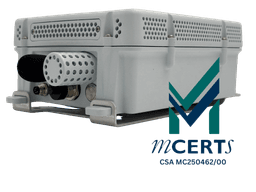
1. What exactly is certified? Certification applies to a specific instrument and measurement. The Sensorbee Particle Matter Module (SB4102) holds MCERTS certification for PM10 and PM2.5 indicative ambient monitoring (Certificate No: CSA MC250462/00), validated against the reference-grade Fidas 200S system at the London Teddington Bushy Park monitoring station. Ask any vendor for the certificate number and scope.
2. Humidity correction. UK air is wet. Optical particle counters without inlet conditioning read falsely high in fog, drizzle, and condensing conditions. The SB4102 uses a heated inlet that activates above 60% relative humidity — the difference between defensible data and false alarms on an exposed site boundary.
3. Power at the monitoring location. Site boundaries rarely have mains power. A certified monitor that needs 230 VAC either costs you a generator and fuel runs, or never gets deployed where the dust actually is. The Air Pro 2 runs entirely on solar with a 20 Ah internal battery — our guide to solar-powered air quality monitoring covers what that changes in practice.
4. Connectivity without site infrastructure. LTE-M and NB-IoT cellular transmission works where Wi-Fi cannot reach and needs no network setup at the site.
5. Individual calibration. Type approval certifies the model; it does not verify your specific unit. Every Sensorbee sensor ships individually calibrated with its own traceable certificate — so the unit on your boundary, not just a laboratory sample, has documented performance.
6. Multi-parameter capability. Construction consents typically cover dust, noise, and vibration together. A monitor that accepts a Class 1 noise sensor and a vibration sensor on the same station replaces three instruments, three power supplies, and three data platforms with one.
The Sensorbee MCERTS Setup
The configuration most UK compliance projects deploy:
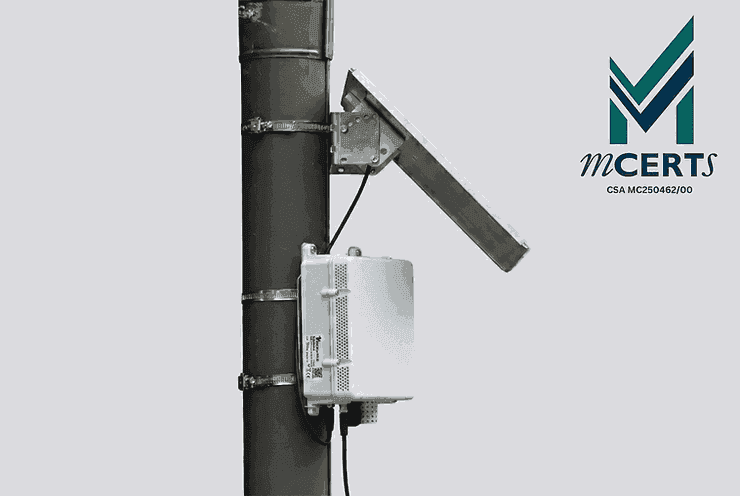
- ·Air Pro 2 (SB8202) — base station, 1.9 kg, solar powered, LTE-M/NB-IoT, deploys in under five minutes
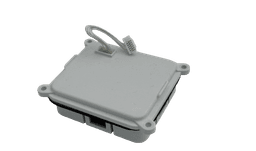
- ·Particle Matter Module (SB4102) — MCERTS-certified PM10/PM2.5, plus PM1, with heated inlet
- ·30 W solar panel — standard for all deployments, pole or wall mounted; the station's internal 20 Ah battery bridges periods of low solar
- ·Optional: Class 1 noise and vibration modules for full Section 61 coverage
Data flows to Sensorbee Cloud with configurable threshold alerts by SMS or email, timestamped audit-ready logging, and one-click export for regulatory submissions. Full certification details are on our certifications page.
Frequently Asked Questions
Is MCERTS legally required for air quality monitoring in the UK?
There is no blanket legal mandate, but MCERTS is effectively required wherever monitoring data serves a regulatory purpose. Planning conditions, environmental permits, and Environment Agency guidance routinely specify it, and data from non-certified equipment risks being challenged or rejected in enforcement proceedings. For any project where data goes to a regulator, treat certification as essential.
What is the difference between an MCERTS monitor and a low-cost air quality sensor?
An MCERTS monitor has passed independent laboratory and field testing against the Environment Agency's performance standards, including statistical equivalence to the EN 12341 gravimetric reference method. Low-cost sensors have not — they can be useful for screening and spatial mapping, but their data generally will not be accepted for permit compliance or planning condition discharge.
Does MCERTS certification cover the whole monitoring station?
Certification applies to the specific measurement it was issued for. Sensorbee's certification covers PM10 and PM2.5 indicative ambient monitoring by the Particle Matter Module (Certificate No: CSA MC250462/00). Other parameters measured by the same station — gases, noise, vibration, weather — fall under their own respective standards, such as IEC 61672-1 for sound level meters.
Can an MCERTS monitor run without mains power?
Most certified monitors require mains electricity, which limits where they can be deployed. The Sensorbee Air Pro 2 is an exception: it operates entirely on solar power with a 20 Ah internal battery, allowing certified PM monitoring at site boundaries, perimeters, and remote locations with no electrical infrastructure.
How quickly can MCERTS monitoring be deployed on a construction site?
A solar-powered station like the Air Pro 2 deploys in under five minutes per location: mount the bracket, attach the station, connect the solar panel, and power on. The unit connects over LTE-M or NB-IoT and begins transmitting to the cloud immediately — no electrician, no cable routing, no civil works.
Get Started
Download the Sensorbee product catalogue for full specifications, or contact our team to discuss MCERTS monitoring for your project.