
How solar-powered air quality monitors work, sizing panels and batteries for UK winters, and where off-grid stations beat mains-powered alternatives.
The single biggest constraint in air quality monitoring has never been the sensors — it is power. Mains-dependent monitors can only go where electrical infrastructure already exists, which is rarely where the pollution is. Site boundaries, fence lines, lamp columns, riversides, and temporary work zones go unmonitored because running power to them costs more than the monitor itself.
Solar-powered air quality monitoring removes that constraint. This guide explains how modern off-grid stations work, what to check when sizing solar and battery capacity for UK conditions, and where solar deployment delivers the clearest advantage over mains-powered alternatives.
How a Solar-Powered Monitoring Station Works
A solar air quality station combines four elements:
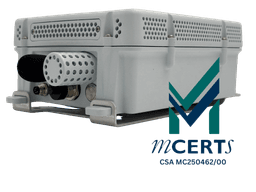
- A low-power monitoring station. Power budget decides everything off-grid. The Sensorbee Air Pro 2 is engineered around an ultra-low-power architecture: optical particle counting, electrochemical gas sensors, and onboard processing in a 1.9 kg unit that accepts 5–24 VDC input.
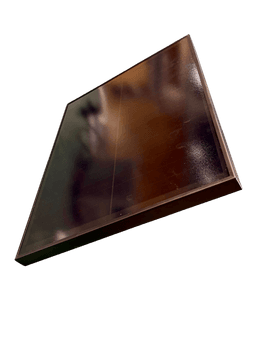
- A solar panel with real headroom. Sensorbee deployments use the 30 W panel as standard — CE-certified, operating from -30 to +60 °C, mounted to a pole or wall with adjustable tilt and a 5 m plug-in cable.
- A battery that bridges dark periods. The Air Pro 2's internal 20 Ah battery provides 10–14 days of continuous operation with no solar input at all. For installations needing longer autonomy, the 100 Ah external battery pack extends this to 4–6 weeks and supports two 30 W panels with a built-in charge controller.
- Low-power cellular connectivity. LTE-M and NB-IoT transmit data to Sensorbee Cloud using a fraction of the energy of Wi-Fi or 4G — no site network, no router, no configuration.
The result: mount the bracket, attach the station, connect the panel, power on. Deployment takes under five minutes per location, with no electrician, no cable routing, and no civil works.
Does Solar Actually Work Through a UK Winter?
This is the question every consultant asks, and it is the right one. Short days, low sun angles, and weeks of overcast are exactly the conditions that kill under-engineered solar deployments.
Three design factors determine winter survival:
- ·Power budget, not panel size. A station drawing watts continuously will outrun any reasonably sized panel in December. The Air Pro 2's low-power design means the standard 30 W panel covers typical loads even at winter charging rates.
- ·Battery autonomy as the safety margin. With 10–14 days of operation on the internal battery alone, the station rides through extended overcast periods and recovers when the sun returns.
- ·Cold-rated hardware. Panels and electronics rated for -30 °C — the Air Pro 2 platform is designed and tested in Nordic conditions with minimal winter daylight, which makes a UK winter a comfortable margin rather than an edge case.
For monitoring positions with extreme shading — north-facing walls, dense urban canyons — a second 30 W panel or the external battery pack provides additional headroom. Seasonal sites can also overwinter equipment and redeploy in spring; the battery carry case and solar panel carry case exist for exactly this rotation.
Where Solar Monitoring Makes the Difference
Construction site boundaries. Dust, noise, and vibration limits apply at the perimeter — where mains power never is. Solar stations monitor at the receptor positions defined in dust management plans and Section 61 consents, then move when site phases change. Our article on solar power for construction monitoring covers this use case in depth, and the construction dust monitoring page shows the compliance workflow.
Urban sensor networks. Lamp columns and street furniture offer mounting points but rarely accessible power. Solar stations turn any pole into a monitoring node, enabling the dense urban air quality networks that reveal street-level variation reference stations cannot see.
Industrial perimeters and fence lines. Continuous boundary monitoring at industrial facilities, landfills, and refineries — kilometres of fence line, no power sockets. Solar stations with gas sensor modules cover VOC, H₂S, NO₂, and particulate monitoring at the perimeter.
Temporary and emergency deployments. Complaint investigations, planning application baselines, short-term campaigns. When the station deploys in five minutes and needs nothing from the site, the economics of temporary monitoring change completely.
MCERTS Certification on Solar Power
A common trade-off in the past: certified monitors needed mains power, so off-grid positions got uncertified sensors and questionable data. That trade-off no longer holds.
The Air Pro 2's Particle Matter Module (SB4102) holds MCERTS certification for PM10 and PM2.5 indicative ambient monitoring (Certificate No: CSA MC250462/00) — and the station runs entirely on solar. Certified, regulator-accepted particulate data from positions that have no electrical infrastructure at all. Our MCERTS air quality monitor buyer guide covers what certification requires and how to specify it.
The module's heated inlet — which activates above 60% relative humidity to prevent false readings in fog and condensation — is part of the certified design and runs within the solar power budget.
Sizing Guide: Which Configuration Fits Your Site
| Deployment | Panel | Battery | Notes |
|---|---|---|---|
| Standard station (any sensor mix) | 30 W | Internal 20 Ah | The built-in battery bridges 10–14 days of low solar |
| Heavy shading or critical uptime | 30 W (up to two) | +100 Ah external | 4–6 weeks autonomy, dual-panel support |
| Indoor or mains-available positions | None | Internal 20 Ah | 5–24 VDC input accepts mains adapters |
Frequently Asked Questions
How long does a solar-powered air quality monitor run without sunlight?
The Sensorbee Air Pro 2's internal 20 Ah battery sustains 10–14 days of continuous operation with no solar charging. With the 100 Ah external battery pack, autonomy extends to 4–6 weeks. In normal UK conditions the solar panel keeps the battery topped up, so the station runs indefinitely without intervention.
Can a solar-powered monitor be MCERTS certified?
Yes. Certification concerns measurement performance, not the power source. The Sensorbee Particle Matter Module is MCERTS-certified for PM10 and PM2.5 indicative ambient monitoring (Certificate No: CSA MC250462/00) and operates on the solar-powered Air Pro 2 platform — certified data with no mains connection.
What happens during a long overcast period in winter?
The battery bridges the gap. Even with zero solar input, the internal battery sustains up to two weeks of operation, and charging resumes whenever daylight returns — overcast skies still deliver partial charge. For positions with severe shading, a second 30 W panel or the external battery pack adds margin.
Do solar monitoring stations need maintenance visits?
Routine data collection needs no visits at all — data transmits over LTE-M or NB-IoT to the cloud, and the platform monitors battery voltage and sensor health remotely, alerting you before intervention is needed. Physical visits are limited to sensor module replacement at end of life and occasional panel cleaning in high-dust environments.
How long does installation take?
Under five minutes per station: mount the bracket on a pole or wall, attach the station, connect the solar panel via its M8 plug-in connector, and power on. The unit connects to the cellular network and begins transmitting automatically.
Get Started
Download the Sensorbee product catalogue for full solar and battery specifications, or contact our team to size a configuration for your site.