Compare Sensorbee and Airly air quality monitoring systems. European manufacturers, measurement parameters, MCERTS certification, and honest guidance for UK environmental projects.
Sensorbee and Airly are both European manufacturers of compact air quality monitoring systems. Airly is a Polish company that has built one of the largest air sensor networks in Europe, with thousands of sensors deployed in cities across Poland, the UK, and other countries. Sensorbee is a Swedish company that combines air quality with noise and vibration monitoring in a single platform.
While both operate in the environmental monitoring space, they target different use cases — Airly focuses on large-scale urban air quality networks, while Sensorbee targets multi-parameter environmental monitoring for construction, industrial, and urban applications.
This comparison uses publicly available specifications and product information. Where detailed technical specifications are not publicly documented, we note it.
At a Glance: Sensorbee vs Airly
| Feature | Sensorbee Pro 2 | Airly Aura | Airly Pure |
|---|---|---|---|
| Dust | PM1, PM2.5, PM10 | PM1, PM2.5, PM10 | PM1, PM2.5, PM10 |
| Gases | Up to 6 modules (NO2, SO2, CO, O3, H2S, CO2, NH3, VOC) | NO2, NO, O3, SO2, CO | None |
| Noise | LAeq (dB) | Not available | Not available |
| Vibration | PPV | Not available | Not available |
| MCERTS | Yes (PM10 & PM2.5) | Yes | Yes |
| Power | Solar + 20 Ah battery | 5V via mains adapter or solar panel | 5V via mains adapter or solar |
| Connectivity | LTE-M / NB-IoT | GSM cellular | GSM cellular |
| Weight | ~1.9 kg | Not publicly documented | Not publicly documented |
| Data platform | Sensorbee Cloud | Airly Dashboard + API + public map | Airly Dashboard + API + public map |
| Target application | Multi-parameter environmental monitoring | Urban air quality networks | Dust-focused monitoring |
| Network scale | Individual stations to small networks | Thousands of sensors across European cities | Thousands of sensors |
| Price | Contact for quote | Contact for quote | Contact for quote |
What Airly Offers
Airly is a Polish manufacturer of compact, MCERTS-certified air quality sensors. They offer two main products:
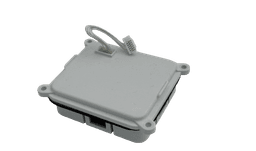
The Airly Aura is their full multi-parameter unit, measuring PM1, PM2.5, PM10, NO2, NO, O3, SO2, and CO alongside temperature, humidity, and pressure. Airly publishes accuracy data: R² >0.8 for particulate matter, R² >0.7 for NO2/NO/O3/CO, and R² >0.6 for SO2. It connects via GSM cellular and is powered by 5V mains adapter or solar panel. The Aura targets local authorities, smart cities, construction, environmental consultancy, and mining/energy applications.
The Airly Pure is a dust-only unit measuring PM1, PM2.5, and PM10 (plus temperature, humidity, pressure). It also holds MCERTS certification, with published accuracy of R² >0.8 for PM1 and PM2.5 and R² >0.6 for PM10.
Both products are MCERTS certified. Airly both manufactures sensors and calibrates them against reference stations — a combination they highlight as unusual in the low-cost sensor market.
Airly's platform includes:
- ·Airly Dashboard: Cloud-based data management for sensor fleet operators
- ·API: Data integration for third-party platforms, city dashboards, and apps
- ·Public air quality map: Real-time air quality data shared publicly across all Airly sensor locations
The company has built its reputation on large-scale urban network deployments — thousands of sensors providing hyperlocal air quality data across cities in Poland, the UK, and other European countries. They actively support UK local authorities with DEFRA funding applications for air quality monitoring. With 3,763 UK keywords and approximately 19,000 monthly organic visits, Airly has a substantial search presence — significantly larger than most competitors in this comparison.
What Sensorbee Offers
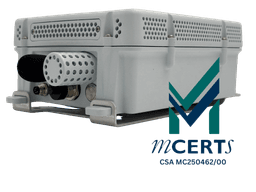
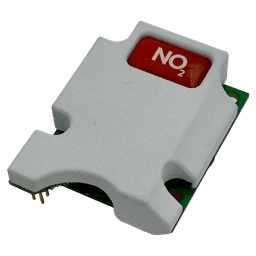
The Sensorbee Pro 2 measures dust (PM1, PM2.5, PM10), noise (LAeq), vibration (PPV), temperature, humidity, pressure, and VOC in a single 1.9 kg device. It holds MCERTS certification for PM10 and PM2.5. Up to six gas sensor modules add NO2, SO2, CO, O3, H2S, and CO2.
Sensorbee is designed for professional environmental monitoring — construction compliance, industrial fenceline monitoring, urban environmental assessment — where data needs to meet UK regulatory standards and satisfy consent conditions.
Key Differences
Noise and Vibration
The clearest differentiator. Airly does not measure noise or vibration. Sensorbee includes both as standard. For UK construction projects, port monitoring, airport applications, or any scenario requiring combined NDV (noise, dust, vibration) assessment, Sensorbee covers all three from a single device. Airly would need to be supplemented with separate noise and vibration equipment.
Network Scale vs. Individual Station Capability
Airly's strength is network density — deploying hundreds or thousands of sensors across a city to create hyperlocal air quality maps. Their platform, pricing, and support are optimised for this use case. Individual sensor cost is typically lower to enable mass deployment.
Sensorbee targets individual monitoring stations or smaller networks where each station needs to measure multiple parameters (not just air quality). A Sensorbee station at a construction site boundary measures noise, dust, vibration, and gases — replacing what would otherwise be three or four separate instruments.
These are fundamentally different use cases. If you need 500 air quality sensors across a city, Airly's model is designed for that. If you need 5 comprehensive environmental monitoring stations on a construction site, Sensorbee's model is designed for that.
MCERTS Certification
Both Sensorbee and Airly hold MCERTS certification. Sensorbee's MCERTS covers PM10 and PM2.5. Airly's MCERTS covers both the Aura and Pure products. For UK projects requiring MCERTS-certified particulate data, both platforms meet the requirement.
The difference is in what else each system measures alongside MCERTS-certified dust. Sensorbee adds noise and vibration. Airly adds a broader gas suite (NO2, NO, O3, SO2, CO) in the Aura model.
Power Architecture
Sensorbee runs on solar power with a 20 Ah battery as standard — designed for off-grid deployment on construction sites and remote locations. Airly sensors are powered by a 5V adapter (mains) or solar panel. Both support solar deployment, though Sensorbee's 20 Ah battery provides more energy reserve for extended low-light periods.
For deployment locations without mains power — construction site boundaries, rural monitoring positions, temporary installations — Sensorbee's larger battery capacity is a practical advantage for uninterrupted operation.
Public Data vs. Project Data
Airly emphasises public data sharing — their air quality map displays real-time readings from all Airly sensors, making data accessible to citizens. This is valuable for public engagement, community awareness, and city transparency programmes.
Sensorbee Cloud is a professional monitoring platform where data is accessible to the project team. Data is not shared publicly unless the operator chooses to do so. For regulatory compliance monitoring where data may be commercially sensitive or subject to contractual obligations, this distinction matters.
Which Is Right for Your Project?
Airly may be the better choice if:
- ·You need a large-scale urban air quality network (50+ sensors)
- ·Public air quality data sharing is a project goal
- ·The focus is purely on air quality (PM and gases) with no noise or vibration requirement
- ·You are a municipality or city authority building a citizen-facing monitoring programme
- ·Lower per-sensor cost is needed for mass deployment
Sensorbee may be the better choice if:
- ·You need noise, dust, and vibration monitoring from a single device
- ·MCERTS-certified particulate monitoring is specified
- ·Solar-powered, off-grid deployment is required
- ·Your project is construction, industrial, or port-based
- ·Professional regulatory compliance data (not public data) is the requirement
- ·Each monitoring position needs comprehensive multi-parameter coverage
For UK environmental consultants, the choice between Airly and Sensorbee rarely presents a direct either/or decision — they target different project types. Airly suits large-scale urban air quality programmes. Sensorbee suits professional environmental monitoring where noise, vibration, and regulatory compliance are requirements alongside air quality.
Frequently Asked Questions
Does Airly measure noise or vibration?
No. Airly sensors measure air quality parameters (particulate matter and gases) only. They do not include noise or vibration measurement. For projects requiring combined air quality, noise, and vibration monitoring, separate noise and vibration equipment would be needed alongside Airly sensors.
Is Airly MCERTS certified in the UK?
Yes. Both the Airly Aura and Airly Pure hold MCERTS certification. Airly calibrates sensors against reference stations and publishes accuracy data (R² >0.8 for PM1/PM2.5). Both Sensorbee and Airly meet the MCERTS requirement for indicative ambient particulate monitoring.
Can Sensorbee deploy at the same scale as Airly?
Sensorbee is designed for professional monitoring deployments — typically individual stations to networks of up to 20 stations on a project. Airly's platform is designed for mass deployment of hundreds or thousands of sensors. For city-wide air quality networks, Airly's infrastructure and pricing are better suited. For multi-parameter environmental monitoring projects, Sensorbee's capability per station is the relevant metric.
Which system provides better air quality data?
Both systems measure particulate matter and gases. Airly's large network scale provides hyperlocal spatial resolution across a city. Sensorbee provides comprehensive multi-parameter data at each monitoring location. "Better" depends on whether you need broad spatial coverage (Airly) or deep parameter coverage at specific locations (Sensorbee).
Are both systems European manufacturers?
Yes. Airly is based in Poland. Sensorbee is based in Sweden. Both design and manufacture in Europe, which may be relevant for procurement requirements and supply chain considerations.
Explore the specifications — download the Sensorbee product catalogue or request a quote for your project.