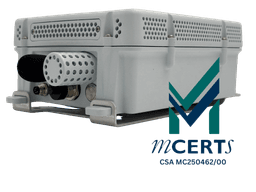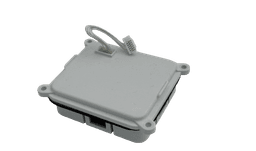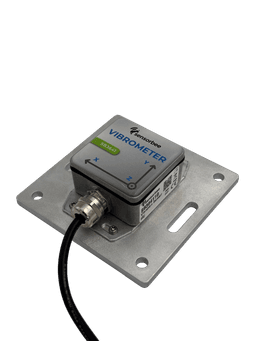
Side-by-side comparison of Sensorbee and Casella Guardian2 for construction dust, noise, and vibration monitoring. Specs, power, certifications, and honest buyer guidance.
If you are specifying environmental monitoring for a UK construction project, the Sensorbee Pro 2 and the Casella Guardian2 are two systems you will likely encounter. Both measure dust, noise, and vibration — the three parameters most commonly required under Section 61 consent conditions. But they differ significantly in power architecture, connectivity, modularity, and how they handle gas monitoring.
This comparison draws on publicly available specifications, datasheets, and certification records. Where data is not publicly documented, we say so.
At a Glance: Sensorbee vs Casella Guardian2
| Feature | Sensorbee Pro 2 | Casella Guardian2 |
|---|---|---|
| Dust parameters | PM1, PM2.5, PM10 | PM1.0, PM2.5, PM10 |
| Noise measurement | LAeq (dB) | LAeq, LAFmax, LN% |
| Vibration | PPV | PPV |
| Gas monitoring | Up to 6 gas modules (NO2, SO2, CO, O3, H2S, VOC, CO2, NH3) | Optional VOC sensor (PID, up to 6,000 ppm) |
| Noise certification | Class 2 (Standard) or 3:rd Party IEC 61672-1 Class 1 | IEC 61672-1 Class 1 |
| Dust certification | MCERTS (PM10 & PM2.5) | No MCERTS Certification |
| Power | Solar as standard (20 Ah battery). 2 weeks of power on only internal battery. Small 30W solar panel required. | Mains (100–250 VAC), solar, or battery. Big Solar panel required. |
| Connectivity | Cellular SIM | E-SIM cellular |
| Weight | ~2 kg | Not publicly documented |
| Deployment time | Under 5 minutes | "Plug and play" — bolt to wall or pole |
| Data platform | Sensorbee Cloud (LwM2M) | Casella247 web platform |
| Mounting | Wall or pole mount | Wall or pole mount |
| Price | Contact for quote | Contact for quote |
What the Casella Guardian2 Offers
The Casella Guardian2 (model 208174D) is a multi-agent monitoring station designed for construction and demolition sites. It measures particulate matter (PM10, PM2.5, PM1.0), noise (with IEC 61672-1 Class 1 compliance), and ground vibration (PPV) from a single housing.
Casella describes the Guardian2 as a "plug and play" system — configured at time of ordering, bolted to a wall or pole, and transmitting data within moments of powering on. The system connects to Casella247, a web-hosted platform providing real-time data, email/SMS alerts, and automatic daily, weekly, or monthly reports. An optional VOC sensor (PID, up to 6,000 ppm) can be added for remediation or industrial monitoring.
The Guardian2's primary power source is mains electricity (100–250 VAC), with solar and battery as alternatives. It uses an embedded SIM (E-SIM) that automatically selects the strongest cellular signal, and buffers data during connectivity loss via the mHUB datalogger.
What Sensorbee Offers
The Sensorbee Pro 2 is a compact, solar-powered environmental monitoring station that measures dust (PM1, PM2.5, PM10), noise (LAeq), vibration (PPV), temperature, humidity, pressure, and VOC — all in a single 1.9 kg device. It is MCERTS-certified for PM10 and PM2.5, CE certified, and RoHS compliant.
What distinguishes Sensorbee from most competitors is the modular gas expansion. The Pro 2 supports up to six gas sensor modules — NO2, SO2, CO, O3, H2S, CO2, and more — connected via M8 ports. This means a single Sensorbee station can monitor construction compliance parameters and air quality simultaneously, without additional hardware.
Power comes from solar as standard, backed by a 20 Ah internal battery. There is no mains dependency — the unit can be deployed on any construction site with no cable runs, no generator, and no electrician. Connectivity is via NB-IoT or LTE-M cellular, with data transmitted to Sensorbee Cloud.
Key Differences
Power and Deployment
This is the most consequential difference for construction projects. The Guardian2's primary power source is mains electricity. On an active construction site, mains power is often unavailable at monitoring locations — boundary positions, access roads, and receptor locations rarely have a convenient socket. Running temporary power involves cable routes, PAT testing, and ongoing risk assessments.
The Sensorbee Pro 2 runs on solar power with a 20 Ah battery backup. You mount it on a pole, switch it on, and it is operational. No electrician, no cable run, no generator. For projects where monitoring locations change as the site evolves — which is most construction projects — this is a significant practical advantage.
Noise Measurement Depth
The Guardian2 has a clear advantage in noise measurement. Its sound level meter is certified to IEC 61672-1 Class 1, the standard required for regulatory and legal evidence. It measures LAeq, LAFmax (maximum fast-weighted level), and statistical noise levels (LN%) — the full suite expected by an acoustic consultant working to BS 5228.
The Sensorbee Pro 2 measures LAeq, which covers the most common consent condition metric. For projects where detailed statistical noise analysis or LN percentile data is required by consent conditions, the Guardian2 provides more comprehensive noise data. For projects where continuous LAeq with threshold alerts is sufficient, Sensorbee covers the requirement.
Gas and Air Quality Monitoring
The Guardian2 offers a single optional VOC sensor (PID). The Sensorbee Pro 2 supports up to six gas modules, each measuring a different pollutant. If your project requires air quality monitoring alongside dust, noise, and vibration — increasingly common for urban construction projects near sensitive receptors — Sensorbee handles this from a single station. With the Guardian2, you would need separate air quality monitoring equipment.
Certifications
The two systems hold different certifications for different parameters. Sensorbee holds MCERTS certification for PM10 and PM2.5 — the Environment Agency's standard for particulate monitoring data quality. The Guardian2 holds IEC 61672-1 for noise measurement. Neither system currently holds both certifications.
If your project consent conditions specify MCERTS-certified dust data, Sensorbee meets this requirement directly. If conditions specify IEC 61672-1 noise data, the Guardian2 meets that requirement.
Data and Connectivity
Both systems offer cloud-based data platforms with real-time access and alerting. Casella247 provides automated reporting (daily/weekly/monthly), multi-user access, and FTP integration. Sensorbee Cloud uses the LwM2M protocol, designed for IoT devices, offering low-power data transmission that extends battery life in solar-powered deployments.
The Guardian2 uses an E-SIM that selects the strongest cellular signal — a practical feature on construction sites where network coverage can be inconsistent. Sensorbee uses NB-IoT or LTE-M, which are purpose-built for IoT devices and penetrate buildings and ground-level positions better than standard cellular, though with lower bandwidth.
Which Is Right for Your Project?
The Casella Guardian2 may be the better choice if:
- ·Your consent conditions specifically require IEC 61672-1 Class 1 noise data with LAFmax and LN% statistical analysis
- ·Mains power is available and reliable at your monitoring locations
- ·You need a well-established brand with a long track record in UK construction
The Sensorbee Pro 2 may be the better choice if:
- ·You need solar-powered monitoring with no mains dependency
- ·Your project requires gas and air quality monitoring alongside dust, noise, and vibration
- ·Monitoring locations will change as the project progresses
- ·You need MCERTS-certified particulate matter measurement
- ·Budget matters — one station covering multiple parameters reduces equipment costs
For many UK construction projects, the practical reality is that monitoring locations are on site boundaries with no mains power, and the scope includes both compliance monitoring (dust, noise, vibration) and air quality assessment. In that scenario, a solar-powered, multi-parameter system like Sensorbee significantly simplifies deployment.
Frequently Asked Questions
Is the Casella Guardian2 MCERTS certified?
The Guardian2 does not hold MCERTS certification for dust measurement. It holds IEC 61672-1 certification for noise. If your project requires MCERTS-certified particulate monitoring, you would need to verify whether the Guardian2's dust measurement meets your specific consent conditions, or consider an MCERTS-certified alternative.
Can Sensorbee measure LAFmax and LN% noise statistics?
The Sensorbee Pro 2 currently measures LAeq, which is the most commonly specified noise metric in Section 61 consent conditions. It does not currently provide LAFmax or LN% percentile statistics. If your acoustic consultant requires these metrics, discuss whether LAeq alone meets your consent conditions or whether additional noise measurement capability is needed.
Which system is better for construction dust monitoring?
For dust monitoring specifically, Sensorbee holds MCERTS certification for PM10 and PM2.5, which is the Environment Agency's performance standard for indicative ambient particulate monitors. The Guardian2 measures the same dust fractions (PM10, PM2.5, PM1.0) but without MCERTS certification. For projects where MCERTS is specified in consent conditions, Sensorbee meets the requirement directly.
Can I use both systems on the same project?
Yes. Some projects use different monitoring systems at different locations depending on site-specific requirements. For example, a Guardian2 at a mains-powered boundary location where detailed noise analysis is critical, and Sensorbee stations at solar-powered perimeter locations where multi-parameter monitoring is needed.
How do the data platforms compare?
Both Casella247 and Sensorbee Cloud provide real-time data access, threshold alerts, and remote monitoring. Casella247 offers automated report generation (daily, weekly, monthly) and multi-user access with role-based permissions. Sensorbee Cloud uses the LwM2M IoT protocol for efficient data transmission and is accessible via web interface. Both support data export for inclusion in environmental monitoring reports.
Ready to see how Sensorbee fits your project? Download our product catalogue for full technical specifications, or request a quote for a configuration tailored to your site requirements.