Compare Sensorbee and Aeroqual for dust, air quality, and construction monitoring. Side-by-side specs for Dust Sentry, AQS 1, and AQM 65 against Sensorbee Pro 2.
Aeroqual is one of the most visible names in environmental monitoring, with 447 UK keywords and approximately 3,600 monthly organic visits — the highest search traffic of any competitor in this space. Their product range spans from dedicated dust monitors to comprehensive air quality stations. Sensorbee takes a different approach: a single, compact, solar-powered station that combines dust, noise, and vibration monitoring with modular gas expansion.
This comparison covers Aeroqual's three main outdoor monitoring products — the Dust Sentry, AQS 1, and AQM 65 — against the Sensorbee Pro 2. All data is drawn from publicly available specifications and datasheets.
At a Glance: Sensorbee vs Aeroqual
| Feature | Sensorbee Pro 2 | Aeroqual Dust Sentry | Aeroqual AQS 1 | Aeroqual AQM 65 |
|---|---|---|---|---|
| Dust | PM1, PM2.5, PM10 | PM1, PM2.5, PM4, PM10, TSP | PM1, PM2.5, PM4, PM10, TSP | PM1, PM2.5, PM10, TSP |
| Gases | Up to 6 modules | None | Up to 3 gases | 10+ gases |
| Noise | LAeq (dB) | None | Optional | Optional |
| Vibration | PPV | None | None | None |
| Dust certification | MCERTS (PM10 & PM2.5) | MCERTS, AQMD Rule 1466 | Near-reference | NIST Traceable |
| Primary power | Solar (20 Ah battery) | Solar or battery | Mains, solar, or battery | Mains AC (solar optional) |
| Connectivity | LTE-M / NB-IoT | WiFi, Ethernet, 4G | WiFi, Ethernet, 4G | WiFi, Ethernet, 3G/4G |
| Weight | ~1.9 kg | Not publicly documented | Not publicly documented | Not publicly documented |
| Data platform | Sensorbee Cloud | Aeroqual Cloud | Aeroqual Cloud | Aeroqual Cloud |
| Target application | Construction NDV + air quality | Dust-only monitoring | Construction + remediation | Reference-grade air quality |
| Price | Contact for quote | Contact for quote | Contact for quote | Contact for quote |
What Aeroqual Offers
Aeroqual is a New Zealand-based manufacturer with over 20 years in air quality monitoring. They offer three distinct outdoor monitoring products, each targeting different applications.
The Dust Sentry is a dedicated particulate monitor measuring PM1, PM2.5, PM4, PM10, and TSP. It holds MCERTS certification for PM10 and PM2.5 plus South Coast AQMD Rule 1466 approval. Designed for construction, demolition, quarrying, and bulk terminal dust monitoring, it is the most directly comparable product to Sensorbee's dust measurement capabilities — but measures dust only, with no noise, vibration, or gas capability.
The AQS 1 is a multi-parameter station that adds up to three gas sensors to the Dust Sentry's particulate measurement. It measures PM alongside gases such as NO2, CO, O3, VOCs, SO2, H2S, and CH4, plus meteorological parameters including noise, temperature, humidity, and wind. Aeroqual positions the AQS 1 for construction, remediation, brownfield redevelopment, and industrial monitoring. It is the closest competitor to Sensorbee in terms of multi-parameter capability.
The AQM 65 is Aeroqual's flagship — a compact air quality station measuring 20+ parameters at near-reference accuracy levels. It is NIST traceable and US EPA recognised, aimed at air quality agencies and national monitoring networks. Its primary power source is mains AC, with solar and battery as options. The AQM 65 operates in a different segment from the Sensorbee Pro 2 — it targets reference-grade urban monitoring rather than rapid-deployment construction applications.
Aeroqual Cloud, their web-based software platform, supports up to 3,000 monitors and provides real-time data access, automated reporting, remote diagnostics, and third-party device integration. They emphasise "defensible data" — a term that resonates with environmental consultants who need monitoring data that will withstand regulatory scrutiny.
What Sensorbee Offers
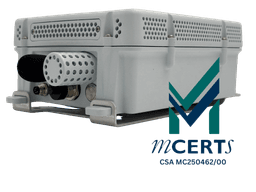
The Sensorbee Pro 2 measures dust (PM1, PM2.5, PM10), noise (LAeq), vibration (PPV), temperature, humidity, pressure, and VOC in a single 1.9 kg, solar-powered unit. It holds MCERTS certification for PM10 and PM2.5. Up to six additional gas sensor modules expand measurement capability to include NO2, SO2, CO, O3, H2S, and CO2.
The fundamental difference is architecture: Sensorbee integrates noise and vibration monitoring into the base unit, while Aeroqual treats these as optional add-ons (available on the AQS 1) or not at all (Dust Sentry, AQM 65). For UK construction projects that require combined dust, noise, and vibration monitoring, this integration matters.
Key Differences
Vibration Monitoring
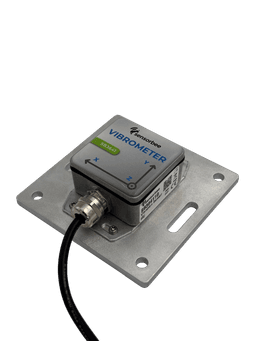
This is the clearest differentiator. None of Aeroqual's products include vibration (PPV) measurement. The Sensorbee Pro 2 measures PPV as standard. For UK construction projects where vibration monitoring is required under BS 7385, Sensorbee provides a single-station solution. With Aeroqual, you need a separate vibration monitor — adding cost, complexity, and another data platform to manage.
Dust Measurement Depth
Aeroqual's Dust Sentry and AQS 1 measure five particle size fractions — PM1, PM2.5, PM4, PM10, and TSP — compared to Sensorbee's three (PM1, PM2.5, PM10). The PM4 (respirable dust) and TSP (total suspended particulate) measurements are relevant for specific industrial hygiene and construction applications, particularly where AQMD Rule 1466 compliance is required.
Both Sensorbee and the Aeroqual Dust Sentry hold MCERTS certification for PM10 and PM2.5. Aeroqual additionally holds South Coast AQMD Rule 1466 approval, which is primarily relevant for US projects but demonstrates the Dust Sentry's measurement credibility.
Power Architecture
Sensorbee runs on solar power with a 20 Ah battery as standard — every unit ships ready for off-grid deployment. Aeroqual's approach varies by product: the Dust Sentry supports solar or battery; the AQS 1 supports mains, solar, or battery; the AQM 65 is primarily mains-powered with solar as an option.
For construction sites and remote monitoring locations where mains power is impractical, Sensorbee's solar-first design avoids the cost and logistics of power provisioning. For fixed urban installations where mains power is available, this advantage is less relevant.
Product Range Breadth vs. Integration
Aeroqual offers three distinct products targeting different applications — you choose the right tool for the job. Sensorbee offers one integrated platform that covers multiple applications through modular expansion. There are trade-offs to both approaches:
- ·Aeroqual's approach gives you a purpose-built monitor optimised for each application (dust-only, multi-parameter, reference-grade). If you only need dust monitoring, the Dust Sentry is a focused, proven choice.
- ·Sensorbee's approach reduces equipment inventory and simplifies procurement. One station type, expandable via sensor modules, covering construction, urban, industrial, and port applications.
Data Platform Maturity
Aeroqual Cloud has been in production longer and supports a larger range of features — up to 3,000 monitors per account, third-party device integration, remote diagnostics, and automated compliance reporting. Their emphasis on "defensible data" reflects experience with clients who submit monitoring data to regulators.
Sensorbee Cloud is newer and focused on core functionality — real-time data access, threshold alerts, and data export. For most construction monitoring projects, this covers the essential requirements. For large-scale urban networks or regulatory submissions requiring extensive data management, Aeroqual's platform maturity is an advantage.
Which Is Right for Your Project?
Aeroqual may be the better choice if:
- ·You need dust-only monitoring with no noise or vibration requirements (Dust Sentry)
- ·TSP and PM4 measurement is specifically required
- ·You are deploying a large network and need mature fleet management software
- ·Reference-grade air quality data is required for regulatory submissions (AQM 65)
- ·US regulatory compliance (AQMD Rule 1466, US EPA) is a factor
Sensorbee may be the better choice if:
- ·You need combined dust, noise, and vibration monitoring from a single station
- ·Your project requires vibration monitoring under BS 7385
- ·Solar power with no mains dependency is a practical necessity
- ·Size and weight matter — rapid deployment across changing site conditions
- ·Budget favours one integrated station over multiple single-parameter monitors
For UK environmental consultants specifying construction monitoring, the question often comes down to whether the project needs NDV (noise, dust, vibration) monitoring. If it does — and most Section 61 projects do — Sensorbee delivers this from a single solar-powered unit. If the project is purely air quality or dust focused, Aeroqual's depth and track record in that specific space is worth evaluating.
Frequently Asked Questions
Does Aeroqual measure vibration?
No. None of Aeroqual's current outdoor monitoring products (Dust Sentry, AQS 1, AQM 65) include vibration (PPV) measurement. If your project requires vibration monitoring alongside dust or air quality, you would need to procure a separate vibration monitor from another manufacturer.
Is the Aeroqual Dust Sentry MCERTS certified?
Yes. The Aeroqual Dust Sentry holds MCERTS certification for PM10 and PM2.5, the same certification held by the Sensorbee Pro 2. The Dust Sentry additionally holds South Coast AQMD Rule 1466 approval, primarily relevant for US projects.
How does Sensorbee compare to the Aeroqual AQS 1?
The AQS 1 is Aeroqual's closest product to the Sensorbee Pro 2 in terms of multi-parameter capability. Both measure particulate matter and gases. The key differences are that Sensorbee includes vibration (PPV) as standard and runs on solar power by default, while the AQS 1 offers more gas measurement options (up to three gases) and additional particle fractions (PM4, TSP). The AQS 1 can also integrate an optional noise sensor.
Can Aeroqual monitors connect to Sensorbee Cloud?
No. Aeroqual monitors connect to Aeroqual Cloud, and Sensorbee monitors connect to Sensorbee Cloud. The two platforms are separate. If you are running both manufacturers' equipment on a project, you would manage data through two separate platforms, which adds complexity to reporting.
Which system is better for brownfield remediation?
Aeroqual's AQS 1 has a strong track record in brownfield and remediation monitoring, with support for VOC, H2S, and CH4 measurement alongside particulate matter. Sensorbee can also measure VOCs and, with gas modules, H2S — though its primary strength is construction NDV monitoring. For remediation projects requiring detailed gas speciation, evaluate both platforms' gas sensor options against your specific monitoring plan requirements.
Get the full picture — download our product catalogue for detailed specifications, or request a quote tailored to your project.